 Bahasa Inggris
 Bahasa Indonesia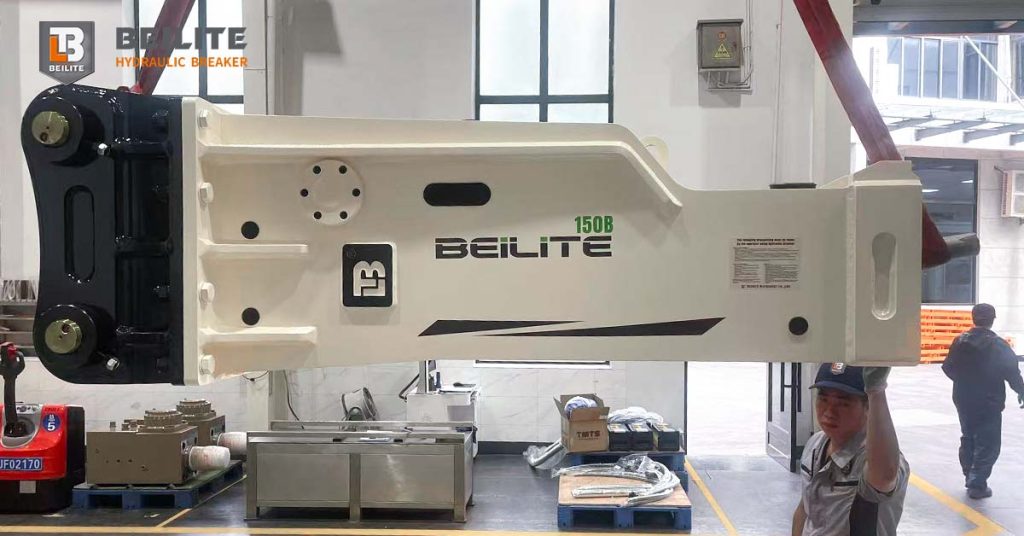
Indonesia’s construction and mining sectors are expanding rapidly. From road development and urban housing to quarrying and mining projects, excavators are now a common sight on job sites across the country. However, many Indonesian operators and contractors face a familiar problem: standard excavation tools are often not enough to deal with the region’s tough ground conditions.
On many projects, the bucket of an excavator works well for soil, sand, or loose material. But once operators encounter rock layers, coral limestone, or compacted ground, productivity can drop dramatically. In these situations, attachments like pemutus hidrolik (palu hidrolik) become essential tools that help contractors complete projects efficiently.
This article explores the real challenges Indonesian operators face during excavation and why hydraulic breakers are often the practical solution.
The Reality of Excavation in Indonesia
Indonesia’s geology varies significantly from region to region. In many coastal and mountainous areas, construction projects encounter hard rock formations such as coral limestone, which are much more difficult to excavate than normal soil.
For example, coral limestone commonly found in areas like Bali has a compressive strength between 20–60 MPa, making it difficult for standard backhoes to remove efficiently.
Because of this, excavation speed can drop significantly. Contractors report that rock excavation may progress at only 3–8 cubic meters per day, compared with 25–40 cubic meters for ordinary soil excavation.
This difference has serious consequences for project timelines. Without proper excavation equipment, operators may spend days trying to break rock with standard buckets, increasing fuel consumption, machine wear, and labor costs.
Why Standard Excavator Buckets Are Not Always Enough?
Excavators are designed primarily for digging and material handling, not for breaking hard rock. When operators attempt to use buckets to remove rock layers, several problems appear:
- Low productivity – The bucket cannot penetrate solid rock effectively.
- Increased machine wear – Teeth, adapters, and bucket edges wear quickly.
- Konsumsi bahan bakar yang lebih tinggi – The machine must work harder to break compact material.
- Operator fatigue – Repeated attempts to break rock slow down work and increase stress.
In many Indonesian projects, especially in road construction, quarrying, and foundation excavation contractors eventually realize that the excavator alone cannot solve the problem.
This is where hydraulic breakers come into play.
Hydraulic Breakers practical Solution
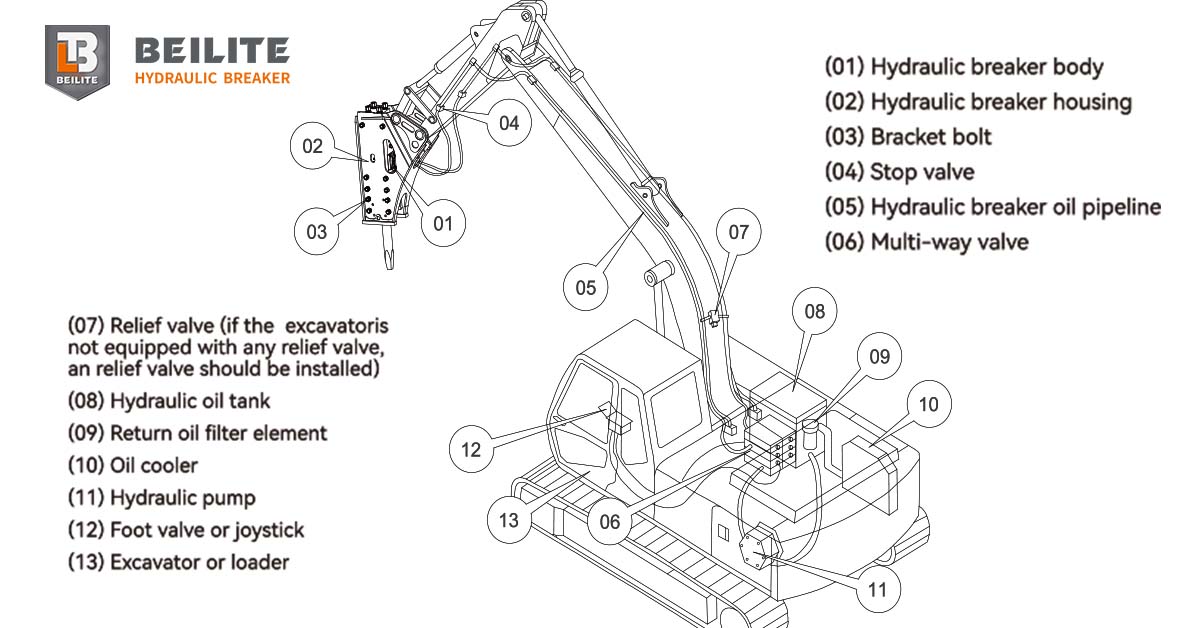
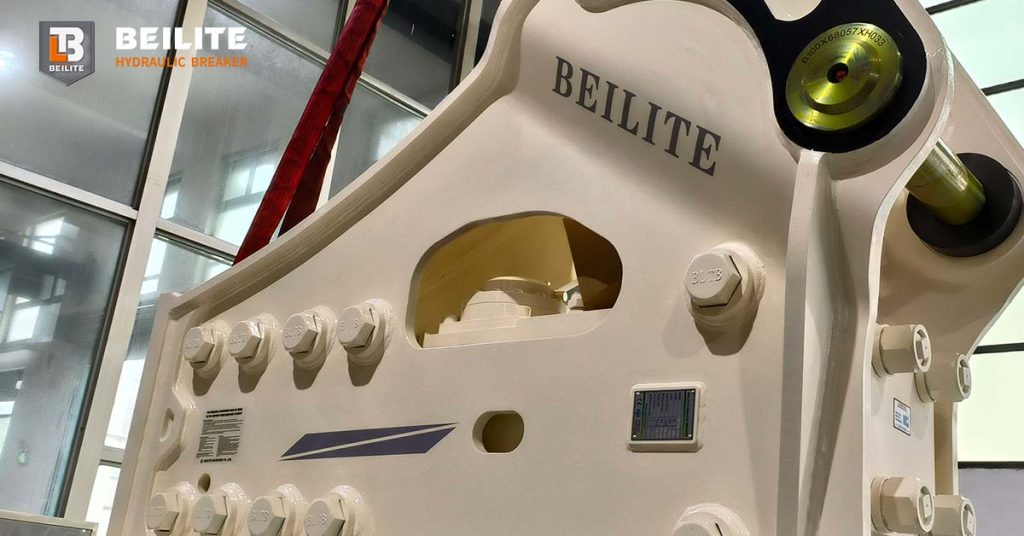
Pemutus hidrolik, also known as hydraulic hammers, are attachments mounted on excavators that deliver high-impact energy to break rock, concrete, or asphalt.
Instead of digging around rock formations, operators can directly fracture the material into smaller pieces, making it easier to remove with the excavator bucket afterward.
Hydraulic breakers are commonly used for:
- Breaking rock layers before excavation
- Demolition of concrete structures
- Konstruksi jalan dan pengangkatan aspal
- Operasi tambang
- Foundation preparation
Many modern excavators are designed to support attachments like pemutus hidrolik through auxiliary hydraulic circuits, allowing contractors to switch tools depending on the task.
This flexibility helps operators maintain productivity even when ground conditions change unexpectedly.
Improve Productivity on Indonesian Construction Sites
For contractors working in Indonesia, productivity often depends on choosing the right attachment for the job.
When operators encounter hard rock or limestone during excavation, using a hydraulic breaker can provide several advantages:
- Faster rock fragmentation
- Lower equipment stress compared with forcing a bucket into rock
- Reduced project delays
- Improved fuel efficiency
On large infrastructure projects, combining multiple machines—such as excavators, hydraulic breakers, and dump trucks—has been shown to significantly improve productivity and workflow.
In other words, the goal is not to replace excavators but to equip them with the right tools for different ground conditions.
The Importance of Operator Training
Another challenge in Indonesia’s construction sector is the shortage of skilled equipment operators, especially for advanced machinery.
Hydraulic breakers require proper operation techniques. If used incorrectly—such as blank firing or applying side pressure—the attachment can wear out quickly.
Experienced operators understand that:
- The hammer should stay perpendicular to the rock surface
- The breaker should not be used as a pry tool
- Regular lubrication and inspection are essential
With proper training and maintenance, hydraulic breakers can significantly extend machine life and improve job site efficiency.
Ringkasan
Excavation in Indonesia is rarely straightforward. Hard rock layers, limestone formations, and unpredictable ground conditions often slow down projects and increase costs.
While excavators remain the backbone of construction work, they cannot always handle rock excavation alone. Hydraulic breakers provide a practical and efficient solution, allowing operators to break tough materials and maintain productivity.
For Indonesian contractors aiming to complete projects faster and more safely, equipping excavators with the right attachments, especially hydraulic breakers can make a major difference on the job site.
Pertanyaan Umum
1. Why do many Indonesian construction sites use hydraulic breakers with excavators?
Because many projects encounter hard rock or limestone layers that standard excavator buckets cannot remove efficiently. Hydraulic breakers break the rock into smaller pieces so the excavator can easily remove it.
2. When should a contractor choose a hydraulic breaker instead of a bucket?
A hydraulic breaker should be used when the ground contains solid rock, reinforced concrete, or compacted material that cannot be excavated efficiently with a bucket alone.
Beilite Machinery Co, Ltd.
40008-40008
info@beilite.com