 Bahasa Inggris
 Bahasa Indonesia
A hydraulic breaker losing power is a common problem in excavator operations. The pemecah batu may strike slower, produce weaker impacts, stop working intermittently, or fail to break hard materials effectively. Reduced performance not only lowers productivity but can also increase fuel consumption and accelerate component wear.
Understanding the root causes helps operators and technicians quickly identify the problem and restore the hydraulic breaker’s performance of fix issues.
Problem: Hydraulic Breaker Has Low Impact Power or Weak Striking Force
When a hydraulic breaker loses power, the most common symptoms include:
- Reduced impact force
- Frekuensi benturan lebih lambat
- Hydraulic Breaker cannot penetrate concrete or rock
- Irregular striking performance
- Excessive hydraulic oil temperature
Several factors can cause these issues, from hydraulic system problems to incorrect operation or component wear.
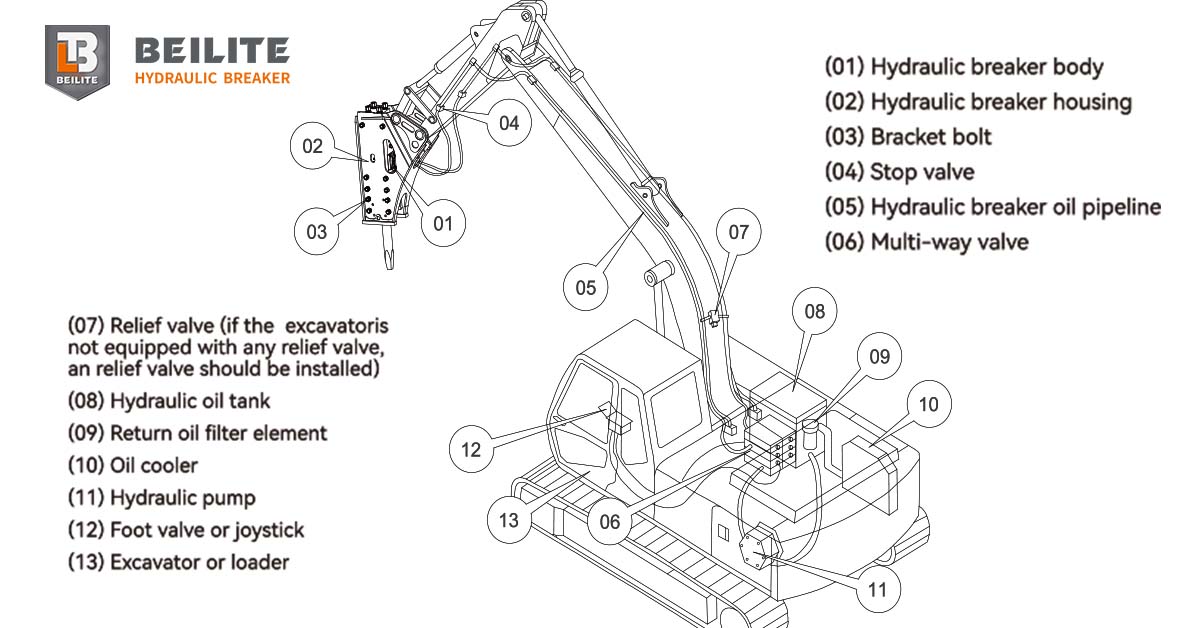
1. Insufficient Hydraulic Flow or Pressure
Problem
A hydraulic breaker depends on the excavator’s hydraulic system to provide the correct oil flow and working pressure. If the flow rate or pressure is too low, the piston cannot move with enough energy, resulting in weak impacts.
Possible Causes
- Excavator hydraulic pump wear
- Incorrect breaker flow adjustment
- Blocked hydraulic lines
- Hydraulic valve malfunction
- Incorrect breaker size for the excavator
Solution
Check the excavator hydraulic system using a flow meter and pressure gauge. Confirm that:
- Hydraulic flow matches the breaker specifications
- Working pressure is within the recommended range
- Hydraulic hoses and valves are not restricted
Proper matching between excavator size and hydraulic breaker capacity is essential for maximum performance.
2. Incorrect Hydraulic Breaker Installation
Problem
A hydraulic breaker installed incorrectly may not receive stable hydraulic power, causing reduced impact efficiency.
Possible Causes
- Incorrect inlet and outlet hose connection
- Wrong hose diameter
- Loose hydraulic fittings
- Contaminated hydraulic connections
Solution
Inspect all hydraulic connections and ensure:
- Hoses are correctly connected
- Hose diameter meets manufacturer requirements
- Fittings are properly tightened
- Hydraulic oil contamination is avoided
3. Low Hydraulic Oil Quality or Contamination
Problem
Dirty or degraded hydraulic oil can reduce breaker efficiency and damage internal components.
Possible Causes
- Hydraulic oil not replaced regularly
- Water or dust contamination
- Blocked hydraulic filters
- Excessive oil temperature
Solution
Perform regular hydraulic system maintenance:
- Replace hydraulic filters according to service intervals
- Use the recommended hydraulic oil grade
- Check oil cleanliness regularly
- Remove contaminants from the hydraulic system
Clean hydraulic oil improves breaker response and extends service life.
4. Worn or Damaged Internal Components
Problem
After long-term operation, internal breaker components may wear, reducing impact energy.
Common worn parts include:
- Piston
- Cylinder
- Front head bush
- Tool retaining components
- Segel
Solution
Inspect the hydraulic breaker regularly. Replace worn parts when necessary and maintain correct lubrication to prevent excessive friction and heat generation.
5. Insufficient Grease or Incorrect Lubrication
Problem
The breaker tool requires proper lubrication to reduce friction between the chisel and front head bushing. Poor lubrication can cause overheating, abnormal wear, and reduced performance.
Solution
Apply high-quality breaker grease regularly according to operating conditions.
Recommended practice:
- Grease before operation
- Grease frequently during continuous work
- Use grease designed for high-temperature impact applications
6. Incorrect Operating Method
Problem
Operator habits can significantly affect breaker performance.
Common mistakes:
- Using the breaker at an incorrect angle
- Applying excessive excavator pressure
- Operating without sufficient downward force
- Breaking oversized materials continuously
Solution
Follow proper operating techniques:
- Keep the breaker vertical to the working surface
- Apply stable downward pressure
- Avoid side loading
- Allow the breaker to work through impact energy rather than excavator force
7. Nitrogen Gas Pressure Is Incorrect
Problem
Hydraulic breakers use nitrogen gas in the upper chamber to increase impact energy. Incorrect nitrogen pressure can reduce striking performance.
Gejala:
- Weak impact
- Slow recovery after each strike
- Breaker stops suddenly
Solution
Check nitrogen pressure according to the breaker manufacturer’s specifications. Too high or too low pressure can affect piston movement and impact efficiency.

Quick Troubleshooting Checklist
| Problem | Kemungkinan Penyebab | Solution |
|---|---|---|
| Kekuatan benturan yang lemah | Low hydraulic pressure | Check excavator hydraulic system |
| Slow striking speed | Insufficient oil flow | Adjust flow rate |
| Breaker stops working | Valve or seal damage | Inspect internal parts |
| Terlalu panas | Poor lubrication or contaminated oil | Maintain oil and grease regularly |
| Reduced performance after long use | Component wear | Replace damaged parts |
How to Prevent Hydraulic Breaker Power Loss?
To maintain consistent breaker performance:
✓ Select the correct breaker size for your excavator
✓ Maintain proper hydraulic oil cleanliness
✓ Inspect hoses and fittings regularly
✓ Lubricate the tool correctly
✓ Check nitrogen pressure periodically
✓ Train operators on correct working techniques
✓ Perform preventive maintenance before failures occur
Kesimpulan
A hydraulic breaker losing power is usually caused by problems with hydraulic flow, pressure, lubrication, component wear, or operating methods. Identifying the correct cause early can prevent expensive repairs, reduce downtime, and improve productivity.
Regular inspection, proper maintenance, and correct operation are the keys to keeping a hydraulic breaker operating at maximum impact performance.
Kontak Resmi Beilite:
Beilite Machinery Co, Ltd.
40008-40008
info@beilite.com