 English
 Indonesian

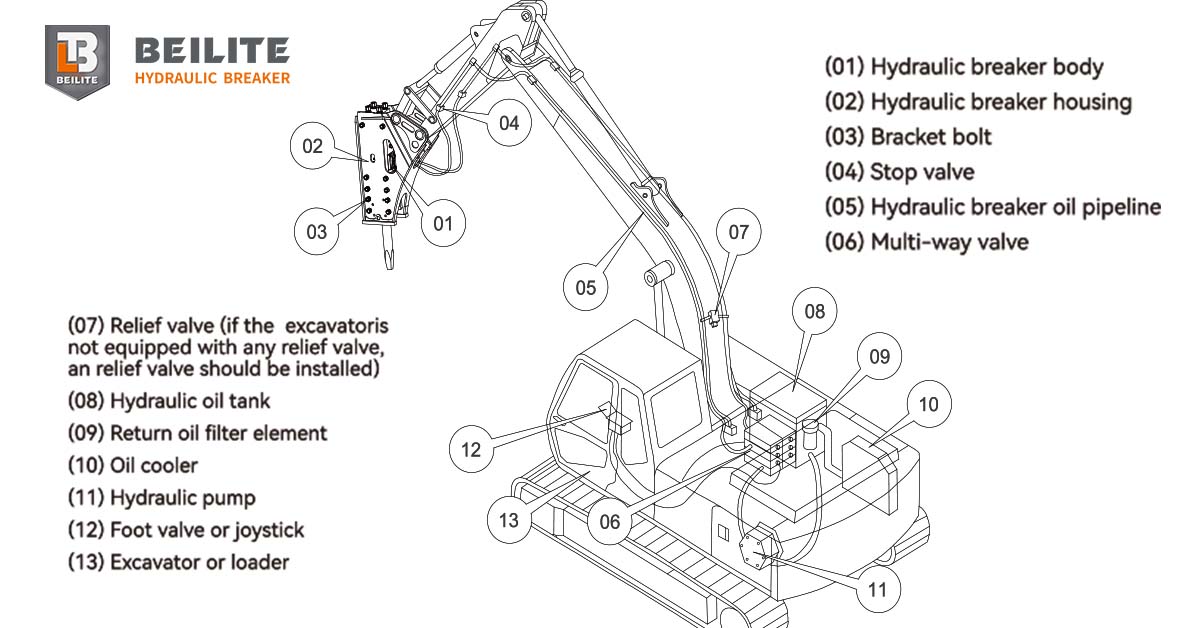
Hydraulic breakers are essential attachments for excavators, backhoe loaders, wheel loaders, and mini excavators. These excavators attachments are used for quarrying, road construction, demolition, mining, and foundation excavation. Furthermore, they rely on one critical power source and performance: the hydraulic oil flow and pressure generated by the machine’s pump station. Understanding this power source and how to maintain it properly in case of troubleshooting is vital to maximize hydraulic breaker efficiency while protecting your machine from costly damage.
This guide explains how hydraulic breakers are powered, common risks to excavators, and the best practices every contractor and operator must follow to keep equipment running safely and efficiently.
Hydraulic breakers operate through a high-speed reciprocal impact mechanism driven by hydraulic oil pressure. When mounted on an excavator, backhoe or skid loader, the hydraulic hammer breaker uses the host machine’s pump to generate the force needed to break rocks, concrete, and hard soil.
How Do Hydraulic Breakers Generate Power?
The hydraulic system provides the following:
Pressurized oil flow to drive the piston
Rapid oil return flow, creating fast hammering cycles
Impact energy transfers to the chisel to break material
Because these cycles run at extremely high frequency, the oil return is fast and pulses are strong. Over time, this leads to :
- Accelerated hydraulic oil degradation
- Excessive heat buildup
- Premature aging of hoses and seals
- Potential damage to the excavator’s hydraulic pump
For buyers and operators, this means correct usage and maintenance rock breakers are essential to prevent equipment failure.
How to Use a Hydraulic Breaker Without Damaging the Host Excavator?
Below are the most important practices to ensure long service life for both the hydraulic breaker and host machine.
1. Maintain The Appropriate Engine Speed of Hydraulic Breakers
A hydraulic breaker does not require high engine throttle. In fact:
- It works most efficiently at medium throttle
- Increase throttle does NOT increase impact power
- High throttle leads to abnormal oil heating, reduces oil life
- Excess heat severely damages the hydraulic system
Additionally, striking at an angle cause:
- Piston misalignment
- Chisel bending or breakage
- Internal component wear
The following formula can helps life of hydraulic breaker in long term: Correct throttle + correct posture = maximum hydraulic breaker lifespan.
2. Replace Oil Seals on Time
Oil seals are wear components that must be replaced regularly.
Recommended interval:
From first usage to every 5 operating hours, and after every 10 to 50 operating hours. Its depending on usage intensity.
If an oil seal becomes worn or begins leaking immediately check or replace seal kits accordingly:
- Stop operation immediately
- Replace the seal kits before dust enters the hydraulic chamber
- Contaminants can damage the hydraulic pump and main control valve
Operators should refer to the maintenance manual and follow daily inspection procedures.
3. Keep Hydraulic Pipelines Clean
Cleanliness is one of the most important factors of the hydraulic hammer performance.
When installing or servicing hydraulic breaker pipelines:
- Clean all hoses thoroughly
- Ensure no dust, metal particles, or residues remain
- Connect lines properly to the inlet and return circuits
Contaminated hoses directly introduce dirt into the hydraulic system, accelerating pump wear.
4. Apply Lubricating Grease Correctly
Proper lubrication prevents tool and bushing wear. However, incorrect grease application can be harmful.
Avoid applying grease when the tool is suspended. This can force grease into the impact chamber, leading to:
- Abnormally high pressure
- Oil contamination
- Hydraulic pump damage
Follow these three rules:
- Correct posture
- Correct frequency
- Correct quantity
Use high-quality rock breaker grease designed for extreme pressure and heat.
5. Choose a High-Quality Hydraulic Breaker
The quality of the rock breaker itself directly affects the lifespan of the excavator.
Low-quality hydraulic breakers often have:
- Poor machining accuracy
- Weak structural components
- Inconsistent piston alignment
- Higher failure rates
These faults can transmit additional vibration to the host machine and result in pump failure, cracked pipes, or damaged brackets.
Contractors should invest in reliable, well-engineered hydraulic breakers with proven safety and quality certifications.
6. Monitor Hydraulic Oil Level and Contamination
Hydraulic oil contamination is one of the leading causes of pump failure.
Common problems caused by dirty or low oil:
- Cavitation
- Piston cylinder scarring
- Abnormal noise
- Pump overheating
Operator must checklist all hydraulic hammer maintenance necessaries :
- Check hydraulic oil level every day before operation
- Replace oil and filters according to manufacturer recommendations
- Test oil for contamination during regular maintenance intervals
Proper hydraulic oil care dramatically increases both pump and rock breaker longevity.
Why Proper Hydraulic Breaker Operation Matters
Hydraulic breakers and excavators are designed to work together. When used correctly:
- Excavator Breaker efficiency increases
- Excavator hydraulic systems remain healthy
- Operating costs decrease
- Downtime and major repairs are avoided
When operator and buyer use hydraulic breakers incorrectly. However, these usages can quickly lead to:
- Pump failure
- Excess heat damage
- Premature seal wear
- Tool breakage
- Unexpected downtime on job sites
For contractors relying on productivity and for operators responsible for equipment health, proper rock breaker handling is critical.
Protect Your Excavator by Using the Hydraulic Breaker Correctly
Hydraulic breakers deliver powerful performance, but they also demand careful operation. By maintaining the correct engine speed, replacing seals regularly, keeping pipelines clean, applying grease properly, monitoring hydraulic oil, and choosing quality equipment, you ensure:
- Longer excavator life
- More efficient breaking force
- Lower maintenance cost
- Safer operation
If you need guidance on selecting a breaker, maintaining your current equipment, or troubleshooting hydraulic issues, our technical team is ready to assist. The right knowledge and the right breaker make all the difference on the job site.
Beilite Machinery Co., Ltd.
40008-40008
info@beilite.com