 English
 Indonesian
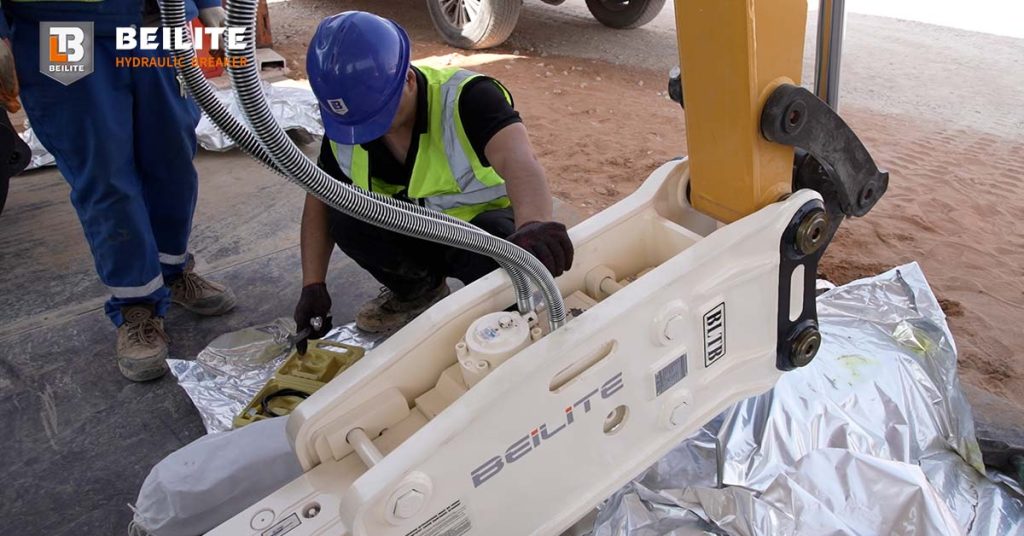
In the world of construction and demolition, hydraulic breakers are essential tools that allow operators to efficiently break hard materials like concrete, rock, and asphalt. Whether you are working on road construction, mining, or infrastructure projects, understanding how hydraulic breakers work and the different types available can help you choose the right tool for your needs. In this blog, we’ll explain what hydraulic breakers are, how they function, and the different types available.
What is a Hydraulic Breaker?
A hydraulic breaker (also known as a hydraulic hammer) is a heavy-duty attachment used on construction and mining equipment like excavators, backhoe loaders, and skid-steer loaders. It is powered by a hydraulic system and utilizes the energy created by the machine’s hydraulic pump to break tough materials. Hydraulic breakers are commonly used in demolition, mining, roadwork, and construction for tasks such as breaking concrete, asphalt, and hard rock.
How Does a Hydraulic Breaker Work?
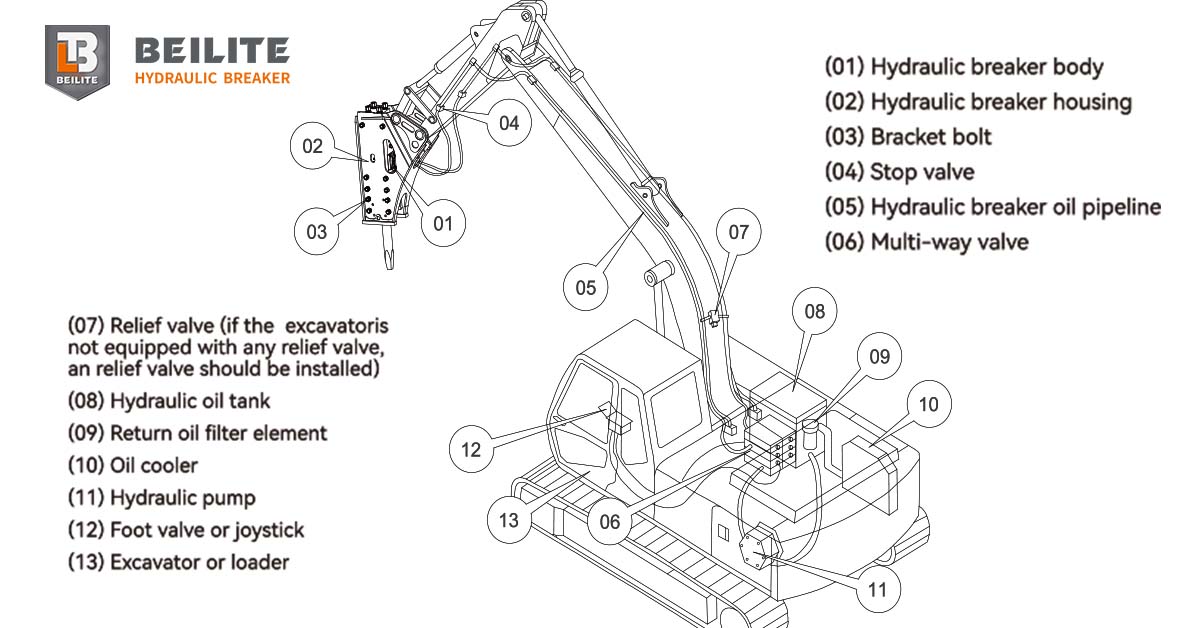
A hydraulic breaker works by transferring hydraulic energy into mechanical force. Here’s a step-by-step breakdown of how it functions:
1. Hydraulic Power Generation
The machine’s hydraulic pump powers the breaker’s piston, which is housed within the breaker’s body. The flow and pressure of the hydraulic fluid are controlled by the operator and are essential to the breaker’s performance.
2. Hydraulic Breaker Piston Movement
The hydraulic fluid is used to move a large piston back and forth. As the piston moves, it compresses and releases energy.
3. Breaker Impact Force
When the piston reaches its maximum compression, it delivers a forceful impact onto the tool attached to the breaker (e.g., a chisel or moil point). This sudden energy release breaks apart the material that the tool is in contact with.
4. Repetitive Action
The hydraulic breaker continuously cycles this process of impact, allowing the tool to break through concrete, rock, or asphalt with repetitive blows.
Types of Hydraulic Breakers
There are several types of hydraulic breakers, each designed for specific applications and varying in power. The main types include:
1. Standard Hydraulic Breakers
These are the most commonly used type of hydraulic breaker and are suitable for medium-duty applications such as breaking concrete, asphalt, or light rock. They are typically used for road construction, demolition, and utility work.
2. Heavy-Duty Hydraulic Breakers
Heavy-duty breakers are designed for tougher applications, including breaking hard rock and reinforced concrete. These breakers are often used in mining, quarrying, and large-scale infrastructure projects where high impact force is required.
3. Silent Hydraulic Breakers
Silent breakers, also known as box-type breakers, are designed for urban environments or construction sites where noise pollution is a concern. These breakers work more quietly than traditional models while maintaining high power and efficiency. They are often used in cities for building demolition or utility work near populated areas.
4. Low-Height Hydraulic Breakers
Low-height breakers are compact and lightweight, designed for applications where space is limited, such as in underground construction or interior demolition. These breakers can fit into tighter spaces and are ideal for smaller machinery.
Applications of Hydraulic Breakers
Hydraulic breakers are versatile tools that are used in a variety of industries for different tasks, including:
1. Construction and Demolition
Hydraulic breakers are commonly used for demolishing buildings, breaking concrete foundations, and removing road surfaces. Their high impact force allows operators to break through tough materials quickly and efficiently.
2. Mining and Quarrying
In mining, hydraulic breakers are used to break large rocks into smaller, more manageable pieces. They are often used in open-pit mining and quarrying operations to reduce large boulders into smaller rocks that can be processed further.
3. Roadwork
During road repairs or resurfacing projects, hydraulic breakers are used to break up old pavement, remove concrete roadbeds, and prepare the ground for new construction.
4. Utility Work
Hydraulic breakers are also commonly used for tasks such as digging trenches for utilities, breaking up asphalt to access pipes, and general utility work.
Benefits of Using Hydraulic Breakers
1. Efficiency
Hydraulic breakers offer high impact energy, making it easier and faster to break through tough materials. The ability to operate with precision means that less time is spent on each task.
2. Versatility
Hydraulic breakers can be used in a variety of applications, from demolition to mining, making them versatile and adaptable to different jobs.
3. Powerful Performance
The hydraulic energy used by the breaker allows it to deliver powerful blows that can break through concrete, rock, and asphalt with ease, reducing the need for additional machinery or blasting.
4. Cost-Effective
By improving productivity and reducing downtime, hydraulic breakers can help contractors complete projects on time and within budget, making them a cost-effective solution for heavy-duty tasks.
Summary
Hydraulic breakers are indispensable tools in the construction, mining, and demolition industries. Their ability to break through tough materials like concrete, asphalt, and rock with minimal effort makes them essential for improving efficiency and productivity. Whether you’re working on a small demolition project or a large mining operation, the right hydraulic breaker can significantly enhance your operations.
Understanding how hydraulic breakers work, the different types available, and their applications will help you select the best breaker for your specific needs. With the right equipment, you can maximize your performance, minimize downtime, and ensure the success of your projects.
Keywords:
Hydraulic breaker, types of hydraulic breakers, construction and demolition tools
FAQs
1. How much impact energy do hydraulic breakers provide?
Hydraulic breakers can provide impact energy ranging from a few thousand joules to over 20,000 joules depending on the size and model. Higher impact energy is required for breaking harder materials.
2. What maintenance does a hydraulic breaker require?
Routine maintenance includes checking hydraulic fluid levels, inspecting seals, and ensuring that the breaker’s tool (chisel or moil) is in good condition. Regular inspections help extend the breaker’s lifespan.
3. Can a hydraulic breaker be used for both demolition and mining?
Yes, hydraulic breakers are versatile and can be used in both demolition and mining. However, the type of breaker you choose depends on the material you need to break. For heavy-duty tasks like mining, a high-impact breaker is needed, while lighter models are sufficient for demolition work.
Beilite Machinery Co., Ltd.
40008-40008
info@beilite.com