 English
 Indonesian
Operating a hydraulic breaker like the Beilite hammer rock breaker is powerful, efficient, and highly effective for demolition, quarrying, mining, and construction work. However, with that power comes serious responsibility. Proper safety knowledge is not just a guideline — it is essential for protecting operators, equipment, and job sites. This complete safety guide explains the key hydraulic breaker safety specifications every operator should know before starting work.
Understanding Safety Symbols in Hydraulic Breaker Manuals
Before using any Beilite hydraulic breaker, you must understand the safety symbols used in the manual:
Danger: Indicates high-risk situations that can cause death or serious injury if ignored.
Warning: Signals unsafe practices that may cause injury or serious equipment damage.
Attention: Highlights actions that can shorten equipment service life or reduce performance.
These symbols are designed to help operators quickly identify critical risks and take immediate preventive action.
High-Pressure Nitrogen Gas of Hammer Breaker: Critical Safety Awareness
A modern hydraulic hammer rock breaker uses high-pressure nitrogen gas inside the accumulator and back head. This stored energy is extremely dangerous if handled improperly.
Key safety rules include:
- Only nitrogen gas must be used. Using other gases can cause explosion, fire, or fatal injury.
- Never weld, drill, cut, or heat the accumulator or back head.
- Always fully release nitrogen gas pressure before disassembling the accumulator, front head, cylinder, or back head.
- Repairs to these components should be handled only by Beilite-authorized technicians or agents.
Ignoring these rules can lead to catastrophic equipment failure and serious injury or death.
Safe Operation After Working
After using a hydraulic rock breaker attachment, several hidden dangers remain:
The chisel becomes extremely hot after operation and can cause severe burns. Never touch it immediately after use.
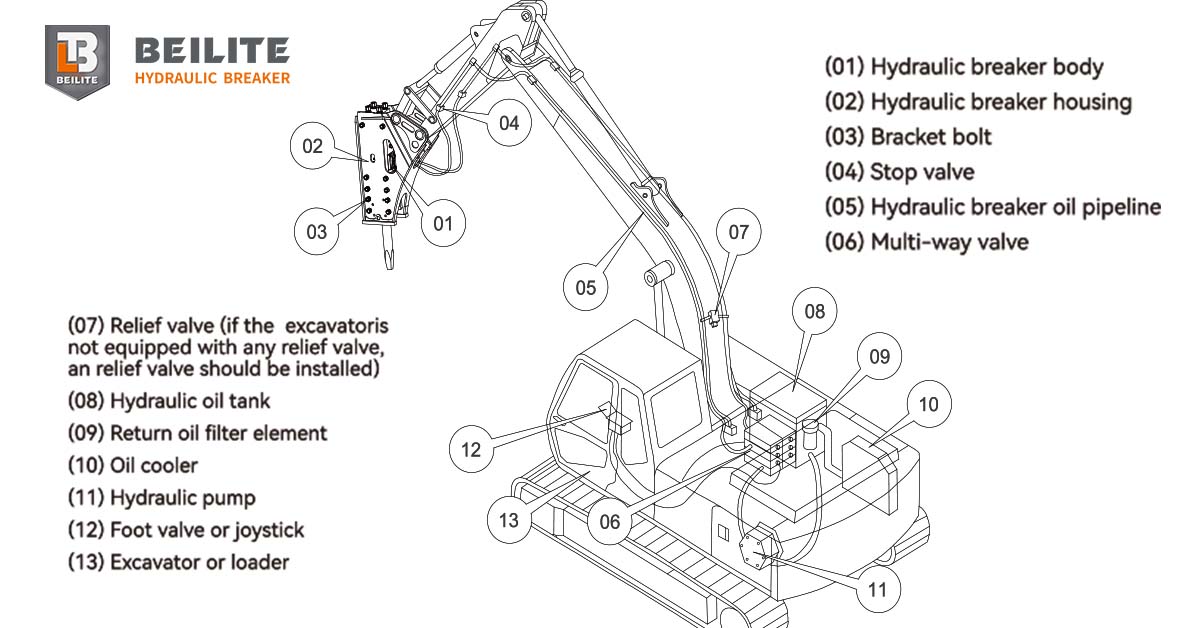
Hydraulic oil inside the pipes may remain under high pressure even after the machine stops. Always shut down the excavator and wait until pressure is fully released before loosening any hoses.
Additionally, standard hydraulic breakers are not designed for underwater operation. If underwater work is required, a specially modified breaker must be used.
Safe Hydraulic Hose Connection and Startup
Correct hose and pipeline management is essential for hydraulic breaker safety and system longevity:
- Prevent dust, sand, metal particles, and debris from entering the hydraulic oil pipes during installation.
- Always confirm that high-pressure and low-pressure hoses are connected correctly.
- Ensure the oil pipe length near the stop valve is appropriate to avoid excessive vibration and hose failure.
- Use intermittent starting of the breaker to remove trapped air from the hydraulic system.
These simple steps greatly reduce the risk of hydraulic system failure and unexpected breakdowns.
Operator Training and Personal Protective Equipment (PPE)
Only qualified and trained personnel should operate, repair, or maintain a Beilite hammer rock breaker. Safety training is not optional — it is mandatory.
Every operator must wear proper personal protective equipment (PPE), including:
- Safety helmet
- Safety glasses or face shield
- Safety shoes
- Glove
- Dust mask or respirator
This protective gear reduces the risk of injuries from flying debris, falling material, excessive noise, and hydraulic oil exposure.
Safe Working Environment and Team Coordination
Hydraulic breaker operations should always be carried out in a flat, stable, and spacious work area. Good site preparation protects both machines and people.
When multiple workers are involved:
- Use agreed signal language, hand signals, or verbal commands
- Maintain clear communication at all times
- Assign a spotter when operating in congested areas
Before starting the breaker, operators should make sure that no one is standing in the danger zone and that loose debris will not fly toward the cab. Installing protective guards around the operator cabin further improves safety in demolition and quarry environments.
Why These Hydraulic Hammer Breaker Safety Specifications Matter?
Following these Beilite hydraulic breaker safety specifications does more than prevent accidents:
- Extends equipment service life
- Reduces costly downtime
- Improves job site efficiency
- Protects workers and surrounding personnel
A well-maintained, safely operated hydraulic hammer delivers maximum performance with minimal risk, which is essential in construction, mining, demolition, and infrastructure projects.
Summary
The Beilite hammer rock breaker is a powerful and reliable tool, but only when used correctly. Understanding high-pressure nitrogen safety, proper hose connection, operator training, and safe working procedures is the foundation of accident-free operation.
By following these essential hydraulic breaker safety guidelines, operators can work confidently, protect their teams, and maintain long-term equipment performance.
FAQs
1. What gas should be used in a hydraulic breaker accumulator?
Only nitrogen gas should be used. Other gases can cause explosion, fire, or serious injury due to unstable pressure and chemical reactions.
2. Why shouldn’t I touch the chisel after using a hydraulic breaker?
The chisel becomes extremely hot after operation and can cause severe burns. Always allow it to cool before handling.
3. Can a standard hydraulic breaker be used underwater?
No. Standard hydraulic breakers are not designed for underwater use. Special underwater conversion kits are required to prevent water damage and system failure.
4. Why is training important before operating a hydraulic breaker?
Proper training ensures operators understand safety risks, correct operating procedures, and emergency response, helping to prevent accidents and equipment damage.
Beilite Machinery Co., Ltd.
40008-40008
info@beilite.com
+6282321982255