 English
 Indonesian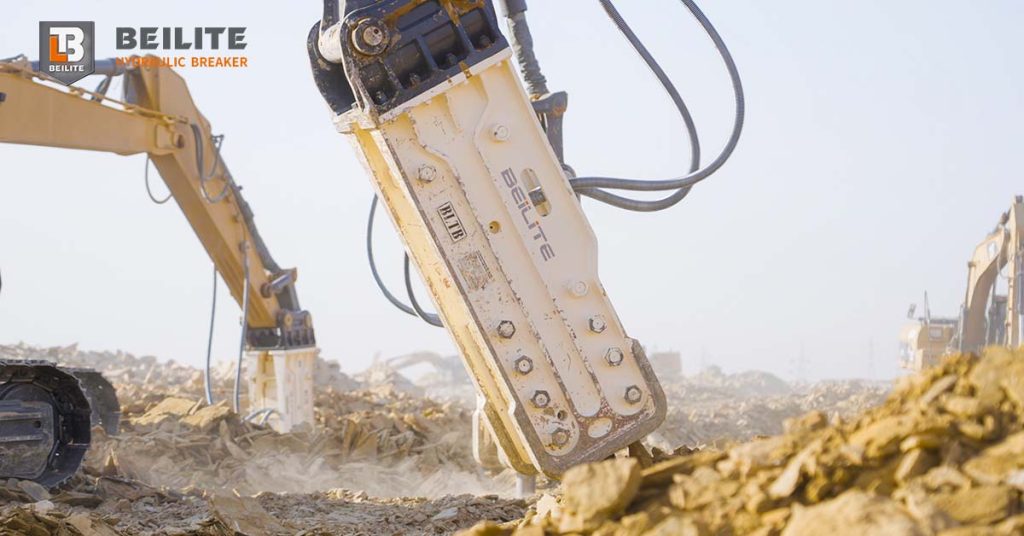
Across Indonesia, construction and infrastructure development continue to expand rapidly. New highways, housing developments, ports, and mining projects require heavy equipment that can operate efficiently in challenging ground conditions. Excavators are the backbone of these operations, but many contractors quickly discover that an excavator alone cannot solve every jobsite challenge.
When projects encounter hard rock layers, compacted soil, or reinforced concrete, productivity can slow dramatically. In these situations, hydraulic breakers become one of the most important attachments contractors can use. Choosing the right hydraulic breaker for an excavator can significantly improve productivity, reduce machine wear, and keep projects on schedule.
This guide explains the practical factors Indonesian operators should consider when selecting a hydraulic breaker for their excavators.
Why Hydraulic Breakers Are Common on Indonesian Job Sites?
Indonesia’s terrain is diverse. Many regions contain volcanic rock, compacted clay, and limestone formations that are difficult to remove with standard excavation tools. When an excavator bucket tries to dig into these materials, operators often face several issues:
- Slow digging progress
- Excessive wear on bucket teeth
- Higher fuel consumption
- Increased stress on the excavator arm
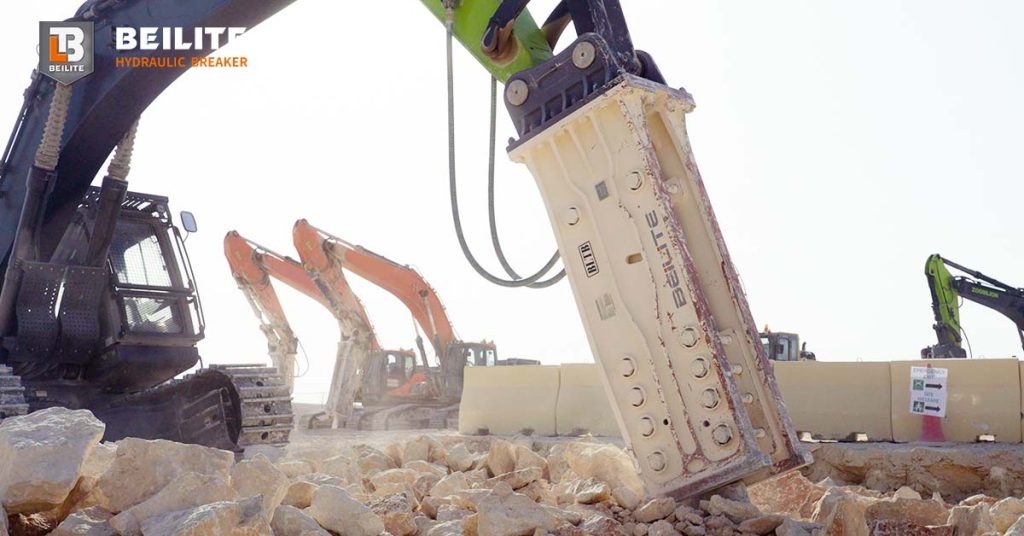
Hydraulic breakers solve this problem by delivering repeated high-impact energy that fractures rock or concrete. Once the material is broken into smaller pieces, the excavator bucket can easily remove it.
Because of this, hydraulic breakers are widely used for:
- Road construction and pavement removal
- Quarry and mining operations
- Demolition of buildings and structures
- Foundation excavation
- Utility trenching
In many Indonesian projects, a hydraulic breaker can reduce excavation time dramatically, especially when working in rocky ground.
Match Your Hydraulic Breaker to the Excavator
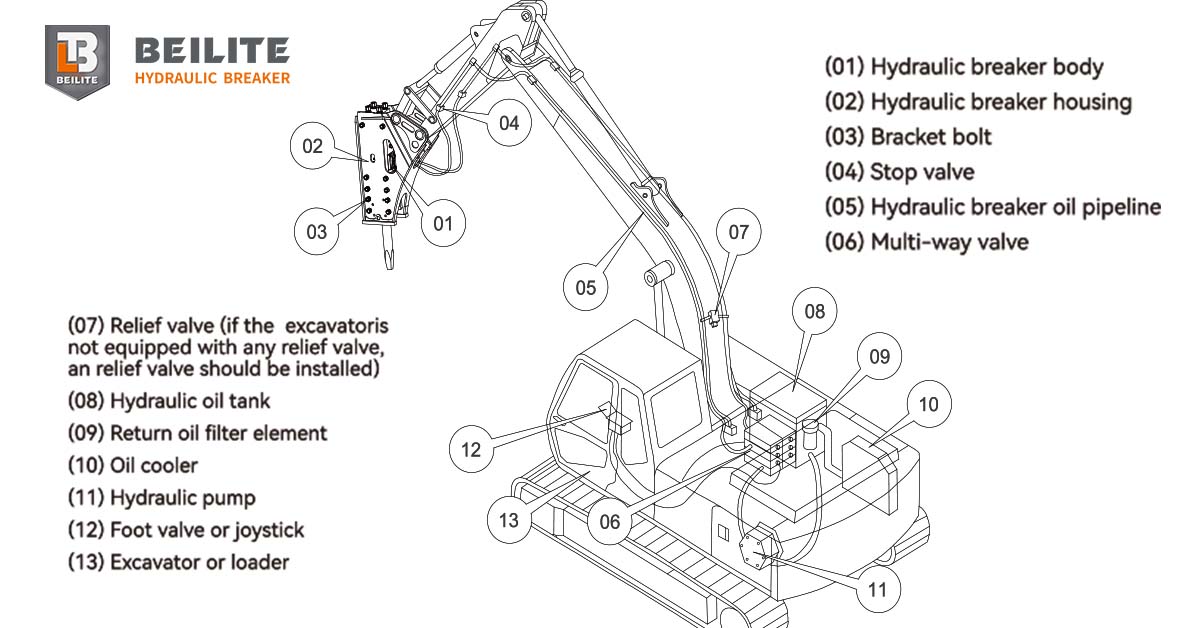
One of the most common mistakes contractors make is choosing a hydraulic breaker that does not match the excavator size. If the breaker is too small, it will struggle to break hard rock. If it is too large, it can damage the excavator or reduce stability.
A properly matched breaker ensures the excavator operates safely and efficiently.
Typical matching examples include:
Table of Excavator Breaker Match with Excavators
| Excavator Weight | Typical Breaker Size | Common Applications |
| 6–10 tons | Small breakers | Urban construction, trenching |
| 12–45 tons | Medium breakers | Roadwork, demolition |
| 45–100 tons | Large breakers | Quarrying, mining |
| 350+ tons | Heavy-duty breakers | Large rock excavation |
For many infrastructure and quarrying projects in Southeast Asia, medium-sized breakers tend to be the most commonly used because they offer a good balance between power and machine compatibility.
Jobsite Conditions Matter
Choosing a hydraulic breaker is not just about machine size. Contractors also need to consider jobsite conditions.
Several factors influence breaker selection:
1. Rock Hardness
Hard volcanic rock requires a breaker with higher impact energy, while softer materials like asphalt or compacted soil require less power.
2. Work Environment
Urban projects often require low-noise breakers, especially near residential areas.
3. Working Space
In tight construction areas, a compact breaker design can make operation easier.
4. Machine Hydraulics
The breaker must match the excavator’s hydraulic flow and pressure specifications to avoid performance problems.
Ignoring these factors can result in poor performance or unnecessary maintenance costs.
Maintenance: The Key to Long-Term Performance
Even the best hydraulic breaker will not perform well without proper maintenance. Many contractors underestimate how important daily inspection and lubrication are.
Experienced operators follow several simple practices:
- Grease the tool regularly to reduce friction and wear
- Check hydraulic hoses for leaks or damage
- Inspect bushings and pins for excessive wear
- Avoid blank firing, which can damage internal components
Routine maintenance not only extends the life of the breaker but also reduces unexpected downtime on the job site.
Improve Efficiency with the Right Excavator Equipment
In modern construction, productivity is often determined by equipment flexibility. Excavators that can switch between buckets, breakers, and other attachments allow contractors to handle different tasks without bringing additional machines to the site.
For example, a typical workflow may look like this:
- Use the hydraulic breaker to break rock or concrete.
- Switch to the excavator bucket to remove the debris.
- Load broken material into trucks for transport.
This combination allows crews to maintain a steady workflow while minimizing delays.
Summary
Indonesia’s construction industry presents unique challenges for equipment operators. Hard rock layers, dense soil, and demanding infrastructure projects require tools that can handle tough conditions.
Hydraulic breakers provide an effective solution when excavators encounter materials that are too difficult to dig. By selecting the right breaker size, considering jobsite conditions, and maintaining equipment properly, contractors can significantly improve productivity and reduce machine wear.
For many Indonesian operators, investing in the right hydraulic breaker is not just about adding another attachment—it’s about ensuring that excavation work continues efficiently, even when the ground becomes difficult.
FAQs
1. How do I know if my excavator needs a hydraulic breaker?
If your excavator struggles to dig through rock, reinforced concrete, or compacted ground, a hydraulic breaker is usually the best solution. It breaks hard materials into smaller pieces so the excavator bucket can remove them easily.
2. What is the most common mistake when using a hydraulic breaker?
One of the most common mistakes is using the breaker as a prying tool. Hydraulic breakers are designed to apply vertical impact force, not side pressure. Using them incorrectly can cause premature wear or damage.
Beilite Machinery Co., Ltd.
40008-40008
info@beilite.com