 English
 Indonesian
Modern construction, mining, and infrastructure projects rarely take place under ideal conditions. From frozen ground in cold regions to underwater excavation and extreme heat in mining sites, contractors increasingly rely on excavator rock breakers that can perform reliably in complex and harsh environments.
This article explores how hydraulic rock breakers are used across challenging conditions, what technical features matter most, and how selecting the right breaker can dramatically improve safety, productivity, and equipment lifespan.
What Is an Excavator Rock Breaker?
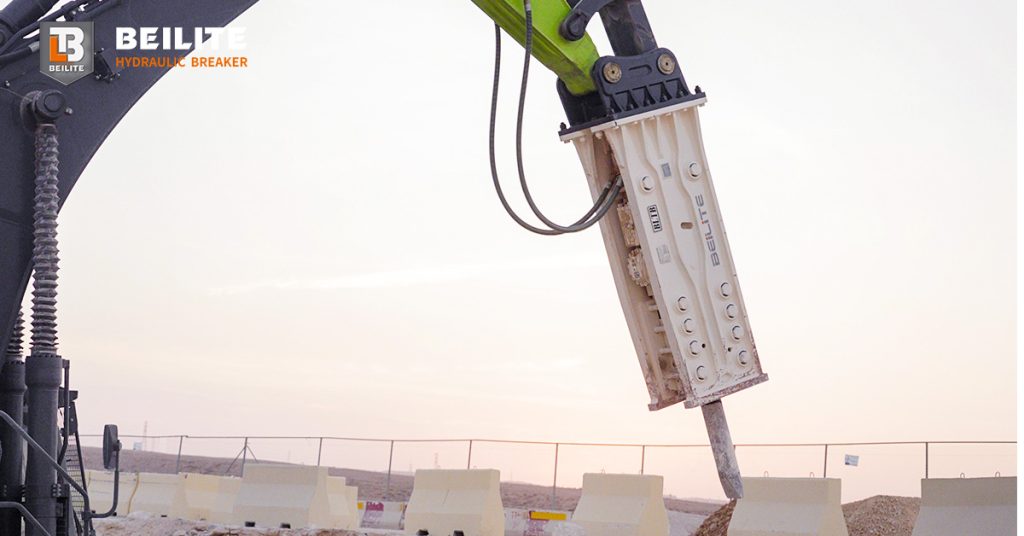
An excavator rock breaker, also known as a hydraulic breaker or rock hammer, is a powerful attachment designed to fracture hard materials such as rock, reinforced concrete, asphalt, and frozen soil. It converts hydraulic energy into high-impact force delivered through a chisel or moil point.
Rock breakers are essential in environments where blasting is unsafe, restricted, or inefficient.
Challenges of Complex Working Environments
Extreme environments place additional stress on both the excavator and the hydraulic breaker. Without the right design and materials, performance drops quickly and maintenance costs rise.
Key environmental challenges include:
- Extreme temperatures (hot or frozen conditions)
- High moisture or underwater operations
- Abrasive rocky terrain
- Confined or unstable working zones
A reliable rock breaker must be engineered to withstand all of these conditions.
Rock Breakers for Frozen and Cold Environments
In frozen ground and permafrost regions, standard excavation tools struggle to penetrate hardened soil and ice-bound rock.
Key requirements for cold environments:
- High-impact energy to fracture frozen material
- Seal kits and hydraulic components resistant to low temperatures
- Steel alloys with strong cold-impact toughness
Hydraulic rock breakers are widely used in:
- Cold-region infrastructure projects
- Winter road construction
- Foundation excavation in frozen soil
Proper lubrication and cold-resistant hydraulic oil are essential to maintain consistent breaker performance in sub-zero conditions.
Rock Breakers for Hot and High-Temperature Sites
In mining and quarry operations, extreme heat can accelerate component wear and hydraulic degradation.
Effective rock breakers for hot environments offer:
- Heat-treated pistons and cylinders
- High-quality seals resistant to thermal expansion
- Stable hydraulic efficiency during continuous operation
Rock Breakers Applications include:
- Open-pit mining
- Quarry rock breaking
- High-temperature demolition zones
Durability and thermal stability are critical for maintaining long working cycles without failure.
Underwater Rock Breaking Applications
Underwater excavation presents unique technical challenges, including pressure, corrosion, and limited visibility.
Rock breakers used underwater must feature:
- Fully sealed hydraulic systems
- Anti-corrosion surface treatments
- Stable impact performance under water resistance
Underwater rock breakers are commonly used for:
- Bridge foundation construction
- Port and harbor development
- Pipeline and underwater trenching projects
Hydraulic breakers are often preferred underwater because they eliminate the risks associated with underwater blasting.
Rocky and Abrasive Terrain Applications
Rocky environments place intense wear on chisels and internal components.
Important features for rocky terrain include:
- High-strength alloy steel chisels
- Optimized tool geometry for rock fracturing
- Reinforced housings to protect internal parts
Rock breakers excel in:
- Mountain excavation
- Secondary rock breaking
- Tunnel and slope stabilization projects
Correct tool selection (moil point, wedge, or blunt tool) plays a major role in performance and service life.
Choose the Right Rock Breaker for Complex Environments?
When selecting an excavator rock breaker for harsh conditions, consider the following:
- Environmental compatibility (temperature, water exposure, abrasiveness)
- Excavator matching (weight, hydraulic flow, pressure)
- Material quality and sealing technology
- Ease of maintenance and parts availability
A well-matched breaker improves productivity while reducing excavator stress and downtime.
Why Professional Contractors Use Advanced Hydraulic Rock Breakers?
Modern hydraulic rock breakers are designed not only for power, but for control, durability, and adaptability. Advanced designs minimize vibration, reduce internal wear, and maintain stable performance across varying conditions.
For contractors working in complex environments, investing in a reliable rock breaker results in:
- Higher safety standards
- Consistent breaking performance
- Lower long-term operating costs
Frequently Asked Questions (FAQs)
1. Can a hydraulic rock breaker be used underwater?
Yes. With proper sealing and corrosion-resistant design, hydraulic rock breakers are widely used for underwater excavation and foundation work.
2. How does extreme cold affect rock breaker performance?
Cold temperatures can reduce hydraulic efficiency if not properly managed. Using cold-resistant seals, oils, and materials ensures stable performance in frozen environments.
3. What chisel type is best for rocky terrain?
Moil points and wedge chisels are typically best for hard rock applications, as they concentrate impact energy and reduce tool wear.
Summary
From frozen ground to underwater construction and extreme heat, excavator rock breakers remain one of the most versatile and reliable solutions for complex environment applications. Selecting the right excavator breaker engineered for durability and environmental adaptability—ensures efficient operations, safer job sites, and long-term performance.
Beilite Machinery Co., Ltd.
40008-40008
info@beilite.com