 English
 Indonesian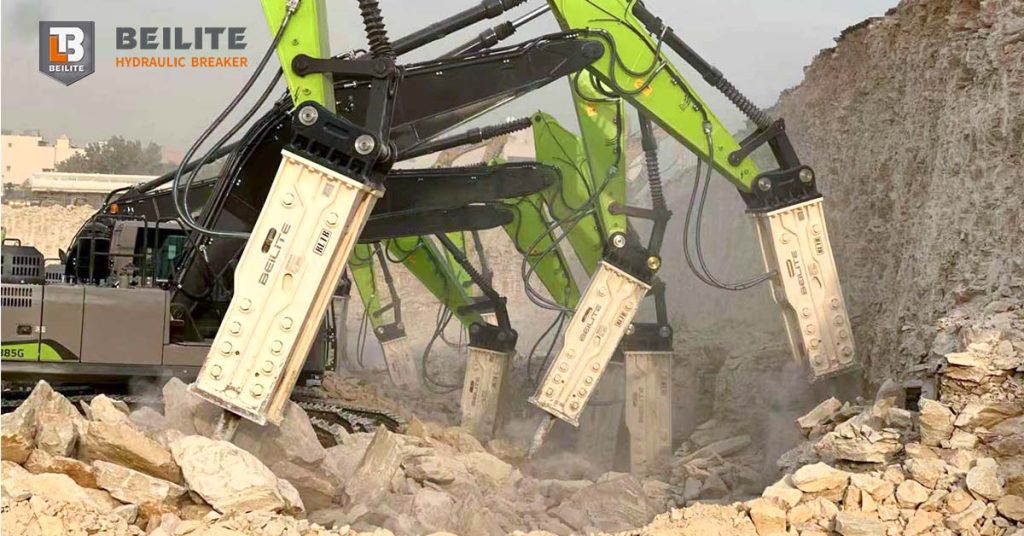
Buying the right hydraulic breaker for foundation breaking is not only a critical decision for contractors, equipment owners, and site managers but is an investment of millions of budgets. Foundation work often involves breaking hard concrete, compacted soil, and rock layers tasks that require a rock breaker with the right impact energy, durability, and hydraulic compatibility. To get the best value and performance, you need to understand key features, machine matching, and what factors influence long-term efficiency and reliability.
Hydraulic breakers, also known as hydraulic hammers, convert hydraulic power from a carrier machine (like an excavator, skid steer, or backhoe loader) into repeated impact force. This force breaks up rigid materials efficiently and reduces manual labor and time on site. Whether you are preparing a building site, laying utility lines, or renovating an industrial area, choosing the right breaker makes a significant difference in cost, productivity, and maintenance needs.
Ensure the Match of Hydraulic Breaker to Your Machine
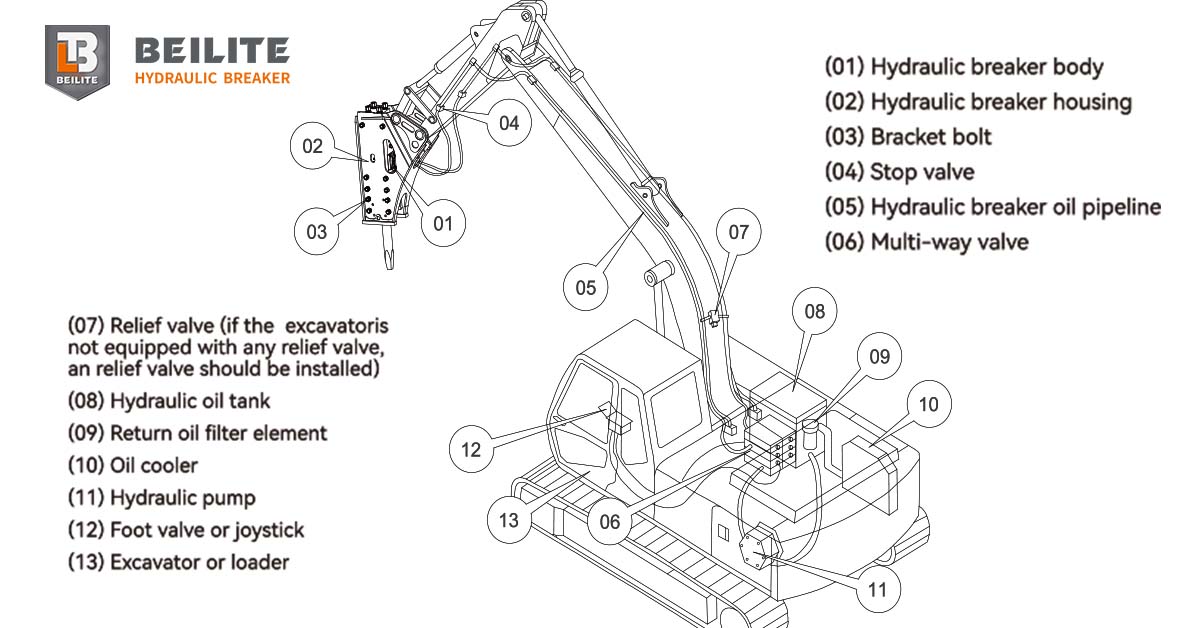
The first and most essential step is to make sure the hydraulic breaker is compatible with your carrier machine. Rock breakers are designed for specific hydraulic flow (L/min) and pressure (bar) ranges. If the rock breaker requires more flow than your machine can provide, the tool will underperform. If the breaker demands less flow, it can overload your machine’s hydraulic system and cause damage.
For foundation breaking, many contractors use medium to large excavators because of their superior hydraulic power and stability. However, smaller loaders and backhoes with auxiliary hydraulics can also be fitted with appropriately sized breakers for shallower or precision work. Always consult the breaker manufacturer’s compatibility chart or seek expert guidance when matching models.
Understand Hydraulic Breaker Performance Metrics
Several key specifications determine the severity and suitability of a breaker for foundation breaking:
Impact Energy – Measured in joules (J), this represents the force delivered with each blow. Higher energy breakers are better for breaking concrete and rock.
Blow Frequency – The number of strikes per minute (bpm). High frequency can speed up breaking in medium-hard materials.
Carrier Weight Compatibility – Ensuring that the breaker’s size matches the excavator’s operating weight range prevents stress on both the breaker and machine.
Hydraulic Hammers are designed with high impact energy and stable blow frequency are best for deep foundation work and very hard materials. For lighter foundation removal or precision work near structures, a breaker with moderate energy but high frequency may be more efficient.
Prioritize Durability and Build Quality of Your Projects
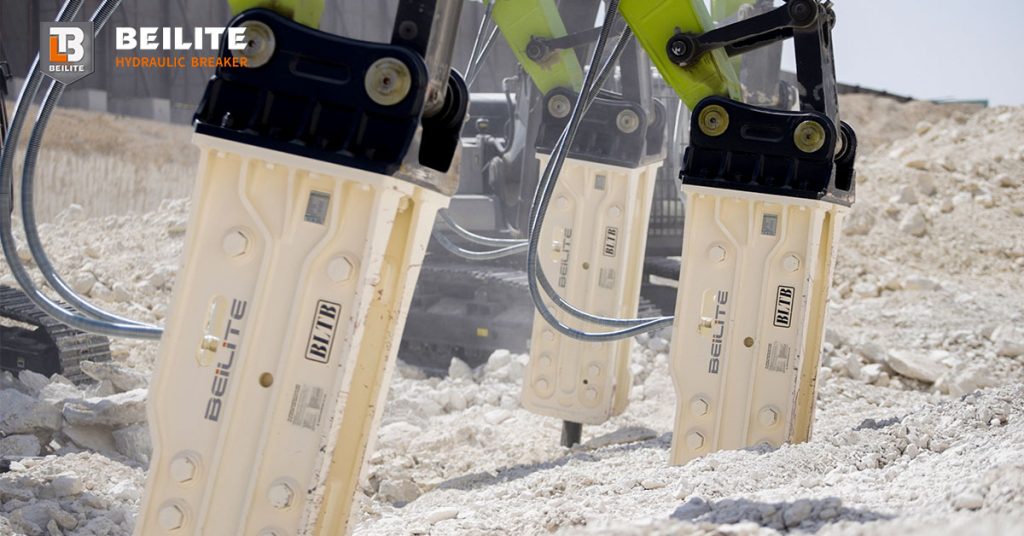
Foundation breaking is tough on excavation equipment. High-quality hydraulic breakers are built with wear-resistant materials, reinforced housings, and precision machined components. Features like advanced sealing systems and quality pistons help reduce wear and tear, extend service life, and minimize unplanned downtime.
It also helps to choose rock breakers with easily replaceable wear parts. Chisels, bushings, and retainers are consumables in any hydraulic breaker system, and having quickly accessible replacements reduces the total cost of ownership.
Evaluate Serviceability and Support
Buying a durable hydraulic breaker is only part of the equation. After-sales support and parts availability are vital. Reliable suppliers offer:
- Spare parts inventory
- Technical support
- Installation and maintenance guidance
- Training resources for operators
When your hydraulic breaker operates in demanding conditions, like breaking reinforced concrete or compact rock, access to fast support can keep your job moving and reduce costly delays.
Consider Operating Conditions
Foundation breaking does not always happen under ideal conditions. You may encounter:
- Moist or uneven ground
- High-temperature environments
- Urban sites with vibration limits
- Confined spaces
Choose a breaker that is designed for your specific environment. Some breakers have low vibration technology, which protects the excavator boom and operator comfort. Others are engineered for extreme temperatures or high-dust environments.
Review Warrant and Total Cost of Ownership
While lower-priced breakers may be tempting, they can cost more in the long run due to:
- Frequent repairs
- Higher maintenance
- Shorter lifespan
Warranty coverage is an important indicator of the manufacturer’s confidence in their product. Longer or more comprehensive warranties often translate into better product quality and lower operational risk. When evaluating cost, consider initial price + maintenance + parts + downtime — not just the purchase price.
Test and Demo When Possible
If possible, see a demo or test unit in action. Observing a breaker’s performance on similar material to your site conditions can provide practical insights that spec sheets alone can’t. Ask suppliers for demo opportunities or reviews from other foundation contractors.
Keywords:
rock breaker, right hydraulic breaker for foundation breaking, Hydraulic breakers, as hydraulic hammers, excavation equipment,
FAQs
1.What size hydraulic breaker do I need for foundation breaking?
Hydraulic breaker size depends on your carrier machine’s operating weight, hydraulic flow, and the hardness of the material you need to break. As a rule of thumb, heavier machines with higher hydraulic capacity require larger breakers for heavy concrete and rock; smaller breakers suit lighter demolition and trimming tasks.
2. How do I maintain my hydraulic breaker for long life?
Regular greasing, checking for oil leaks, inspecting chisel tips, and replacing worn bushings or seals are essential. Follow the manufacturer’s maintenance schedule and use quality parts to extend service life and reduce downtime.
Choosing the right hydraulic breaker for foundation breaking involves understanding machine compatibility, breaker performance, build quality, support system, and operating conditions. By focusing on these key areas, you can select a reliable breaker that enhances productivity, reduces operating costs, and ensures jobsite efficiency.
Beilite Machinery Co., Ltd.
40008-40008
info@beilite.com
+6282321982255