 English
 Indonesian
In modern landscaping, the soft work of planting and sodding is often preceded by the hard work of site preparation. Whether you are carving out a backyard pool, terracing a steep hillside, or clearing old concrete patios, the tool you choose determines your profit margin.
When looking at earthmoving equipment attachments, the hydraulic breaker stands out as the most critical for land clearing. But choosing the best one is not just about hitting the hardest; it’s about matching the tool to the specific demands of the project, the machine, and the person operating it.
Operator Must Understanding the Market: Why Hammer Breakers are Landscaping Essentials
Landscaping has evolved from simple gardening into complex civil engineering. Today’s projects often involve hardscaping the installation of massive stone retaining walls, outdoor kitchens, and decorative water features.
For these tasks, a standard bucket won’t suffice. You need an excavator hydraulic breaker for earthmoving that can handle stubborn bedrock or old foundations without damaging the surrounding environment. From a marketing perspective, having a high-performance breaker in your fleet allows you to bid on all-in-one contracts, taking a project from demolition to final finish without sub-contracting out the rock work.
Meeting Customer Demands or Customer Requirement: Rock Breaker Speed, Noise, and Precision
From the customer’s perspective (the homeowner or developer), two things matter most: timeline and disturbance.
Noise Mitigation: If you are working in a residential neighborhood, a loud, unshielded hammer is a liability. Choosing a “silenced” type or “boxed” hydraulic breaker is a strategic marketing move. It shows the client you are professional and considerate of local noise ordinances.
Minimal Ground Disturbance: Customers want the rock moved, but they don’t want their driveway cracked or their soil overly compacted. A hammer breaker that offers high-frequency hits with controlled energy prevents over-breaking and keeps the site cleaner.
Project ROI: The faster you break, the faster you build. A high-efficiency breaker reduces the “cost-per-cubic-yard”, a metric that savvy customers watch closely.
Addressing Operator Demands: Comfort and Control
While the customer pays the bills, the operator does the work. An unhappy operator is an inefficient one. When selecting earthmoving equipment attachments, consider these operator-focused features:
Vibration Dampening: Constant vibration leads to operator fatigue and long-term joint issues. Modern breakers feature internal suspension systems that protect both the operator and the excavator’s boom.
Automatic Greasing: Operators prefer systems that are easy to maintain. A breaker with an integrated auto-lube system ensures the tool is always protected, even during a long shift in the heat.
Precision Handling: In landscaping, you often work in tight quarters near existing structures. An operator needs a breaker that responds instantly to the trigger, allowing for surgical demolition near gas lines or house foundations.
Technical Matching: The Carrier and the Tool
The most common mistake in choosing an excavator hydraulic breaker for earthmoving is a mismatch between the tool and the machine.
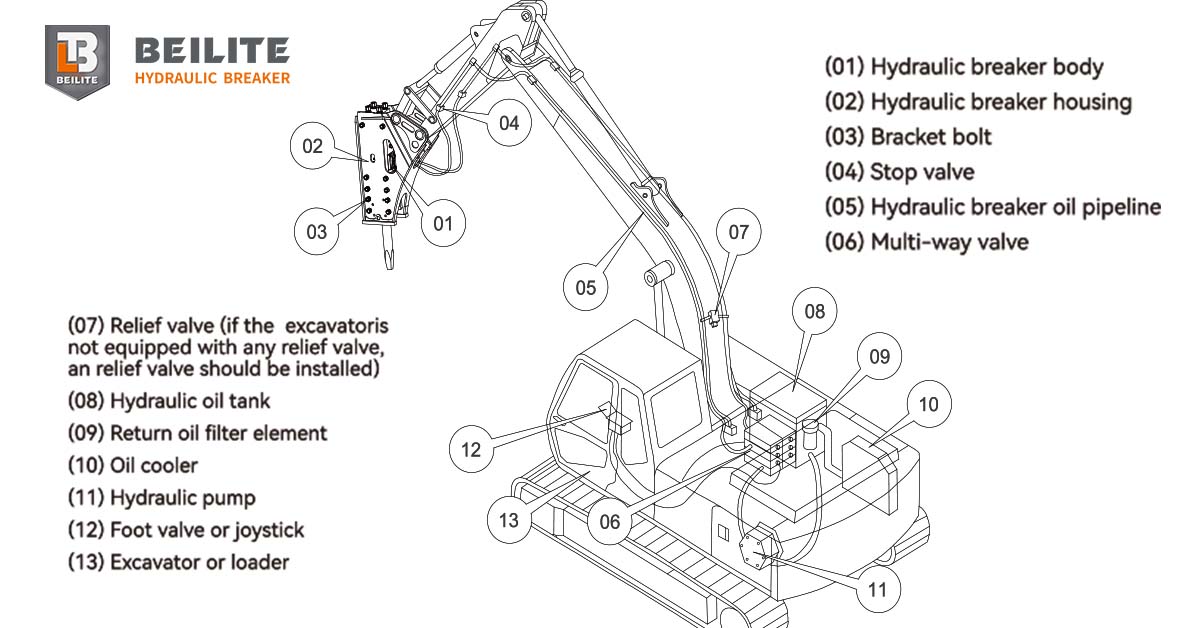
Oil Flow and Pressure: Your excavator’s hydraulic system must provide the exact flow rate the breaker requires. Too little flow leads to sluggish performance; too much flow causes overheating and premature wear on hydraulic breaker spare parts.
Weight Ratios: A breaker that is too heavy for your mini-excavator can cause the machine to tip, especially when working on the uneven terrain typical of landscaping sites. Conversely, a breaker that is too light won’t utilize the machine’s full power.
The Importance of Maintenance and Spare Parts
A breaker is a wear-and-tear tool. Your marketing strategy should emphasize your equipment’s reliability, which is only possible through a rigorous excavator breaker service and maintenance routine.
To keep your projects on schedule, you must have immediate access to excavator hydraulic breaker spare parts.
Chisels and Bushings: These are the front-line soldiers. Using high-quality steel ensures they last longer between sharpenings.
Seal Kits: High-pressure landscaping work generates heat. Quality seals prevent oil leaks that could contaminate the customer’s soil a PR nightmare for any landscaping firm.
Regular excavator breaker service and maintenance is not just a chore; it’s an insurance policy against the $500-an-hour cost of a downed machine on a busy job site.
Marketing Strategy: Position Your Equipment
When you choose the right breaker, do not keep it a secret. Use it in your marketing:
Highlight Versatility: Tell your clients that your earthmoving equipment attachments allow you to handle any obstacle, from buried concrete to solid granite.
Showcase Technology: If you use low-vibration, silenced breakers, advertise yourself as the Neighborhood-Friendly Contractor.
Guarantee Uptime: Mention your commitment to excavator breaker service and maintenance. It tells the client that your machines won’t break down halfway through their project.
Summary
Choosing the best hydraulic breaker for landscaping requires a balance of power, precision, and professional presentation. By focusing on the customer’s need for a quiet, fast job and the operator’s need for a comfortable, reliable tool, you position your business at the top of the market.
Remember, the breaker is the heart of your demolition phase. Invest in a high-quality tool, keep a stock of essential excavator hydraulic breaker spare parts, and follow a strict excavator breaker service and maintenance schedule. Your reward will be faster project completions, happier neighbors, and a significantly stronger bottom line.
Keywords:
hydraulic breaker, Hammer Breakers, Hydraulic Breaker for Excavator Landscaping Projects, excavator hydraulic breaker for earthmoving, Rock Breaker, hydraulic breaker spare parts, excavator breaker
FAQs
- How do I choose the right size hydraulic breaker for my excavator?
Selecting the right excavator hydraulic breaker for earthmoving depends primarily on your carrier’s weight and hydraulic capacity. You must match the breaker’s required oil flow (GPM/LPM) and operating pressure (PSI/Bar) to your excavator’s hydraulic output. A breaker that is too large can damage your excavator’s boom, while one that is too small will lead to excessive vibration and poor productivity. Always consult your machine’s manual to ensure the attachment falls within the recommended lifting and hydraulic limits.
- What are the most critical excavator hydraulic breaker spare parts to keep in stock?
To minimize downtime on a landscaping site, you should always have “wear parts” on hand. The most critical excavator hydraulic breaker spare parts include extra chisels (working tools), upper and lower bushings, and seal kits. Because landscaping involves varying materials from soft soil to hard granite, the chisel wears down at different rates. Having a spare allows you to swap tools instantly, while having a seal kit ready prevents a minor oil leak from halting your entire project.
- How often should I perform excavator breaker service and maintenance?
For a breaker used in daily landscaping or earthmoving, greasing is required every two to three hours of actual impact time. A full excavator breaker service and maintenance inspection should be performed weekly, checking for loose side bolts, cracks in the housing, and wear on the tool bushings. Regular maintenance not only extends the life of the breaker but also protects your excavator’s hydraulic system from contamination and pressure spikes that could lead to expensive repairs.
Beilite Machinery Co., Ltd.
40008-40008
info@beilite.com
+6282321982255