 English
 Indonesian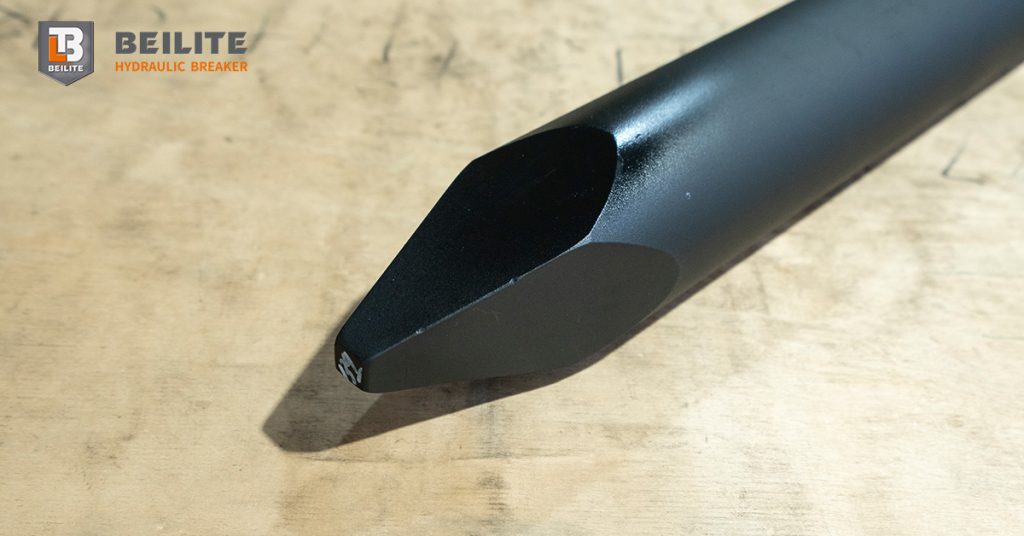
Selecting the correct hydraulic breaker chisel size is one of the most important factors in achieving efficient excavation, concrete demolition, trenching, quarrying, and rock breaking. Whether you are operating with compact mini excavators or heavy-duty crawler excavators, the size and type of chisel directly influence productivity, tool longevity, fuel efficiency, and the hammer breaker’s overall performance. Choosing improperly sized chisels causes slower penetration, increase large vibration, premature tool wear, and even structural damage to both the hydraulic breaker and the excavator.
This guide explains how to choose the right chisel diameter, length, and tip design for your excavator, while highlighting key considerations that professionals follow in construction, mining, quarrying, and industrial demolition. It also incorporates major industry keywords such as rock breaker chisels, hydraulic hammer tools, excavator breaker chisels, and Beilite hydraulic breakers to support performance.
Matching Chisel Size to Excavators Weight Class
The first step in selecting a hydraulic breaker chisel is ensuring compatibility with the excavator’s operating weight and the hydraulic breaker model. Every rock breaker whether small, medium, or large has a defined chisel diameter range. For example, a mini excavator uses a much smaller chisel than a 20-ton excavator used for quarry blasting preparation.
A chisel that is too large increases back-pressure and reduces striking force, while a chisel that is too small cannot withstand the impact energy. Manufacturers such as Beilite (BLTB series, BLTB-FX series) provide recommended chisel sizes for each breaker to ensure maximum energy transfer, stable impact frequency, and optimal demolition efficiency.
Understanding the Role of Chisel Diameter and Length
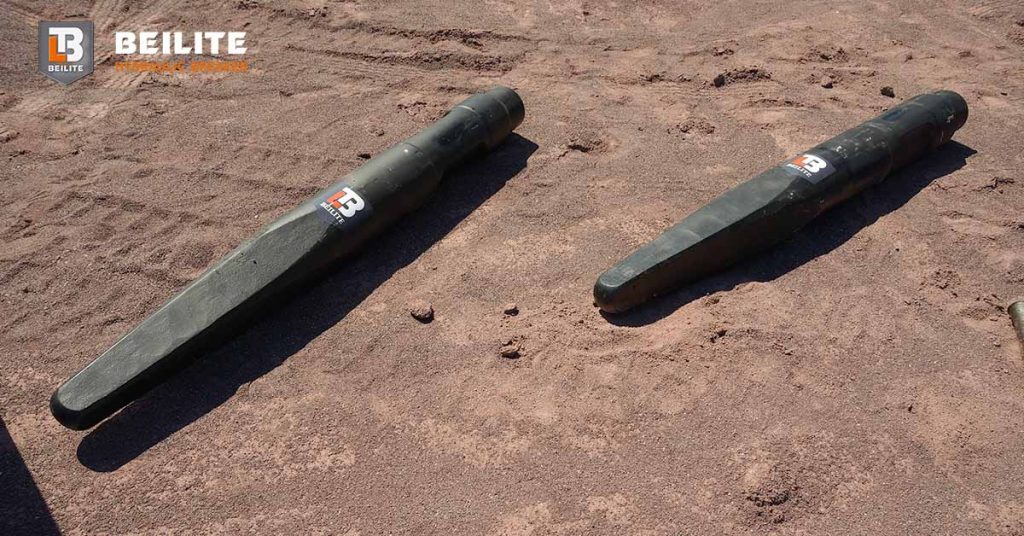
Chisel diameter determines the strength and durability of the tool under high-frequency impacts. Larger diameters are used in heavy rock-breaking, reinforced concrete demolition, and mining tasks. Smaller diameters are suitable for compact excavation, frozen soil breaking, or trenching in urban areas where accuracy is required.
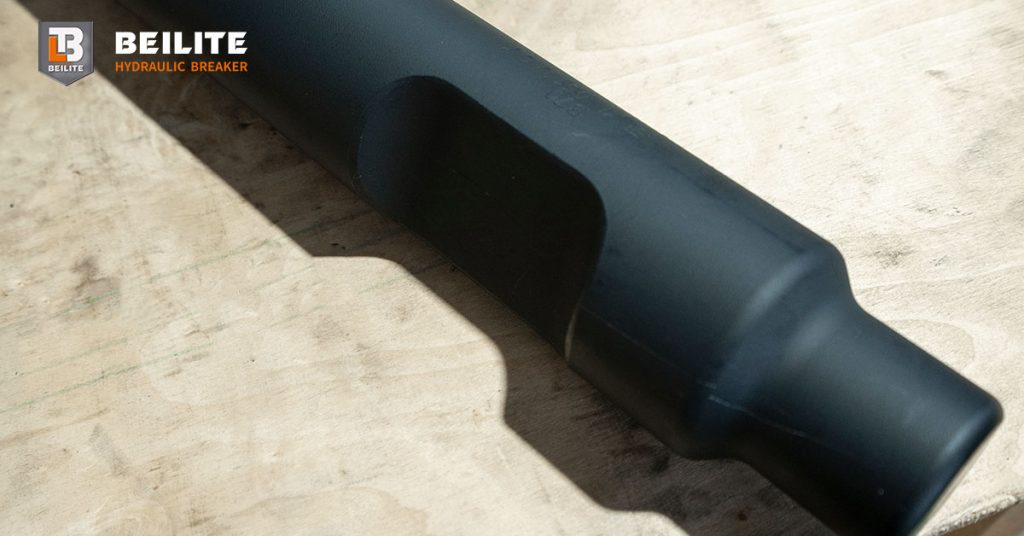
Chisel length affects the breakout force, reach, and precision. Longer chisels provide greater versatility but may reduce stability. Shorter chisels deliver stronger impact transfer and reduce bending risk during angled operations. Selecting the correct length helps prevent side-loading—one of the most common causes of premature chisel failure.
Table of Chisel Diameters
| Model | Chisel Diameter (mm) | Chisel Length (mm) | Carrier |
| BLT40 | 40 | 450 | 0.5–1.2 |
| BLT45 | 45 | 500 | 0.8–1.5 |
| BLT53 | 53 | 580 | 1.5–3.5 |
| BLT68 | 68 | 700 | 4.5–6.5 |
| BLT70 | 70 | 700 | 4.5–6.5 |
| BLT75 | 75 | 750 | 7–11 |
| BLT85 | 85 | 850 | 7–11 |
| BLT100 | 100 | 1000 | 10–14 |
| BLT125 | 125 | 1100 | 18–22 |
| BLT135 | 135 | 1200 | 18–22 |
| BLT135G | 135 | 1200 | 20–24 |
| BLT140 | 140 | 1250 | 24–27 |
| BLT150 | 150 | 1400 | 24–27 |
| BLT150G | 150 | 1300 | 27–33 |
| BLT155 | 155 | 1400 | 33–38 |
| BLT165 | 165 | 1450 | 38–45 |
| BLT175L | 175 | 1500 | 45–55 |
| BLT190D2 | 190 | 1600 | 46–55 |
| BLT195D2 | 195 | 1600 | 50–60 |
| BLT200 | 200 | 1620 | 50–65 |
| BLT205-2 | 205 | 1700 | 55–65 |
| BLT210L | 210 | 1800 | 65–75 |
| BLT215 | 215 | 1800 | 60-75 |
| BLT215-6 | 215 | 1800 | 65–85 |
| BLT220 | 220 | 1850 | 68–85 |
| BLT225 | 220 | 1900 | / |
| BLT230/230-2 | 230 | 1870 | 75–100 |
| BLT235 | 235 | 1860 | 75–100 |
| BLT245 | 245 | 2050 | 90–130 |
| BLT255 | 255 | 2200 | / |
| BLT260 | 259 | 2100 | 90–160 |
| BLT280 | 280 | 2300 | 120–200 |
Choosing the Right Chisel Type for the Job
Different demolition tasks require different chisel shapes. Although many operators use a universal moil point, selecting the correct tip dramatically improves productivity.
Moil point chisels are ideal for general-purpose rock breaking, trenching, and concrete dismantling.
Flat chisels deliver precise cutting for roadwork, pavement removal, and reinforced concrete structures.
Blunt chisels maximize breaking efficiency for very hard rock, boulders, and quarry applications.
Conical chisels offer deeper penetration for compacted soil and layered rock.
Understanding your jobsite material helps you choose the correct tool shape, preventing excessive tool wear and reducing fuel consumption.
Match the Chisel to Your Breaker’s Operating Energy
Every hydraulic breaker has a defined impact energy rating and frequency range. A compatible chisel size allows the piston energy to be transferred efficiently into the material. Beilite hydraulic breakers, for example, are engineered with precise diameter-to-energy ratios, ensuring the chisel fully absorbs and transfers impact force.
Breakers that use oversized chisels often strike inefficiently, reducing penetration speed. Undersized chisels create instability and increase risk of bending. Ensuring the chisel matches the breaker’s specifications is essential for both performance and safety.
Consider Material Hardness and Application Requirements
The hardness of the material whether it is granite, limestone, reinforced concrete, asphalt, or frozen soil affects chisel selection. Hard rock requires blunt or conical chisels with thicker diameters to handle high resistance. Softer materials benefit from moil or flat chisels that cut effectively without overloading the breaker.
For construction, quarrying, tunneling, and road maintenance, correctly matching the chisel to the material helps maintain high productivity and minimizes downtime due to breakage or overheating.
Importance of High-Quality Steel and Heat Treatment
Not all chisels are manufactured with the same standard of steel or heat processing. Premium chisels like those used in Beilite hydraulic breakers are produced from alloy steel, heat-treated for durability, and precision-machined to prevent surface stress and micro-cracks.
Using low-quality chisels increases the risk of shank wear, mushrooming, and structural failure. High-grade chisels ensure consistent performance even under heavy-duty demolition conditions.
Compatibility with Various Excavator Brands
Modern hydraulic breakers and chisels are used across many global excavator brands such as CAT, Komatsu, Doosan, Hitachi, SANY, Volvo, Hyundai, Kubota, Takeuchi, Bobcat, and JCB. Choosing the right chisel ensures seamless integration, prevents fitment issues, and guarantees stable performance on these carriers.
Beilite’s chisel range is designed to be compatible with multiple breaker models and excavator categories, supporting both mini excavators and large-scale demolition carriers.
Maintenance Practices Affect Chisel Performance
Selecting the correct chisel size is only part of the process. Proper maintenance ensures long service life. Regular lubrication prevents overheating and bushing wear. Avoiding excessive angles prevents bending and shank damage. Allowing the chisel to rest during continuous rock breaking prevents metal fatigue.
Operators should also inspect retaining pins, wear plates, and bushings to ensure proper fit between the breaker and chisel. These practices significantly extend tool life and reduce operating costs.
Conclusion
Choosing the right hydraulic breaker chisel size ensures higher efficiency, safer operation, reduced downtime, and improved return on investment. By considering excavator size, breaker energy, chisel shape, material hardness, tool quality, and proper maintenance, contractors and operators can achieve maximum productivity in demanding demolition, rock breaking, and excavation environments.
For heavy-duty projects, partnering with reliable manufacturers like Beilite Machinery provides access to high-quality chisels, robust hydraulic breakers, and expert technical support to keep your equipment performing at peak levels.
Primary Keywords:
hydraulic breaker chisel size
excavator breaker chisel
rock breaker chisel
hydraulic hammer tool
breaker chisel for excavator
Secondary Keywords:
Beilite hydraulic breaker
heavy-duty demolition chisels
excavator attachment tools
chisel selection guide
breaker tool maintenance
rock hammer accessories
excavator hydraulic hammer
quarry rock breaking tools
reinforced concrete demolition
Long-tail Keywords:
how to select hydraulic breaker chisels
chisel types for rock and concrete
best chisel for mini and heavy excavators
compatible chisels for all excavator brands
hydraulic breaker performance improvement tips
FAQs
1. How do I know which chisel size fits my hydraulic breaker?
The correct size depends on your breaker model, impact energy, tool diameter specification, and excavator weight class. Each Beilite hydraulic breaker includes a recommended chisel diameter list to ensure full compatibility and efficient energy transfer.
2. Does the type of material affect which chisel I should use?
Yes. Hard rock requires blunt or conical chisels, while concrete and pavement respond better to moil and flat chisels. Matching the chisel type to the material significantly increases productivity and reduces tool wear.
3. Can Beilite chisels fit other excavator or breaker brands?
Beilite manufactures chisels compatible with most global brands such as CAT, Doosan, SANY, Komatsu, Hitachi, Volvo, Hyundai, Bobcat, Kubota, and JCB. Always confirm the breaker model to ensure proper fit.
4. What happens if I use an oversized or undersized chisel?
An oversized chisel reduces striking efficiency and stresses internal components. An undersized chisel can bend, cause misalignment, or damage bushings. Correct sizing ensures maximum breaker performance and tool life.
5. How often should hydraulic breaker chisels be replaced?
Replacement depends on operating hours, hardness of material, maintenance quality, and tool handling. Operators should replace chisels when the tip becomes rounded, bent, cracked, or when penetration speed noticeably decreases. Beilite provides guidance based on model and usage.
Beilite Machinery Co., Ltd.
40008-40008
info@beilite.com
+6282321982255