 English
 Indonesian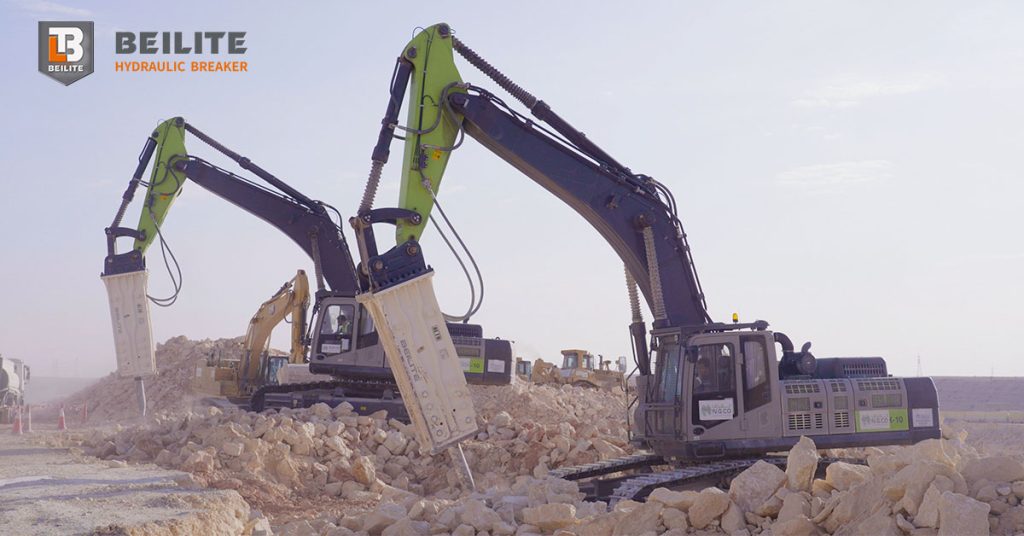
Large-scale demolition projects demand machinery that can deliver extreme impact force and rates, durability, and reliability under continuous heavy loads. Among the most essential attachments for major construction, mining, and infrastructure dismantling is the hydraulic breaker rock hammer, a tool engineered to fracture reinforced concrete, breaks through large boulders, and break down structures that standard buckets or mechanical tools simply cannot handle.
Hydraulic breakers are designed to withstand massive shock loads and operate in harsh environments, heavy-duty hydraulic rock breakers are critical for maximizing productivity in quarrying, road construction, steel-reinforced demolition, and deep excavation works. This guide explores how do hydraulic breakers operate, what makes heavy-duty models different, their best applications, and the advantages of choosing reliable manufacturers such as Beilite winner of 2025 world heavy demolition for demanding demolition projects.
What is a Hydraulic Breaker Rock Hammer?
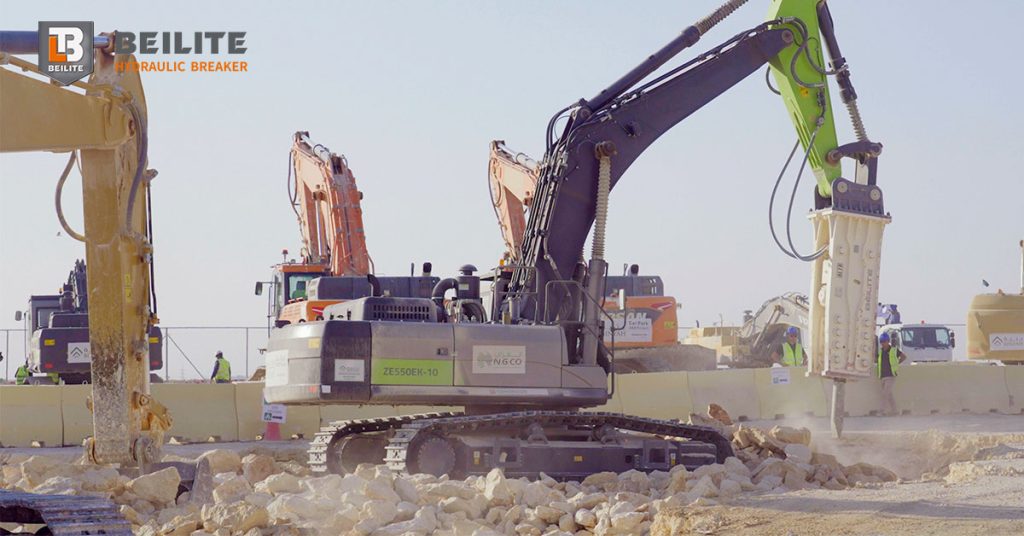
A hydraulic breaker is a high-performance hammer attachment powered by the excavator’s hydraulic system. Unlike lighter hammers for landscaping or compact excavation, heavy-duty rock breakers are built for the most intense demolition scenarios, often installed on 50–350 tons excavators or even larger.
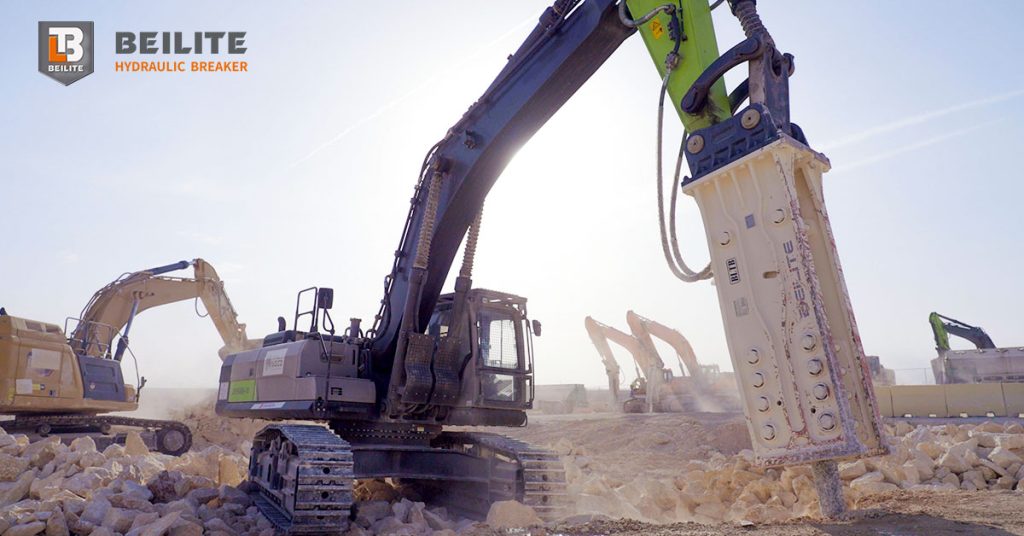
The Core Components of a Heavy-Duty Hydraulic Breaker
The combination of high flow, high pressure, and precision-engineered internals allows these breakers to deliver thousands of joules per blow, making them ideal for rock and reinforced concrete.
Large-bore hydraulic cylinder for maximum impact energy
High-mass piston delivering deep penetration and impact force
Reinforced front and back head and tool bushings designed to handle extreme side-loads
Accumulator system to stabilize pressure and maintain consistent striking power
Heavy-duty housing or box-type shell to reduce vibration and protect internal components
Key Advantages of Heavy-Duty Hydraulic Rock Hammers
1. Maximum Impact Energy for Hard Materials
Large Hydraulic breakers deliver significantly higher strike energy, enabling them to:
Break massive boulders in a single pass
Shatter thick reinforced concrete slabs
Perform deep trenching in rock layers
Reduce oversized materials for crushers
Reduce oversized hard rock
2. Reliability Under Continuous Operation
Heavy-duty demolitions require long working cycles. Industrial-grade hammer breakers use:
- High-strength alloy steel
- Heat-treated pistons
- Reinforced bushings
- Improved lubrication channels
These features minimize heat buildup and reduce operational wear.
3. Better Efficiency and Fuel Savings
Modern breakers, especially premium designs such as those from Beilite, integrate energy recovery systems that:
- Reduce recoil
- Increase impact energy
- Lower fuel consumption
This means faster job completion and lower operational costs.
Applications of Hydraulic Breakers in Large-Scale Demolition
1. Quarrying & Mining
Hydraulic rock hammers help maintain a smooth workflow where blasting may be restricted or costly. They are widely applied in large infrastructures and are crucial for:
- Breaking oversized stones at quarry faces
- Primary rock reduction
- Secondary breaking after blasting
2. Large Structural Demolition
For large demolition tasks where precision is required such as urban demolition, bridge demolition, mountain demolition —hydraulic breakers outperform explosives or heavy cutters.
They are ideal for breaking:
- Bridges
- Multi-story building foundations
- Reinforced beams and columns
- Thick concrete retaining walls
- Train railways and subway underground rails
- Tunnels
3. Road & Highway Construction
Hammer Breakers speed makes them more efficient than milling or mechanical cutting in hard materials. They are used for:
- Removing old pavement
- Breaking concrete slabs and roadbeds
- Creating rock cuts for new roads
4. Pipeline & Utility Trenching in Rock
Large trenching operations through rock beds rely on breakers to:
- Penetrate hard rock quickly
- Minimize excavation width
- Maintain accurate trench depth
Beilite Heavy-Duty Hydraulic Breakers: Engineered for Tough Demolition Work
Beilite is known globally for delivering robust hydraulic breaker designs suitable for extreme conditions. Their large-class hydraulic breakers integrate advanced materials, precision machining, and impact-optimized engineering.
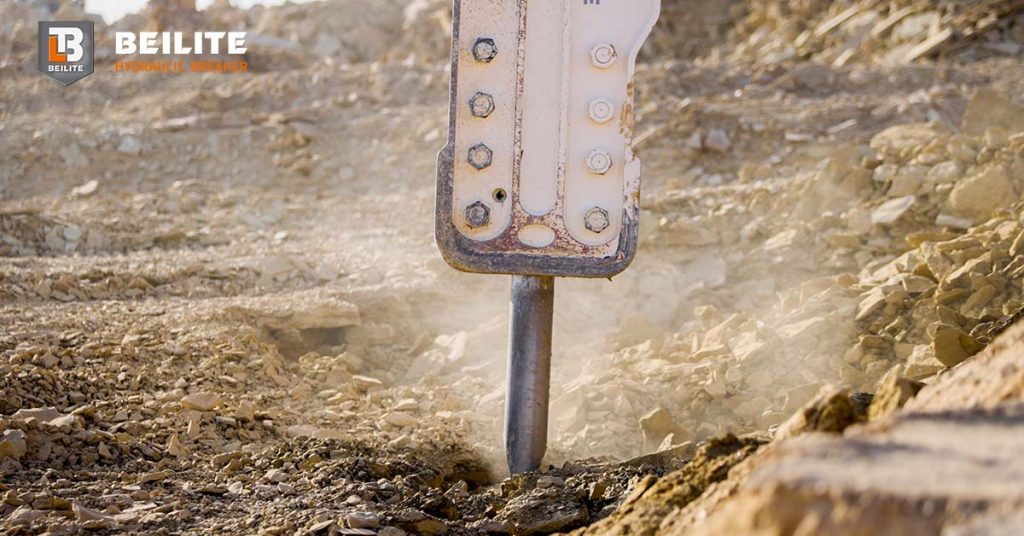
Technical Strengths of Beilite Rock Breakers
High-impact nitrogen accumulator system for stable power output
Enhanced piston diameter for greater striking energy
Anti-blank firing technology to prevent internal damage
Wear-resistant tool steel for longer chisel life
Optimized hydraulic flow channels to reduce heat and improve efficiency
Beilite breakers fit major heavy excavator brands such as:
Caterpillar, Komatsu, Volvo, Doosan/Develon, Hitachi, Hyundai, Kobelco, SANY, XCMG, and others.
How to Choose the Right hydraulic Breaker for Large Demolition Projects
1. Match Hydraulic Breaker Class with Excavator Weight
Larger excavators (50–350 tons) require breakers in the 5,180–15,720 kg range for proper balance and hydraulic compatibility.
2. Check Required Oil Flow & Pressure
Always ensure the excavator can supply:
- Recommended hydraulic flow
- Required operating pressure
- Proper return line configuration
Beilite offers consultation to verify compatibility before installation.
3. Tool Type Selection
Choose the correct tool for the demolition task:
- Moil point – general rock breaking
- Chisel tool – concrete and directional breaking
- Blunt tool – oversized material reduction
- Pyramid tool – boulder cracking
Maintenance Tips for Heavy-Duty Breakers
Daily
- Grease tool bushings every 2–5 hours
- Inspect hydraulic hoses and fittings
- Ensure tool is tightly secured
Weekly
- Check nitrogen pressure
- Inspect bushings and replace if worn
- Remove dust build-up from the breaker housing
Monthly
- Inspect piston and seals
- Check bracket bolts and side plates
Apply proper maintenance prevents downtime and extends your hydraulic breaker lifespan, especially in high-impact environments.
Conclusion
Hydraulic breaker rock hammers are essential tools in large-scale demolition, mining, quarrying, and deep excavation works. Their ability to generate enormous impact energy, withstand long-duty cycles, and deliver precision breaking makes them far more effective than traditional mechanical tools.
With heavy-duty engineering, reliable strike power, and advanced durability features, Beilite hydraulic breakers have become trusted by contractors worldwide for demanding demolition operations. When paired with the right excavator and maintained properly, a quality breaker ensures maximum productivity, lower operating costs, and consistent performance on the toughest job sites.
Primary Keywords
hydraulic breaker rock hammer
heavy-duty demolition hammer
large excavator hydraulic breaker
rock breaker for demolition
Beilite hydraulic hammer
Secondary Keywords
rock demolition equipment
heavy-duty excavator attachments
hydraulic hammer for reinforced concrete
mining rock hammer
quarry hydraulic breaker
demolition rock breaking tools
Long-Tail Keywords
best hydraulic breaker for large excavators
heavy-duty rock hammer for concrete demolition
how hydraulic breakers work in quarry and mining
excavator breaker for bridge and foundation demolition
Beilite large-class breaker specifications
LSI Keywords
breaker impact energy
excavator hammer applications
construction demolition tools
hydraulic breaker maintenance tips
nitrogen accumulator breaker
Highlight Facts
Fact 1: Large rock breakers deliver up to 33,000-44,700 joules per strike, making them capable of breaking massive boulders and thick reinforced concrete in seconds.
Fact 2: Heavy-duty breakers reduce demolition time by 40–60% when paired with a properly matched excavator (55–350 tons).
Fact 3: Beilite large-class breakers use wear-resistant alloy steel, extending the lifespan of pistons, bushings, and tool holders even under constant high impact.
Fact 4: A properly maintained hydraulic breaker can operate more than 1,500 hours per year, even in mining and quarry environments.
Fact 5: Nitrogen-boosted accumulator systems inside Beilite breakers increase impact force and stabilize striking frequency during continuous demolition.