 English
 Indonesian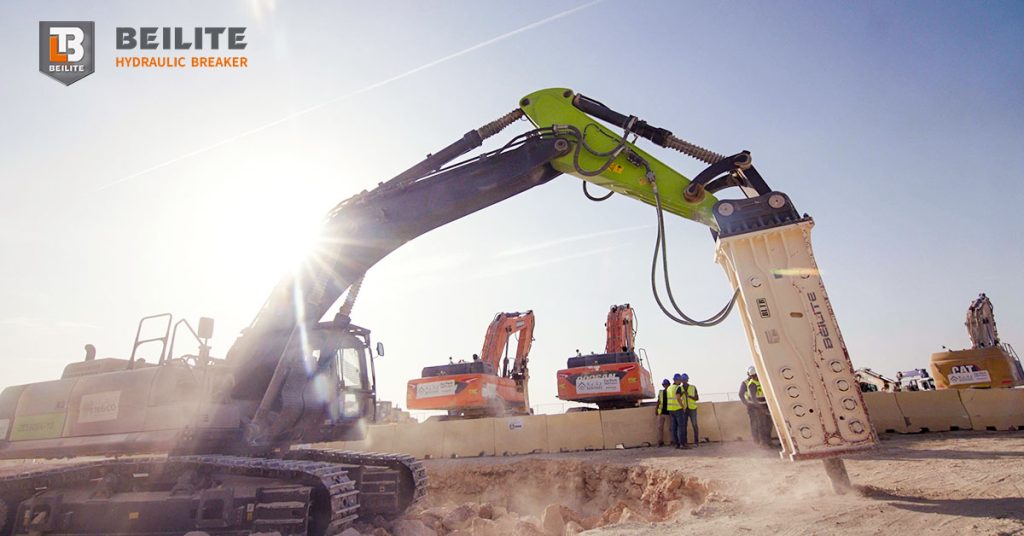
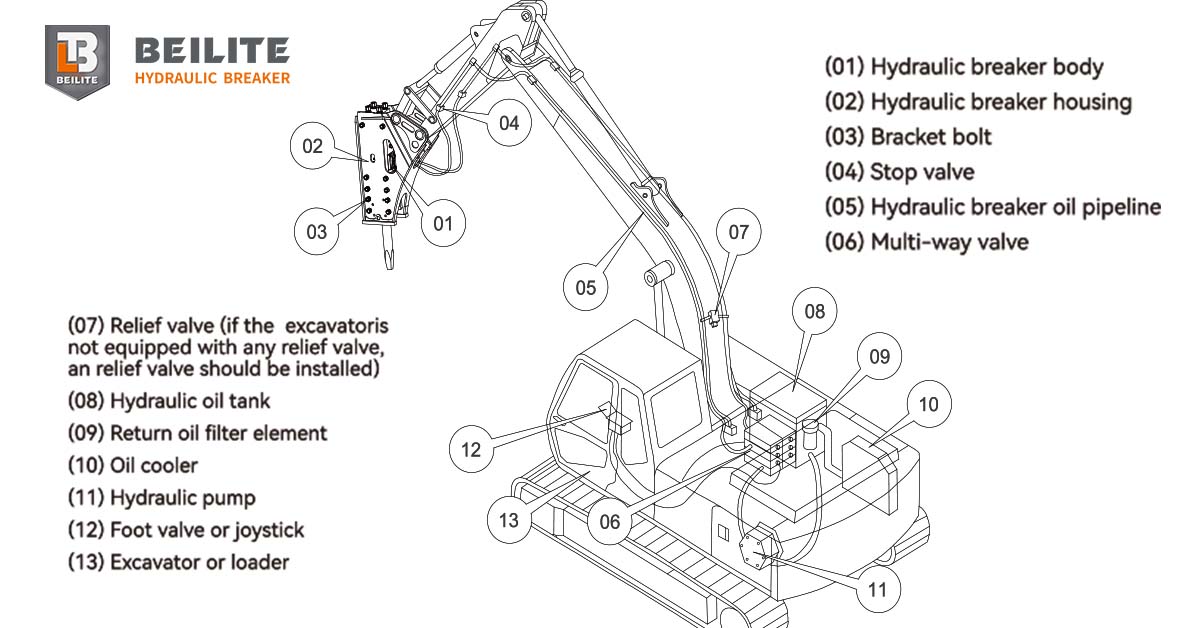
Hydraulic breakers have become essential attachments for modern excavators, supporting a wide range of applications from demolition and mining to road construction and infrastructure development. In Indonesia’s fast-growing construction and resource sectors, choosing a reliable hydraulic breaker for excavators is not just about power performance, but it’s about efficiency, durability, and long-term performance.
This guide explains how do hydraulic breakers work, what to look for when selecting ideal one, and why Beilite Indonesia branch hydraulic breakers are increasingly trusted by contractors and equipment owners.
What Is a Hydraulic Breaker?
A hydraulic breaker, also known as a hydraulic hammer or rock breaker, is an excavator attachment designed to break hard materials such as concrete, rock, asphalt, and reinforced structures. Powered by the excavator’s hydraulic system, it converts hydraulic pressure into high-impact energy delivered through a chisel or tool.
Hydraulic breakers are widely used in following applications:
- Building and bridge demolition
- Quarrying and mining operations
- Road and pavement breaking
- Trenching and pipeline installation
- Secondary rock breaking in excavation sites
Key Factors to Choose a Hydraulic Breaker for Excavators
1. Excavator Compatibility
The hydraulic breaker must match the excavator’s operating weight, hydraulic flow, and pressure. An oversized rock breaker can damage the carrier, while an undersized unit reduces productivity.
Beilite offers hydraulic breakers compatible with excavators ranging from mini excavators to 350-ton machines, ensuring optimal balance and performance. Additionally, Beilite hydraulic breaker are also compatible with skid steer, backhoe loaders, and other brand machines such as VOLVO, Epic, SANY, Sandvik, Soosan, Komatsu etc.
2. Breaking Performance and Energy Efficiency
Modern projects demand high impact energy with controlled vibration. Efficient hydraulic breakers deliver powerful blows while minimizing stress on the excavator.
Beilite excavator breakers are engineered to provide:
- Stable impact frequency
- Optimized piston energy transfer
- Reduced recoil and vibration
3. Durability and Wear Resistance
In harsh working environments, excavator breaker durability is critical. High-quality steel, precise heat treatment, and reinforced housings significantly extend service life.
Beilite hydraulic breakers are designed with:
- High-strength alloy steel components
- Reinforced side plates and housings
- Long-life chisels for rock and concrete breaking
4. Noise and Environmental Considerations
Urban and infrastructure projects increasingly require low-noise hydraulic breakers. Silent or box-type rock breakers reduce sound levels and improve operator comfort.
Beilite provides silent hydraulic breaker models ideal for:
- Urban demolition
- Residential construction sites
- Noise-restricted environments
Beilite Indonesia: Hydraulic Breakers Built for Real-World Conditions
Indonesia’s construction and mining environments demand equipment that performs reliably under heat, humidity, and heavy workloads. Beilite Indonesia hydraulic breakers are developed to meet these challenges with consistent performance and reduced downtime.
Advantages of Beilite Hydraulic Breakers:
- Wide model range for all excavator sizes
- Stable performance in continuous operation
- Easy maintenance and fast tool replacement
- Compatibility with major excavator brands
- Proven reliability in demolition, mining, and infrastructure projects
Whether used for rock breaking, concrete demolition, or foundation excavation, Beilite hydraulic hammer breakers are engineered to maximize productivity while controlling operating costs.
Applications of Hydraulic Breakers in Indonesia
Hydraulic breakers play a crucial role in multiple industries:
Construction & Demolition: Breaking reinforced concrete, slabs, and structures
Mining & Quarrying: Secondary rock breaking and oversize material reduction
Road Construction: Asphalt breaking and pavement removal
Infrastructure Projects: Tunnels, pipelines, and foundation works
By choosing the right breaker model, contractors can significantly improve efficiency and reduce machine wear.
Why Contractors Choose Beilite Hydraulic Breakers?
Compared to generic hydraulic hammers, Beilite focuses on balanced performance, not just raw power. This approach results in:
- Lower operating costs
- Reduced excavator stress
- Longer service intervals
- Consistent breaking performance
For contractors seeking long-term reliability, Beilite hydraulic breakers represent a practical and cost-effective solution.
Frequently Asked Questions (FAQs)
1. How do I choose the right hydraulic breaker for my excavator?
Select a rock breaker based on your excavator’s operating weight, hydraulic flow, and working application. Matching specifications ensures maximum efficiency and prevents equipment damage.
2. What is the difference between standard and silent hydraulic breakers?
Silent hydraulic breakers feature enclosed housings that reduce noise and vibration. They are ideal for urban projects and noise-sensitive environments, while standard breakers are often used in open or heavy-duty sites.
3. How often should hydraulic breaker maintenance be performed?
Regular greasing, tool inspection, and seal checks should be performed daily or weekly, depending on usage. Proper maintenance significantly extends breaker lifespan and performance.
Summary:
Choosing the right hydraulic breaker for excavators is a strategic decision that impacts productivity, safety, and operating costs. With a complete product range and proven performance in demanding environments, Beilite Indonesia hydraulic breakers provide a dependable solution for construction, demolition, and mining professionals.
Beilite Machinery Co., Ltd.
40008-40008
info@beilite.com