 English
 Indonesian
Earthmoving Equipment Attachments
When you are running a construction, an infrastructure maintenance or demolition project, choosing the right earthmoving equipment attachments can make or break your timeline and budget. For operators and contractors facing tough materials like concrete, rock, underground, mountains or frozen ground, the question is not just about getting a project site done, it’s about accomplishment of the project timely, efficiently, safely, and profitably.
Earthmoving Equipment Attachments
Let’s dive through the noise and help you understand which excavator attachment, and backhoe attachment or skid loader attachment truly fits your project needs.
Understanding Your Construction Equipment Attachment Options
The world of heavy equipment attachments has expanded significantly. Beyond the standard bucket, today’s operators can choose from hydraulic breakers, concrete crushers, hydraulic shears, grapples, augers, and compactor attachments. Each serves a specific purpose, but hydraulic hammer attachments remain the go-to solution for one critical reason: versatility in breaking hard materials.
What Makes Hydraulic Breakers the Best Attachment for Rock Breaking?
Hydraulic breakers, also known as excavator hydraulic breakers, hammer rock breaker or hammer attachments, deliver concentrated impact force to fracture rock, concrete, and asphalt. Unlike other earthmoving equipment attachments that cut, grip, or scoop, hydraulic breakers use percussion power with superior impact energy to demolish solid structures from the inside out.
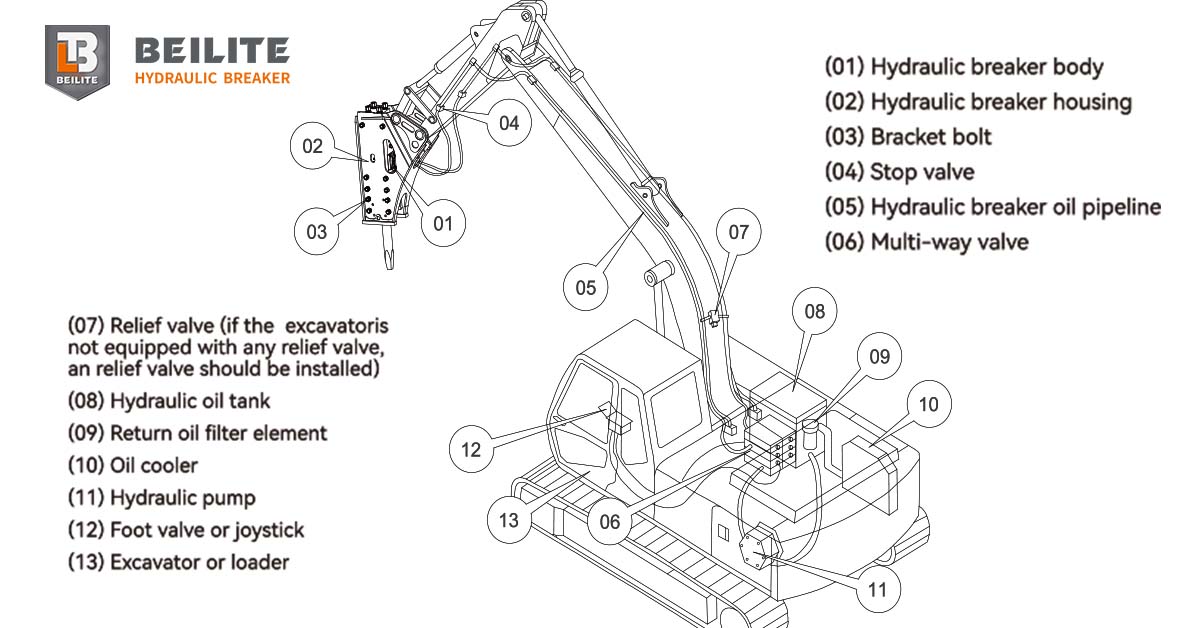
For operators, rock breaking equipment means faster project completion on demolition sites, road construction equipment applications, trenching through rock, and foundation excavation tools requirements. The attachment connects directly to your excavator’s hydraulic system, converting hydraulic flow into repeated striking force that can reach up to 1,500 blows per minute depending on the model’s hydraulic pressure ratings.
For example,Beilite BLT-280 Heavy-duty demolition breaker has over 480 blows and 44700 joules.
| Parameter | Value |
| Total Length (Top Mounted Type) | 5693mm |
| Total Weight (Top Mounted Type) | 15482kg |
| Chisel Diameter | 280mm |
| Chisel Length | 2300mm |
| Working Oil Flow | 550~650l/min |
| Relief Pressure | 350bar |
| Working Pressure | 300~330bar |
| Back Head Nitrogen Pressure | 35~38bar |
| Accumulator Nitrogen Pressure | 75~80bar |
| Impact Rate | 60~90bpm |
| Oil Hose Diameter | 1½inch |
| Applicable Excavators / Backhoes / Skid Loaders Weight etc. | 100~350ton |
Customer Demands Driving Earthmoving Equipment Attachments Selection
Today’s demolition contractors face mounting pressure: tighter deadlines, stricter budgets, and higher safety standards. These market realities shape what customers actually need from their construction equipment investments.
Speed and Productivity: Project managers consistently report that downtime costs more than hydraulic breaker rental fees. A quality hydraulic breaker for excavator can reduce concrete demolition time by 80% compared to manual concrete demolition tools. When you are billing by the project rather than the hour, this efficiency directly impacts your bottom line.
Versatility Across Job Sites: Contractors don’t want single-purpose construction site equipment sitting idle. The best earthmoving equipment attachments 2026 models earn their keep across multiple applications. Industrial demolition equipment like hydraulic breakers excel here the same unit that breaks concrete foundations on Monday can handle trenching equipment attachments work on Wednesday and demolish bridge decks by Friday.
Operator Comfort and Safety: Experienced operators know that vibration fatigue is not just uncomfortable, but it’s a productivity killer. Modern commercial hydraulic breakers feature advanced damping systems that reduce vibration transfer by up to 50%. This means your crew stays fresh through longer shifts and faces lower injury risk.
How to Choose Excavator Attachments: Performance Comparison
Hydraulic Breakers vs Bucket Rippers
Bucket rippers attach steel teeth with tool steel specifications to standard excavator attachments for breaking moderately hard materials. While cost-effective for light work, they struggle with reinforced concrete or solid rock. Rippers also put excessive wear on your excavator’s boom and arm due to the prying forces involved.
Hydraulic breakers deliver cleaner breaks with less machine stress. For materials harder than weathered rock or unreinforced concrete, hammer breakers consistently outperform rippers by significant margins, making them essential rock excavation machinery.
Hydraulic Breaker vs Crusher Attachment
Concrete crushers excel at processing demolished material into reusable aggregate. However, they cannot initiate demolition on standing structures. Many contractors run a simple calculation: use a hydraulic hammer breaker for primary demolition, then switch to a crusher for material processing.
This tag-team approach with heavy equipment attachments maximizes both tools’ strengths. The rock breaker handles what crushers cannot vertical walls, thick slabs, and structural elements, while the crusher attachment adds value by recycling debris on-site.
Hydraulic Breakers vs Hydraulic Shears
Hydraulic shears cut through steel structures, rebar, and metal components with precision. They are indispensable for structural steel demolition and scrap processing among demolition contractor tools. However, hydraulic shears cannot break concrete or rock effectively.
Projects involving reinforced concrete demand both tools. The rock breaker fractures the concrete while hydraulic shears cut exposed rebar. Understanding this complementary relationship in your excavator attachment selection guide helps contractors bid more accurately and avoid mid-project equipment scrambles.
Operator Demands: What Really Matters in the Field of Earthmoving
Talk to operators who have logged thousands of hours with various construction equipment attachments, and you will hear consistent priorities that go beyond manufacturer spec sheets.
Quick Coupler Systems: Operators waste valuable time with complicated attachment changes. Quick coupler systems that swap earthmoving equipment attachments in under two minutes are not luxuries, but they are necessities for maximizing billable hours on construction sites.
Maintenance Accessibility: Hammer breakers take abuse daily. Operators demand designs where they can inspect critical components, change wear parts, and perform hydraulic breaker maintenance without specialized tools or excessive downtime. Models with easy-access side plates and tool-free inspection points win operator loyalty.
Matching Hydraulic Flow Requirements: Not all excavators or attachment carriers can handle every attachment. Operators need to know how to match hydraulic breaker to excavator based on the carrier machine’s attachment weight class and hydraulic flow capacity. Mismatched equipment leads to poor performance or, worse, machine damage due to incompatible hydraulic pressure ratings.
Why Use Hydraulic Breakers Over Other Attachments?
The answer lies in specialized capability. When your project demands breaking through reinforced concrete, solid bedrock, hard rocks, or heavily compacted materials, no other attachment delivers comparable results. Here is what sets them apart:
Superior Breaking Force: While bucket rippers might handle weathered material, hydraulic breakers deliver concentrated impact energy measured in foot-pounds. This makes them the only viable choice for foundation excavation tools applications and serious rock breaking equipment needs.
Reduced Machine Wear: Compared to forcing your excavator to pry or rip hard materials, hydraulic hammer attachments distribute forces properly through the machine’s hydraulic system. This protects your primary investment while accomplishing tasks other attachments simply cannot handle.
Multi-Application Flexibility: From road construction equipment needs to trenching equipment attachments work, the same hydraulic breaker handles diverse challenges. This versatility makes them smarter investments than specialized single-purpose tools.
Buy Excavator Attachments or Rent? Making Smart Investment Decisions
For construction equipment suppliers and contractors, the buy-versus-rent decision depends on utilization rates and project pipelines.
When to Buy Hydraulic Breakers for Sale: If your project schedule shows consistent demolition or excavation work totaling 100+ days annually, purchasing makes financial sense. Ownership eliminates rental coordination headaches and ensures equipment availability during peak seasons.
When Hydraulic Breaker Rental Makes Sense: Occasional heavy breaking work or specialized one-time projects favor rental. Finding hydraulic breaker rental near me options gives you access to the latest commercial hydraulic breakers without capital expenditure or long-term maintenance commitments.
Evaluation of Hydraulic Breaker Rental Cost: Compare daily rates against purchase price divided by expected service life. Factor in maintenance, storage, and transportation costs. Many contractors find that renting for projects under 30 days maximizes ROI while buying serves longer commitments.
Marketing Strategy: Positioning Your Attachment Investment
For construction equipment suppliers and rental companies, understanding these customer and operator demands and shapes effective marketing approaches.
Emphasize Total Cost of Ownership: Smart contractors look beyond rental rates. Promote how efficient earthmoving equipment attachments reduce labor costs, speed project completion, and minimize machine wear. A slightly higher daily rate becomes insignificant when the job finishes two days early.
Demonstrate Versatility: Create content showing your industrial demolition equipment across different applications. Video demonstrations of the same unit handling concrete demolition, rock excavation machinery work, and asphalt removal prove versatility better than any specification sheet for the best earthmoving equipment attachments 2026.
Support Operator Success: Offer hydraulic breaker maintenance tips, training sessions, and troubleshooting guides. When operators feel confident with your heavy equipment attachments, they will request your tools by name on future projects.
Leverage Job Site Results: Document before-and-after scenarios with real metrics—cubic yards processed per hour, project completion time, fuel consumption. These concrete numbers resonate with decision-makers far more than generic capability claims about construction site equipment.
What Are Earthmoving Equipment Attachments? A Quick Reference
For those new to heavy construction, earthmoving equipment attachments are specialized tools that connect to carriers like excavators, backhoes, and skid steers. They transform a single base machine into a multi-function workhorse capable of:
- Breaking and demolishing (hydraulic breakers)
- Material processing (concrete crushers)
- Cutting metal (hydraulic shears)
- Material handling (grapples)
- Ground compaction (compactor attachments)
- Drilling (augers)
This modular approach maximizes equipment investment by eliminating the need for dedicated single-purpose machines.
Making Your Decision: Which Excavator Attachment Do I Need?
Choosing between hydraulic breakers and other earthmoving equipment attachments ultimately depends on your material challenges. For breaking solid rock, demolishing reinforced concrete, or trenching through hardpan, excavator hydraulic breakers deliver unmatched performance.
The most successful contractors maintain relationships with construction equipment suppliers who offer multiple attachment options. This flexibility lets you match tools precisely to each project phase rather than forcing one attachment to handle every task.
Whether you are breaking ground on a new foundation or demolishing an aging structure, understanding what each attachment truly offers and what your operators actually need and transforms equipment decisions from guesswork into strategic advantage.
Ready to boost your productivity? Evaluate your upcoming projects against your current attachment inventory. The gap between what you have and what you need might cost you more than you realize. Contact your local construction equipment supplier or search for “hydraulic breaker rental near me” to explore options that match your specific project requirements and budget constraints.
Primary Keywords:
Earthmoving equipment attachments
Hydraulic breakers
Excavator attachments
Hydraulic hammer attachments
Hydraulic breakers
hydraulic breaker rental near me
Excavator hydraulic breakers
Hammer rock breaker
Hammer attachments
Construction equipment attachments
Demolition equipment
Rock breaking equipment
Concrete demolition tools
Excavator hydraulic breakers
Heavy equipment attachments
hammer rock breaker
Long-Tail Keywords:
Best hydraulic breaker for excavator
Hydraulic breaker vs crusher attachment
How to choose excavator attachments
Earthmoving equipment for rock breaking
Hydraulic breaker rental cost
Excavator attachment selection guide
Which attachment for concrete demolition
Hydraulic breaker maintenance tips
Commercial Intent Keywords:
Hydraulic breaker for sale
Rent hydraulic breaker attachment
Buy excavator attachments
Hydraulic breaker rental near me
Best earthmoving equipment attachments 2026
Commercial hydraulic breakers
Industrial demolition equipment
backhoe attachment
skid loader attachment
Question-Based Keywords (Featured Snippets):
What are earthmoving equipment attachments?
Which excavator attachment do I need?
How does a hydraulic breaker work?
What is the best attachment for breaking concrete?
Why use hydraulic breakers over other attachments?
How to match hydraulic breaker to excavator?
Industry-Specific Keywords
Construction site equipment
Demolition contractor tools
Road construction equipment
Foundation excavation tools
Trenching equipment attachments
Rock excavation machinery
Hydraulic breaker rental in Indonesia
Earthmoving equipment in South Africa
Construction equipment supplier Saudi Arabia
Excavator attachments in China
Related Equipment Keywords:
Bucket rippers
Concrete crushers
Hydraulic shears
Excavator grapples
Quick coupler systems
Compactor attachments
Technical Specification Keywords:
Hydraulic flow requirements
Breaker impact energy
Attachment weight class
Tool steel specifications
Hydraulic pressure ratings
Frequently Asked Questions
Q1: How do I know if I need a hydraulic breaker or another excavator attachment?
A: The decision depends on your material hardness and project requirements. Choose a hydraulic breaker when you are working with reinforced concrete, solid rock, heavily compacted soil, or asphalt demolition. If you are processing already-broken material, a concrete crusher works better. For cutting steel or rebar, hydraulic shears are ideal. For moderate materials like weathered rock, bucket rippers may suffice. The key factor is material resistance, if standard buckets or rippers cannot penetrate it, you need a hydraulic hammer breaker’s impact force.
Q2: Is it better to buy or rent hydraulic breakers for my construction business?
A: Buy hydraulic breakers if you have consistent breaking work totaling up to 100 days annually ownership provides better ROI and guaranteed availability. Rent when you have occasional projects under 30 days or need specialized hammer breaker sizes for one-time jobs. Calculate your decision by dividing purchase price by expected service life, then compare against rental rates. Do not forget to factor in maintenance costs, storage, and transportation. Many contractors buy a mid-size breaker for regular use while renting larger or smaller units for specific projects.
Q3: What hydraulic flow requirements do I need to match a hammer breaker to my excavator?
A: Matching hydraulic breakers to excavators requires checking three specifications: your excavator’s hydraulic flow rate (measured in gallons or liters per minute), operating pressure (PSI or bar), and machine weight class. Most manufacturers provide compatibility charts showing which breaker models work with specific excavator sizes. As a general rule, the breaker should weigh 2-10% of your excavator’s operating weight. Using an oversized breaker on a small excavator causes poor performance and potential damage, while undersized breakers won’t deliver adequate breaking force. Always consult your equipment dealer to verify compatibility before purchasing or renting.
Beilite Machinery Co., Ltd.
40008-40008
info@beilite.com
+6282321982255