 English
 Indonesian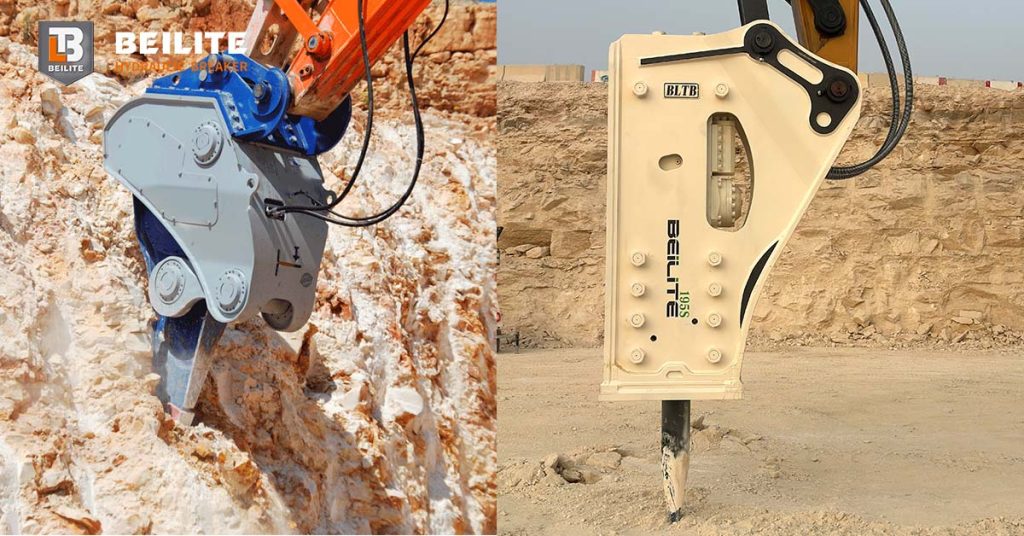
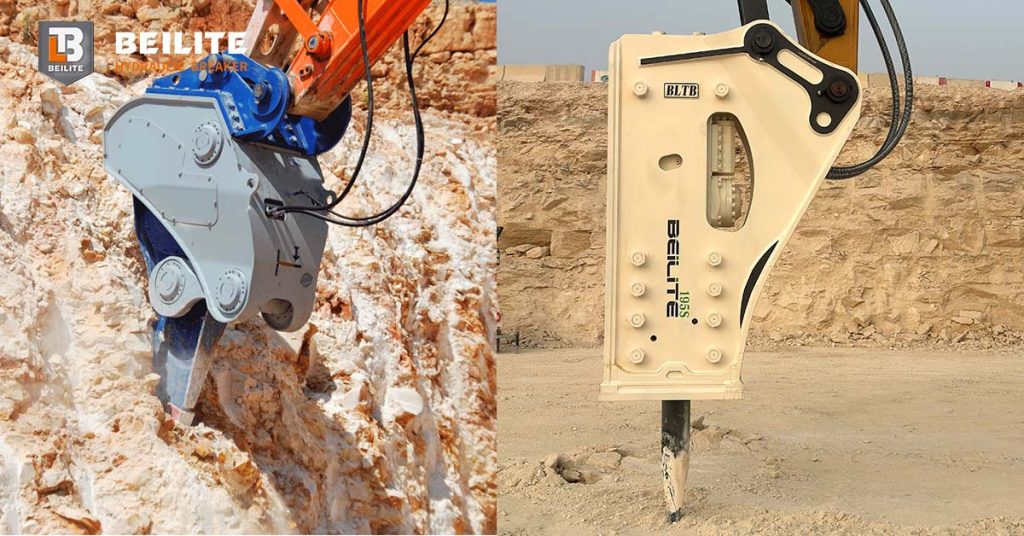
When faced with tough ground conditions or challenging demolition tasks, a standard excavator bucket often is not enough. That’s when specialized hydraulic attachments like hydraulic rippers and hydraulic breakers come into play. Often grouped under the umbrella of “rock breakers for excavators», these powerful tools each have a distinct purpose.
Choosing between a ripper and a hydraulic breaker is not just about raw power; it is about matching the right tool to your material, desired outcome, and operational efficiency. This guide will help you understand their fundamental differences and make an informed decision for your next project.
Hydraulic Breaker: The Percussive Powerhouse
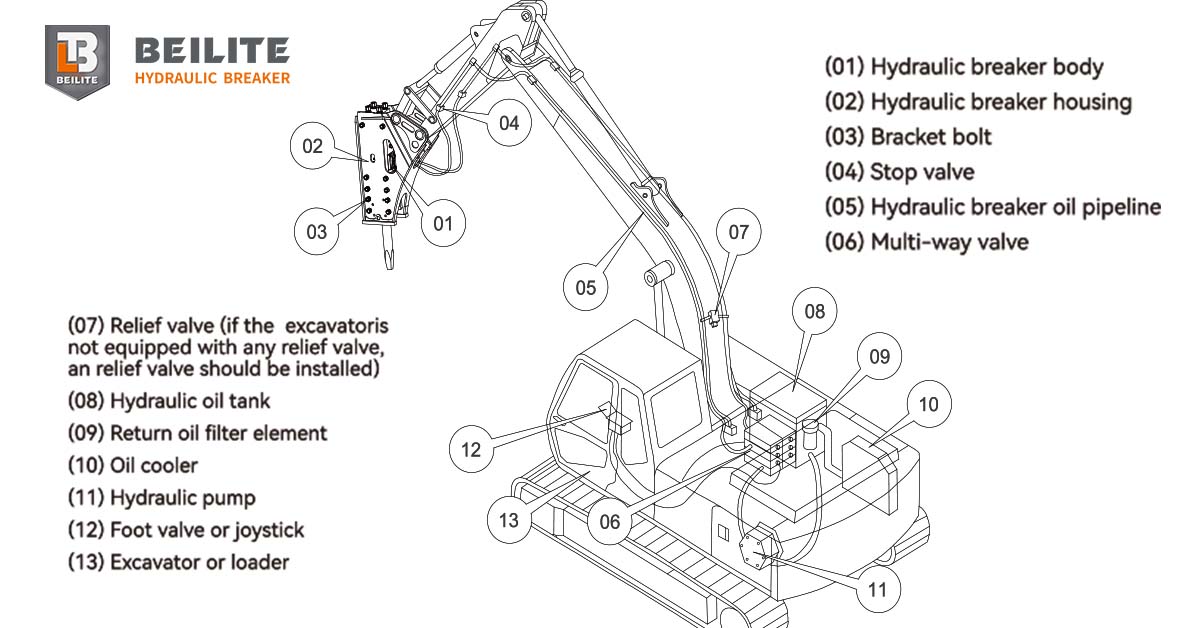
A hydraulic breaker, also known as a hydraulic hammer, is designed for direct, high-impact demolition. It works by converting the excavator’s hydraulic pressure and flow into rapid, repetitive percussive blows. Inside the breaker, a heavy piston is driven up and down at high speed, striking a chisel or tool that then transfers massive kinetic energy into the material.
Key Characteristics of Hydraulic Breaker:
Mechanism: Percussive impact power (hammering action), Precision Strike
Action: Delivers focused, high-frequency blows
Tool: Sharp chisel or blunt tool at the tip
Noise/Vibration: High (Choose Silenced type for sensitive area)
Maintenance: Requires regular lubrication, seal kits replacement, and attention to tie rods and bushings.
Hydraulic Breaker Best Used For:
Demolition: Breaking up concrete structures, foundations, and reinforced concrete.
Rock Breaking: Reducing oversized boulders, secondary breaking in quarries, or trenching through solid rock formations.
Road Construction: Breaking asphalt and concrete pavements.
Mining: Scaling rock faces or breaking large chunks of ore.
Advantages of Hydraulic Breaker:
Strong Force: Unmatched for breaking hard, dense materials.
Precision: Can target specific areas for breaking.
Versatility: With different chisel types, it can tackle various materials.
High Wear & Tear: The intense impact creates significant wear on components.
Noise & Vibration: Can help a major concern in urban or sensitive environments.
Hydraulic Ripper: The Penetrative Force
A hydraulic ripper is designed for penetration and leverage. It features a single, robust tooth or shank, often with a replaceable tip, that is used to tear, pry, and fracture softer rock, frozen ground, asphalt, or compacted earth. Unlike a breaker, it doesn’t “hammer”; instead, it uses the excavator’s powerful downward force and curl action to exert immense pressure and leverage to rip through material.
Key Characteristics of Hydraulic Ripper:
Mechanism: Penetration and leverage (prying/tearing action)
Action: Applies sustained force and uses the excavator’s hydraulics to tear and lift
Tool: Single, heavy-duty tooth/shank
Noise/Vibration: Lower than a breaker
Maintenance: Primarily focuses on the tip, shank, and mounting pins
Hydraulic Ripper Best Used For:
Soil & Ground Breaking: Loosening highly compacted soil, hardpan, and frozen ground.
Soft Rock Excavation: Breaking up layered shale, sandstone, weathered rock, or fractured rock.
Trenching: Preparing trenches in challenging ground where a bucket struggles
Root Removal: Tearing out large tree roots and stumps.
Demolition (Light): Breaking up old asphalt or thin concrete slabs.
Advantages of Hydraulic Ripper:
Efficient for Large Areas: Much faster than a breaker for loosening broad sections of material.
Lower Operating Costs (Typically): Less wear on excavator’s hydraulic system compared to constant impact.
Reduced Noise: Quieter operation, suitable for noise-sensitive areas.
Minimal Fines: Produces larger, more manageable chunks of material.
Disadvantages:
Limited Hardness: Ineffective against solid, unyielding rock like granite or heavily reinforced concrete.
Less Precision: Designed for broader material removal rather than pinpoint breaking.
Choosing the Right Hydraulic Tool Attachment for Your Project
The decision between a hydraulic ripper and a hydraulic breaker boils down to the material you’re tackling and the outcome you need.
Material Hardness & Density:
Solid, Hard Rock (example granite, basalt): Breaker. Its percussive force is necessary to fracture dense material.
Layered Rock, Shale, Sandstone, Hardpan, Frozen Ground: Ripper. Its penetrative power is ideal for prying apart layers or breaking up compacted earth.
Reinforced Concrete, Thick Slabs: Breaker. The rebar within concrete requires direct impact to sever.
Asphalt, Thin Concrete: Both can work, but a ripper might be faster for large areas, while a breaker offers more controlled demolition.
Project Scale & Speed:
Breaking a few large boulders or precise demolition: Hydraulic Breaker.
Loosening vast areas of compacted soil or softer rock for excavation: Ripper. Its speed in these conditions is unmatched.
Environmental Factors:
Noise-sensitive areas: Ripper might be preferred due to lower noise levels.
Vibration concerns: Again, a ripper typically generates less overall vibration than a continuous hammering action.
Excavator Size & Capability:
Ensure your excavator’s hydraulic flow and pressure match the requirements of the attachment. Both rippers and breakers come in sizes suitable for mini to large excavators, but matching the tool to the machine’s capacity is crucial for efficiency and longevity.
Conclusion
Both hydraulic rippers and hydraulic breakers are invaluable excavator attachments that significantly extend your machine’s capabilities beyond a standard bucket. While a hydraulic breaker excels at shattering the hardest materials through concentrated impact, the hydraulic ripper is superior for prying, tearing, and loosening extensive areas of softer rock and compacted earth.
Understanding their distinct operating principles and applications is key to maximizing efficiency, reducing project costs, and ensuring you have the right “rock breaker for excavators” for every challenging job. Investing in the correct attachment can dramatically improve productivity and unlock new project possibilities for your operation.
Keywords:
hydraulic ripper
hydraulic breaker
hydraulic hammer
rock breakers for excavators
excavator attachments
hydraulic ripper vs hydraulic breaker
choose the right hydraulic breaker
breaker vs ripper
demolition equipment
secondary rock breaking
trenching in rock
breaking reinforced concrete
loosen compacted soil
hydraulic hammer maintenance
Component & Action Keywords:
piston
chisel
percussive impact
leverage
hydraulic pressure
operating costs
FAQs
Q1: Can a hydraulic ripper be used to break hard granite or dense rock?
Generally, no. A hydraulic ripper is optimized for penetration and prying apart fractured or layered materials like shale, sandstone, or frozen ground. For solid, unyielding, hard rock like granite or basalt, the specialized, repetitive percussive force of a hydraulic breaker (hammer) is necessary to create the micro-fractures required for demolition.
Q2: Which tool is better for loosening a large area of hardpan or compacted soil?
The hydraulic ripper is far better for this task. The ripper uses the excavator’s sustained downward force and leverage to tear and loosen broad sections of compacted material quickly and efficiently. A breaker would be much slower, as it only focuses on a small impact point at a time.
Q3: Why is maintenance higher on a hydraulic breaker compared to a hydraulic ripper?
A hydraulic breaker generates constant, intense internal stress. Its maintenance requires frequent lubrication, regular checking of highly stressed components (like tie rods, bushings, and seal kits), and attention to hydraulic pressure settings. The hydraulic ripper, relying on external prying force, typically only requires maintenance focus on the shank/tooth tip and the excavator’s pins and bushings.
Beilite Machinery Co., Ltd.
40008-40008
info@beilite.com
+6282321982255