 English
 Indonesian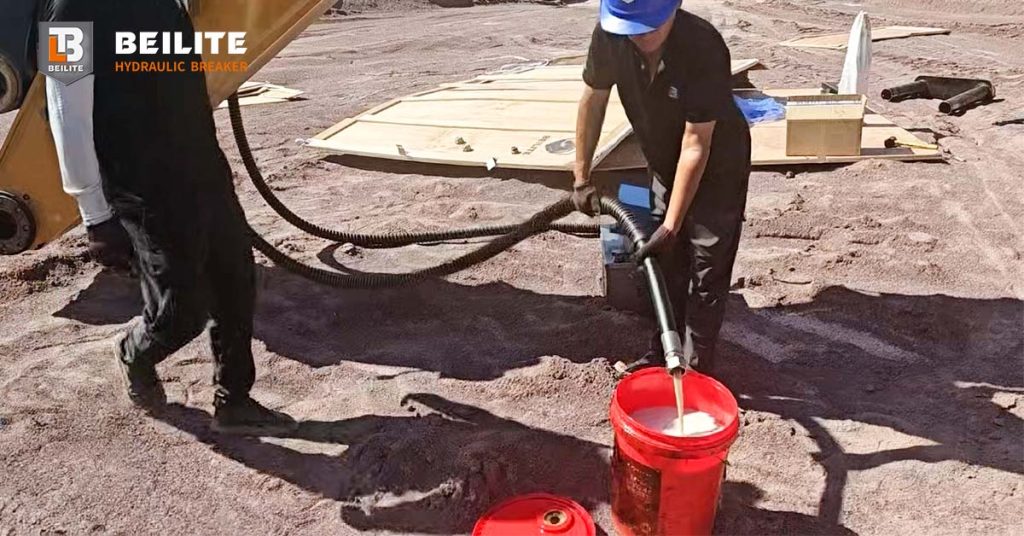
The Correct Hydraulic Oil Temperature for Your Hydraulic Hammer Breaker
The hydraulic breaker is one of the most powerful and essential tools in construction and demolition. But this power comes with a price: massive stress on the hydraulic system. The single most critical factor determining your hammer breaker’s efficiency, performance, and lifespan is the quality and temperature of its hydraulic oil. Ignoring these details is the fastest way to cause a fatal fault and incur expensive downtime.
This comprehensive guide breaks down the essential operating procedures, temperature limits, and selection criteria you need to keep your hydraulic breaker operating at peak efficiency.
The Golden Rule: Optimal Hydraulic Hammer Operating Temperature Range
The first rule of hydraulic breaker operation is maintaining the correct oil temperature. For most systems, including those recommended by Beilite, the optimal operating temperature range is narrow and unforgiving: 20°C to 80°C (68°F to 176°F).
The Danger of Exceeding 80°C
When the hydraulic oil temperature rises above this 80°C (176°F) threshold, the results are catastrophic:
- Viscosity Breakdown: The oil thins out dramatically, losing its ability to provide proper lubrication and sealing.
- Abnormal Operation: Internal components rely on precise seals; thin oil compromises these, leading to sluggish or abnormal operation.
- Fatal Damage: Sustained overheating causes rapid wear on vital internal components, potentially leading to a complete hydraulic breaker failure.
Preventing Overheating of Hammer Rock Breaker
After long periods of continuous hydraulic breaker work, the oil will naturally heat up. If the temperature exceeds the operating range, you must :
- Stop Operation: Immediately cease work to prevent fatal damage to the hydraulic system.
- Allow Cooling: Let the system rest until the oil temperature decreases back into the 20°C to 80°C (68°F to 176°F) range.
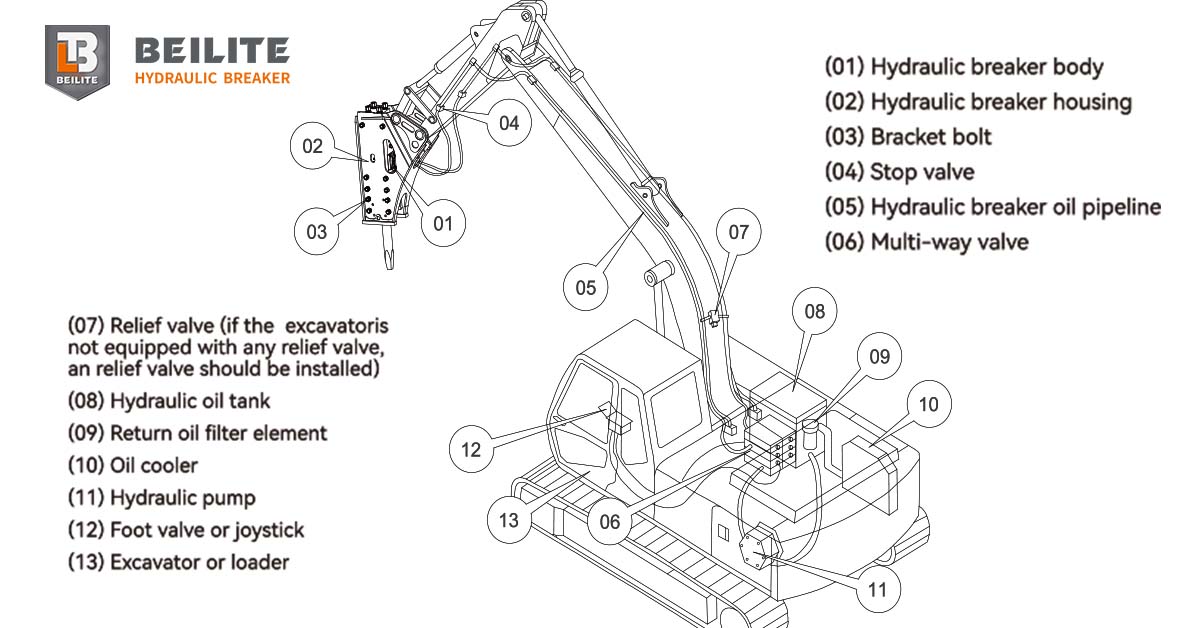
- Check the Cooler: Regularly inspect and maintain the hydraulic oil cooler to ensure it is functioning efficiently and can keep the fluid within a reasonable temperature range.
Cold Weather Operation: The Warm-Up Protocol
Operating in low temperatures presents the opposite challenge. If the oil is too cold, it becomes too viscous (thick). Starting cold operation without sufficient oil flow can cause fatal damage. Always ensure the excavator or carrier is sufficiently warmed up first, allowing the entire hydraulic circuit to reach operational temperatures before starting the hydraulic hammer breaker.
Selection and Quality of Hydraulic Oil
The type and quality of your hydraulic oil are just as important as the temperature. The correct selection directly determines the efficiency and service life of your hydraulic breaker.
Never Mix Hydraulic Oils!
A fundamental safety and maintenance rule are simple: Do not use a mixture of hydraulic oil and other oils. Never add different oil types or hydraulic oils with incompatible components to your existing fluid. Mixing oils can lead to unpredictable changes in viscosity and chemistry, jeopardizing the entire hydraulic system.
When to Consult Your Agent or Beilite Manufacturer?
Choosing the right hydraulic oil is crucial. You should immediately contact your equipment agent or manufacturer in the following special cases:
- Extreme Climate: When the hydraulic breaker must be used under special weather conditions, such as in extremely cold or hot regions.
- Unavailable Oil: If the manufacturer’s recommended hydraulic oil is unavailable and needs to be substituted with other hydraulic oils.
- Oil Conflict: If the oil recommended by the main engine manufacturer conflicts with the oil recommended by the hydraulic breaker manufacturer.
Recommended Hydraulic Oil and Viscosity (By Beilite)
Manufacturers like Beilite provide specific recommendations based on season and climate to maintain optimal hydraulic oil viscosity. These recommendations specify different oil grades (46# or 68#F) for summer versus winter operation.
| Manufacturer | Summer Oil (Higher Viscosity) | Winter Oil (Lower Viscosity) | Recommended Grease |
| Your Choice of Energy | Huile hydraulique 68# | Huile hydraulique 46# | 2# or 3# (according to weather) |
| Shell | Shell Tellus T68 | Shell Tellus T46 | Alvania Grease 2 |
| Esso | Nuto H68 | Nuto H46 | Beacon 02 |
| Mobil | Mobil DTE 16 | Mobil DTE 15 | Mobil Grease Special |
| Mobil | Mobil DTE 16 | Mobil DTE 15 | Mobil Grease Special |
| Gulf | Harmony 68 | Harmony 46 | Gulf Grown EP2 |
The Maintenance Schedule: Replacing Oil and Filters
Even the best hydraulic oil degrades and becomes contaminated over time, leading to accelerated wear. Paying special attention to the hydraulic oil quality is non-negotiable for the longevity of both the hydraulic breaker and the main engine.
Dealing with Oil Contamination
If the hydraulic oil is contaminated or deteriorated, it must be replaced immediately. Contaminated hydraulic oil will cause failure in both the hydraulic breaker and the carrier. When replacing the oil:
- Thorough Cleaning: Clean the entire hydraulic circuit, including the pipeline and the oil tank. Replace any parts necessary to ensure the contamination is completely removed.
- Total Replacement: All the old hydraulic oil in the oil tank and hydraulic circuit should be replaced entirely do not top off.
Timely Replacement Schedule
Adhering to a strict replacement schedule is key to minimizing oil contamination and preventing damage:
| Component | First Replacement Interval | Subsequent Replacement Interval |
| Hydraulic Oil Filter Element | 250 Hours | Every 600 Hours |
| Hydraulic Oil | 600 Hours | Every 1,500 Hours |
By meticulously managing the hydraulic oil temperature, avoiding incompatible mixtures, and adhering to strict replacement schedules for the fluid and filter, you secure the maximum service life and performance from your hydraulic hammer breaker.
Keywords:
Hydraulic breaker
Hydraulic hammer breaker
Hydraulic oil temperature
Optimal operating temperature
Hydraulic oil viscosity
Fatal fault / Fatal damage
Hydraulic system
Hydraulic circuit
Hydraulic oil cooler
Oil contamination
Abnormal operation
Hydraulic oil filter element
Excavator / Main engine
Winter oil
Summer oil
Stop overheating
Prevent overheating
Hydraulic oil replacement schedule
Replace hydraulic oil
Cold weather operation
Warm-up protocol
Mixing hydraulic oil
Contaminated hydraulic oil
Replacement of filter element
Periodic replacement of hydraulic oil
Hydraulic oil selection
Frequently Asked Questions (FAQs)
1. What is the optimal operating temperature range for hydraulic oil in a hydraulic breaker?
The optimal operating temperature range for hydraulic oil is 20°C to 80°C (68°F to 176°F). Operating the hydraulic breaker above this range, especially above $80^\circ\text{C}$, can lead to rapid viscosity breakdown, resulting in poor lubrication and potentially causing fatal damage to the breaker’s internal components.
2. How often should the hydraulic oil and filter be replaced in a hydraulic breaker?
The hydraulic oil and filter element should be replaced on a schedule to prevent oil contamination and deterioration:
- Filter Element: Replace 250 hours after the first use, then every 600 hours subsequently.
- Hydraulic Oil: Replace 600 hours after the first use, then every 1,500 hours subsequently.
3. Can I mix different types or brands of hydraulic oil in my hydraulic breaker?
No. You must not add other oils or hydraulic oils with different components to the existing fluid. Using a mixture of hydraulic oil and other oils can lead to unpredictable viscosity and chemical reactions, which will compromise lubrication, cause abnormal operation, and potentially damage the entire hydraulic circuit.
4. What should I do if my hydraulic breaker oil temperature exceeds 80°C?
If the hydraulic oil temperature rises above 80°C after working for a long time, you must immediately stop work. Allow the hydraulic system to cool down until the oil temperature returns to the safe 20°C to 80°C (68°F to 176°F)range before continuing operation. Additionally, check the hydraulic oil cooler to ensure it is functioning properly
Beilite Machinery Co., Ltd.
40008-40008
info@beilite.com
+6282321982255