 English
 Indonesian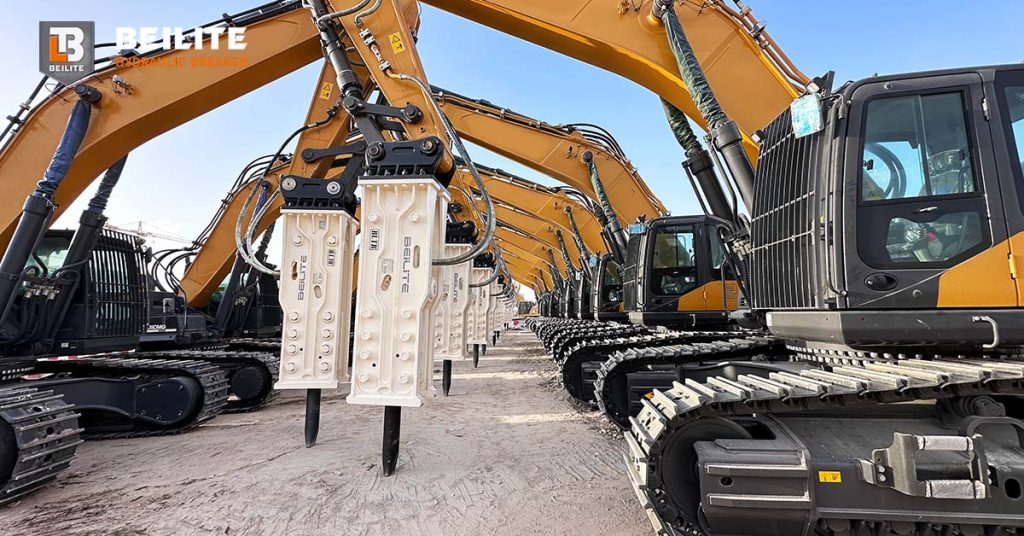
Modern infrastructure development depends on powerful, efficient, and reliable construction equipment. From highways and bridges to tunnels, railways, and urban redevelopment projects, hydraulic breakers play a critical role in shaping the built environment. As a core attachment for excavators and loaders, hydraulic breakers enable fast material demolition, controlled rock breaking, and precise concrete removal, that making them indispensable for today’s large-scale construction and civil engineering projects.
In this article, we explore why hydraulic breakers are essential for infrastructure development, how they improve productivity and safety, and what makes them a key investment for contractors and project owners.
What Is a Hydraulic Breaker?
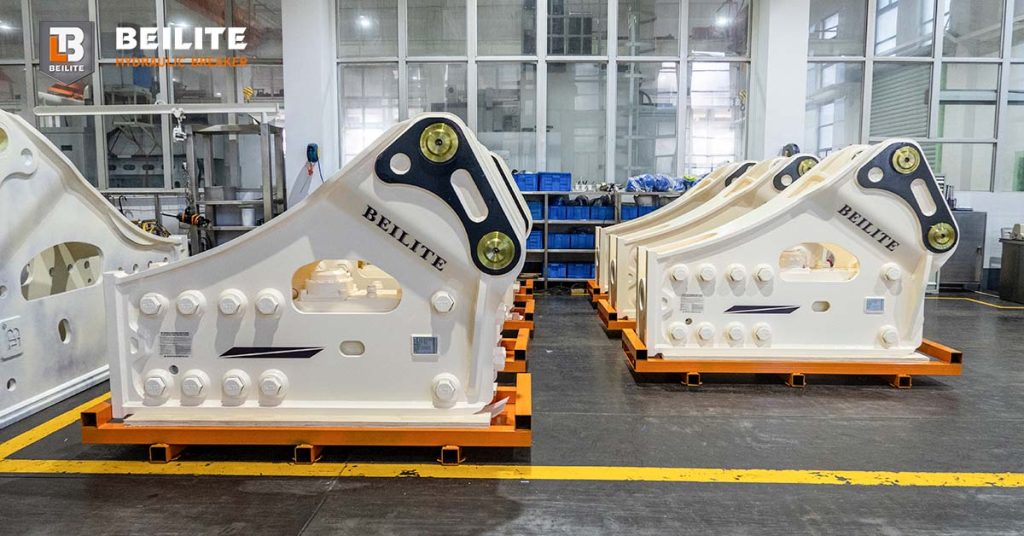
A hydraulic breaker, also known as a hydraulic hammer, is an excavator attachment designed to break hard materials such as rock, reinforced concrete, asphalt, and frozen ground. Powered by the excavator’s hydraulic system, the breaker converts hydraulic energy into high-impact force through a piston and chisel mechanism.
Hydraulic breakers are widely used in road construction, bridge demolition, mining, quarrying, foundation work, and municipal infrastructure projects, where traditional mechanical tools are inefficient or unsafe.
Why Hydraulic Breakers Are Essential for Infrastructure Projects?
Infrastructure projects demand speed, precision, and durability. Hammer hydraulic breakers meet these demands by delivering consistent impact energy while allowing operators full control over the breaking process.
Unlike blasting or manual demolition, hydraulic rock breakers offer controlled demolition, minimizing vibration, noise, and damage to surrounding structures. This is especially important in urban infrastructure development, where safety and environmental regulations are strict.
Productivity Improvement in Construction and Civil Engineering
One of the biggest advantages of hydraulic hammer breakers is their ability to significantly boost productivity. By attaching a breaker directly to an excavator or skid loader, contractors eliminate the need for multiple machines or labor-intensive processes.
High-performance hydraulic breakers allow:
Faster concrete breaking in road rehabilitation
Efficient rock excavation for foundations and tunnels
Reduced downtime during large-scale demolition
Continuous operation in demanding environments
As a result, infrastructure projects can meet tight deadlines while reducing overall operating costs.
Applications of Hydraulic Breakers in Infrastructure Development
Road and Highway Construction
Hydraulic breakers are essential in road construction and maintenance. They are commonly used for breaking old asphalt, concrete pavements, and curbs before resurfacing or reconstruction. Their precision ensures minimal damage to underlying structures, saving time and repair costs.
Bridge Construction and Demolition
During bridge upgrades or demolition, hydraulic breakers provide controlled force to remove decks, piers, and reinforced concrete sections. This method improves worker safety and ensures structural stability during phased demolition.
Tunnel and Railway Projects
In tunnel excavation and railway infrastructure, hydraulic breakers are used to break hard rock and reinforced concrete where blasting is restricted. Their ability to operate in confined spaces makes them ideal for underground and rail corridor projects.
Urban Infrastructure and Utilities
Hydraulic breakers are widely used in municipal infrastructure projects, including pipeline installation, sewer maintenance, and utility trenching. Their low vibration design helps protect nearby buildings and underground utilities.
Safety and Environmental Advantages
Safety is a top priority in infrastructure development. Hydraulic breakers enhance safety by reducing the need for explosives or manual demolition tools. Operators can control impact force, direction, and duration, minimizing the risk of accidents.
Modern hydraulic breakers are also designed to meet environmental standards, offering:
Reduced noise levels
Lower vibration transmission
Improved energy efficiency
Less dust generation
These features make hydraulic breakers suitable for environmentally sensitive and densely populated areas.
Compatibility with Excavators and Loaders
Hydraulic breakers are available in various sizes and energy classes to match different machines, from compact skid loaders to large excavators. Choosing the right breaker ensures optimal performance, fuel efficiency, and machine longevity.
Proper compatibility between the breaker and the excavator hydraulic system prevents excessive wear, overheating, and pressure loss factors that are critical in long-term infrastructure projects.
Durability and Long-Term Cost Efficiency
Infrastructure development often involves harsh working conditions, including high-impact operations, abrasive materials, and long operating hours. High-quality hydraulic breakers are engineered with wear-resistant materials, reinforced housings, and advanced sealing systems to withstand these challenges.
Although premium hydraulic breakers may have a higher initial cost, their durability, reduced maintenance needs, and extended service life make them a cost-effective investment for contractors and government projects.
Choosing the Right Hydraulic Breaker for Infrastructure Work
Selecting the right hydraulic breaker is crucial for maximizing performance and project efficiency. Key factors to consider include:
Excavator or loader operating weight
Required impact energy and frequency
Type of material (rock, concrete, asphalt)
Noise and vibration regulations
Availability of service and spare parts
A well-matched hydraulic breaker not only improves productivity but also protects the host machine from unnecessary stress.
The Future of Hydraulic Breakers in Infrastructure Development
As infrastructure projects become more complex and sustainability-focused, hydraulic breaker technology continues to evolve. Innovations such as energy recovery systems, smart hydraulic control, and noise-reduction technology are shaping the future of demolition and excavation.
With global investment in transportation, renewable energy, and urban development on the rise, hydraulic breakers will remain a cornerstone of modern infrastructure construction.
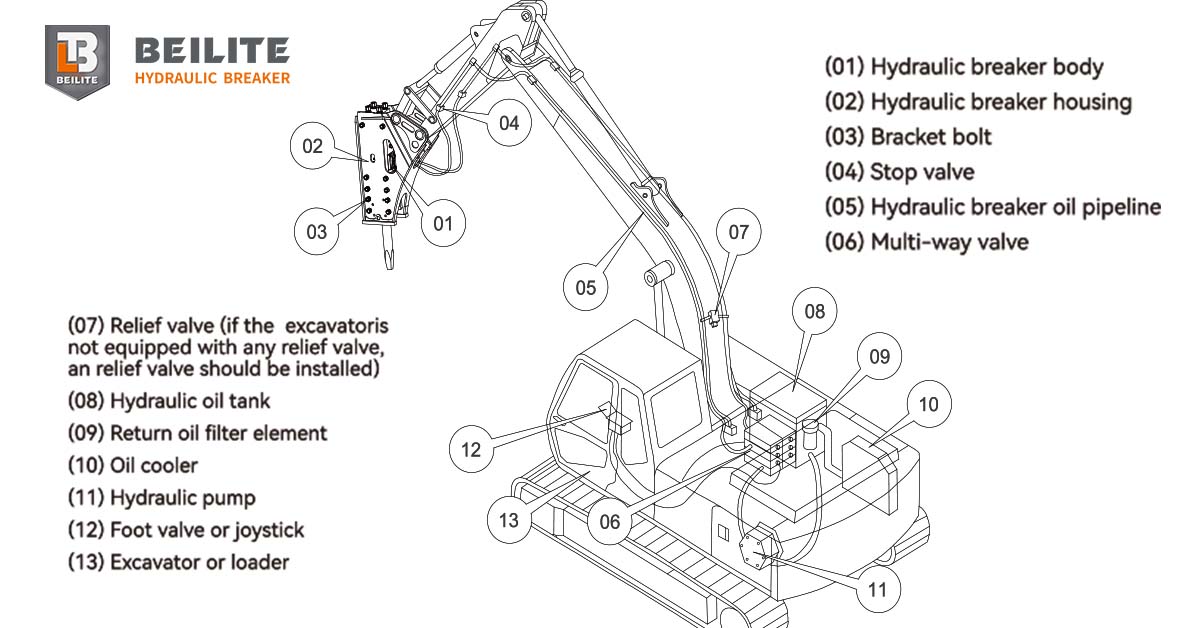
Beilite Hydraulic Breaker for Infrastructure Development: Compatibility with Carriers
Beilite hydraulic breakers are highly versatile attachments designed to work with a wide range of carrier machines, making them ideal for diverse infrastructure development applications. The most common and widely used carriers are construction machines that are already equipped with complete and stable hydraulic systems, ensuring reliable power supply and operational efficiency for hydraulic breaker operations.
In earthmoving and general construction, crawler excavators are the primary carriers for hydraulic breakers, ranging from compact 0.8-ton mini excavators to ultra-large excavators exceeding 120 tons. This broad compatibility allows Beilite hydraulic breakers to be used in small urban projects as well as large-scale infrastructure and mining operations. Wheeled excavators, known for their mobility and efficiency on paved surfaces, are frequently used in municipal road maintenance and urban infrastructure repair, where quick relocation between job sites is essential.
Backhoe loaders offer exceptional flexibility by combining a front loader and a rear excavator arm, allowing the hydraulic breaker to be mounted on the digging arm for breaking tasks while maintaining loading capabilities. Similarly, skid steer loaders can be equipped with small hydraulic breakers via quick couplers, making them suitable for confined spaces such as indoor demolition, landscaping, and utility work. Compact track loaders provide a similar configuration but with greater traction, enabling stable breaker operation on soft or uneven ground. In certain quarrying and heavy-duty scenarios, wheel loaders can also be adapted with special conversion arms or quick couplers to mount large hydraulic breakers, particularly for handling oversized rock materials.
For demolition and specialized engineering projects, Beilite hydraulic breakers are compatible with purpose-built machines designed for extreme conditions. High-reach demolition excavators feature extended working arms for dismantling high-rise structures from the top down. Remote-controlled demolition robots, such as compact electric units, can be equipped with hydraulic breakers for operations in hazardous or restricted environments, including tunnel construction, furnace cleaning, and nuclear facility decommissioning. Additionally, telehandlers with auxiliary hydraulic circuits can mount small breakers for elevated or long-reach breaking tasks, while amphibious excavators enable breaker operations in wetlands, marshes, and shallow water environments.
In mining and tunneling applications, Beilite hydraulic breakers integrate seamlessly with heavy-duty and specialized systems. Pedestal boom systems are fixed installations commonly used at crusher inlets to break oversized rocks and prevent blockages. Drilling jumbos and scaling machines may use breaker attachments for tunnel wall shaping and roof scaling, ensuring operational safety. Modified underground LHD machines can also carry hydraulic breakers for tunnel maintenance and rock fragmentation in confined underground spaces.
Beyond construction and mining, hydraulic breakers can be adapted to agricultural and landscaping machinery through hydraulic retrofit kits. Tractors equipped with three-point hitches and rear hydraulic outputs can operate small breakers for land clearing or rock removal. Certain multi-purpose utility vehicles with hydraulic interfaces can also support light-duty breaker applications.
Even non-traditional carriers can be adapted for specific scenarios. In rare cases, cranes fitted with independent hydraulic power packs are used to operate breakers at extreme heights or angles, typically in research or emergency rescue operations. In automated industrial environments, breakers may be mounted on custom gantry or rail systems for repetitive or precision breaking tasks.
Regardless of the carrier type, successful hydraulic breaker installation depends on three critical technical parameters: hydraulic flow rate, which must match the breaker’s operating range; operating pressure, which must safely handle peak impact loads; and weight compatibility, ensuring the carrier’s structure can withstand reaction forces without instability or damage. In practice, over 90% of hydraulic breakers on the market are mounted on excavators, skid steer loaders, and remote-controlled demolition robots, highlighting their central role in modern infrastructure development.
Conclusion
Hydraulic breakers play an essential role in infrastructure development by enabling efficient, safe, and precise material breaking across a wide range of applications. From roads and bridges to tunnels and urban utilities, these powerful attachments help contractors meet demanding project requirements while controlling costs and minimizing environmental impact.
As infrastructure development continues to expand worldwide, the hydraulic breaker remains not just a tool, but a strategic asset for building the foundations of modern society.
Beilite Machinery Co., Ltd.
40008-40008
info@beilite.com
+6282321982255