 English
 Indonesian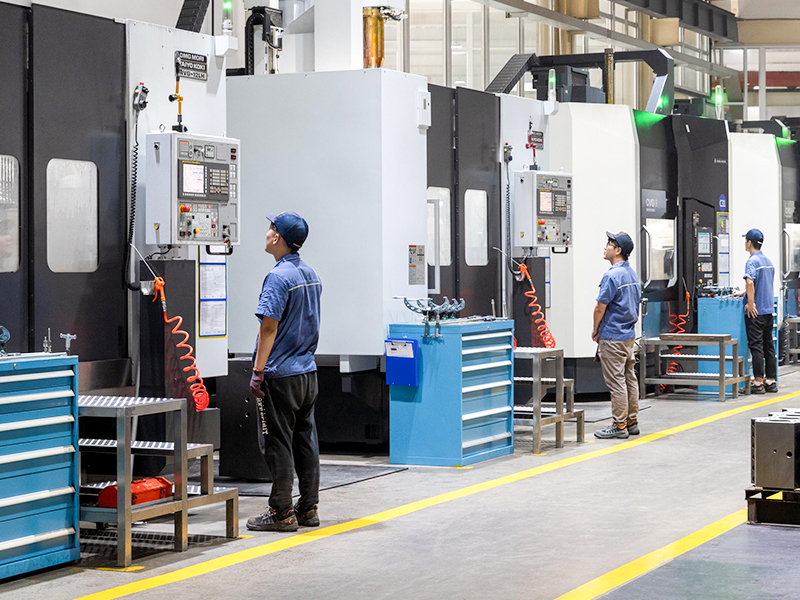

Hydraulic breakers also known as hammer rock breaker, excavator breaker, and hydraulic hammers are essential attachments used across construction, mining, and demolition industries. Their power, durability, and overall efficiency depend heavily on the quality and engineering of their internal components. While many users focus on impact force or carrier compatibility, the true performance of a hydraulic rock breaker is determined by its structural design, material quality, and internal energy-enhancement systems.
In this article, we explore the four core components and engineering principles that make a hydraulic breaker powerful, durable, and efficient. Understanding these elements helps operators, contractors, and equipment owners select the right breaker and maintain it properly for long-term use.
The Role of Accumulators in Hydraulic Breakers
How the Accumulator Boosts Hydraulic Hammer Breaker Striking Power?
One of the most important components found in medium and large hydraulic breakers is the nitrogen-filled accumulator. This internal chamber plays a critical role in energy storage and release, significantly influencing impact power.
During operation, the accumulator stores the remaining energy from the previous blow as well as the recoil energy generated by the piston. In the next strike, this stored energy is released instantly, adding to the hydraulic power supplied by the excavator. This combined force increases the breaker’s striking capacity, efficiency, and consistency especially when working in hard rock, concrete foundations, and heavy demolition tasks.
Why Small Hammer Breakers Usually Don’t Have Accumulators?
Smaller hydraulic hammers do not typically include accumulators because their impact requirements and structural limitations differ from medium and heavy-duty models. However, for mountain demolition, deep rock excavation, quarrying, and mining, an accumulator-equipped breaker is essential to maintain continuous high power.
Structural Engineering for Higher Impact Energy
Modern hydraulic breakers rely heavily on optimized structural engineering to increase impact energy output. One of the key improvements is the extended stroke design of the piston and cylinder block. By increasing the piston’s travel distance, more energy can be generated and transferred with each blow. In addition, adopting a unified diameter between the piston and the tool rod creates a smoother, more efficient flow of power through the breaker’s internal components. This design also helps maintain a stable striking rhythm and minimizes unnecessary resistance during operation.
Optimized Stroke and Cylinder Design
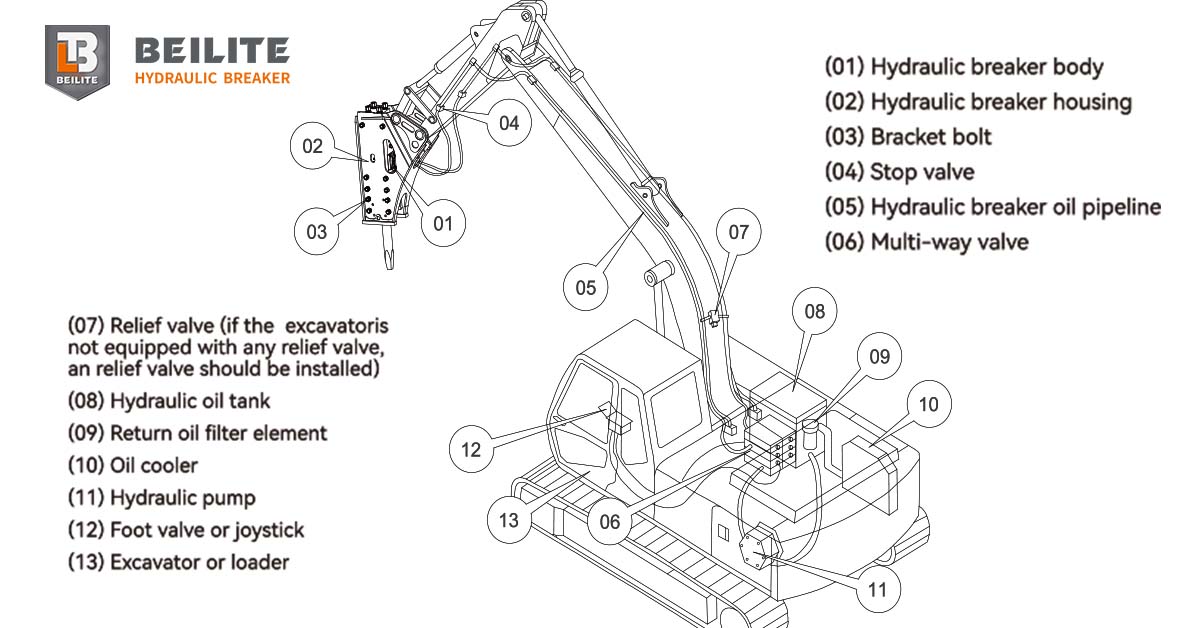
A well-engineered hydraulic breaker works more harmoniously with the main carrier—whether it is an excavator, skid steer, backhoe loader, or wheel loader. Proper structural balance ensures that the breaker utilizes the excavator’s hydraulic power effectively, without overloading the pump or causing excessive oil heating. The result is a breaker that delivers high output energy while maintaining lower fuel consumption, better energy efficiency, and smoother performance. Such structural enhancements are especially valuable in demanding applications such as highway construction, mining, quarry rock splitting, and large-scale.
Modern hydraulic breakers incorporate advanced engineering to maximize energy transfer. This includes:
- Extended piston and cylinder stroke
- Uniform diameter design between the piston and the tool rod
- Improved energy distribution along the striking axis
These design improvements ensure more efficient use of hydraulic power, reduce internal resistance, and enable the breaker to deliver higher impact energy per blow without increasing fuel consumption.
Better Compatibility of Hydraulic Hammer Breaker with Excavators and Loaders
Because of this optimized configuration, hydraulic breakers can be matched more effectively with a wider range of carriers including excavators, backhoe loaders, mini excavators, and wheel loaders. The result is a smoother power balance, reduced machine strain, and improved overall productivity.
This engineering advantage is especially crucial in applications such as:
- Mountain excavation
- Hard-rock trenching
- Road and bridge construction
- Mining and stone quarrying
By maximizing usable output energy, the breaker can complete tasks more quickly and cost-effectively.
Superior Materials and Precision Manufacturing of Hammer Breaker
High-Quality Materials for Maximum Durability
The performance and lifespan of a hydraulic breaker depend greatly on the materials used in its construction. Critical components such as:
- Pistons
- Main body bolts
- Cylinder blocks
- Front and back heads
- Rear main body sections
are manufactured from high-grade alloy steel, carefully selected for strength, wear resistance, and fatigue durability.
These parts undergo strict quality inspections before assembly to ensure structural integrity and reliability.
Advanced Heat Treatment and Precision Engineering of Hammer Breaker
The manufacturing process includes advanced CNC machining, deep heat treatment, and precision finishing to ensure perfect alignment and smooth operation within the cylinder housing.
Years of technical experience combined with modern production equipment results in:
- Greater component stability
- Reduced internal friction
- Longer service life
- Enhanced performance under continuous heavy load
High-quality engineering ensures that the hydraulic breaker maintains consistent force output, even under harsh working conditions such as mines, tunnels, and demolition projects.
Why Hydraulic Rock Breaker Component Quality Matters in Real-World Operations?
The engineering and material choices behind a hydraulic breaker directly influence how it performs on job sites. A high-quality breaker delivers stronger, more consistent power, enabling operators to break rock, concrete, and hard surfaces more efficiently. This leads to faster completion of excavation, foundation preparation, road construction, and mining tasks. Moreover, high-quality components significantly reduce the chances of system failures, seal leakage, overheating, and downtime.
Using a well-designed hydraulic breaker also protects the carrier machine. Poorly manufactured breakers tend to overload the hydraulic pump, contaminate the hydraulic system, and cause abnormal oil heating, which can result in expensive excavator repairs. In contrast, a breaker with optimized structural design and superior materials maintains stable hydraulic flow, reduces system stress, and keeps the excavator running safely. Over time, this not only improves operational efficiency but also lowers overall maintenance costs for both the breaker and the carrier.
Enhanced Performance Across All Job Sites
Each of the key components accumulator, structural design, and high-quality materials—works together to directly influence the breaker’s real-world performance. A well-engineered hydraulic breaker ensures:
- Higher impact energy and faster breaking speed
- Greater fuel efficiency
- Reduced downtime and maintenance needs
- Better compatibility with various carrier machines
- Lower Long-Term Operating Costs
Cheap or poorly manufactured hydraulic breakers may initially seem cost-effective, but their frequent breakdowns, seal failures, and structural cracks lead to higher overall expenses. Low-quality materials can also damage the carrier machine by overloading the hydraulic system.
High-quality breakers protect the excavator’s hydraulic pump, maintain stable oil flow, and reduce system contamination resulting in long-term cost savings.
Reliable Engineering Is the Heart of Every Hydraulic Breaker
A hydraulic breaker’s performance depends on far more than just its size or impact rating. The accumulator system, energy-enhancing structure, and precision manufacturing are the core elements that determine efficiency, durability, and working stability.
Whether used for mountain demolition, mining, foundation breaking, or general construction, choosing a well-engineered hydraulic breaker ensures faster results, better productivity, and safer operation.
Keywords:
Hammer breaker, hydraulic breakers, hammer rock breaker, rock breaker, excavator breakers, hydraulic breaker for excavators, hammer breaker for backhoes
If you need assistance selecting the right breaker or want more details about component quality and maintenance, feel free to ask we are here to help.