 English
 Indonesian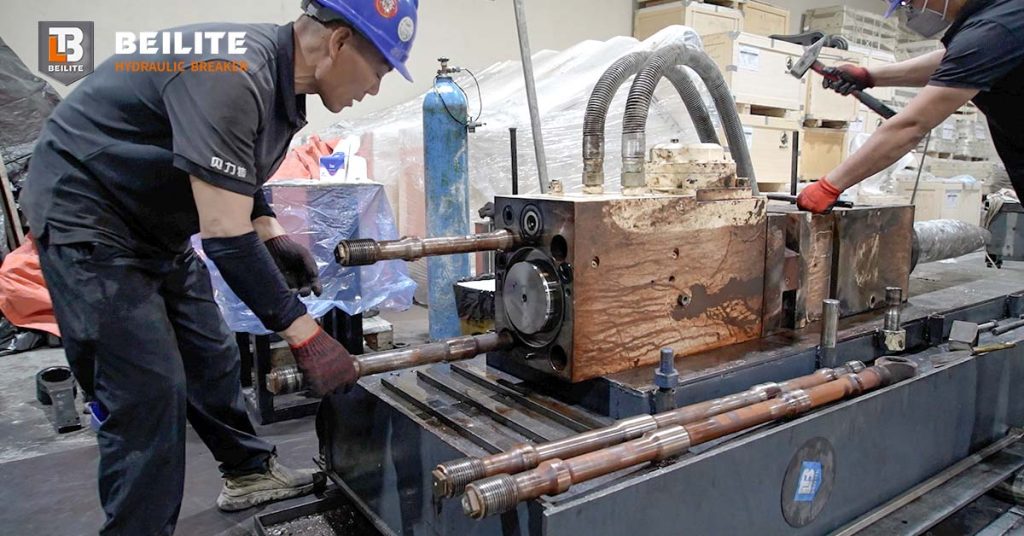
Hydraulic breakers are essential tools for heavy-duty demolition, excavation, and construction tasks. They play a crucial role in breaking down concrete, asphalt, rock, and other tough materials. However, like all heavy machinery, hydraulic breakers require regular maintenance and occasional repairs to ensure their longevity, efficiency, and optimal performance.
For operators, understanding the fundamentals of hydraulic breaker repair and maintenance can dramatically reduce costly downtime, extend the lifespan of the hydraulic hammer breaker, and improve job site safety. In this ultimate guide, we will walk through the key maintenance practices, common issues, and repair tips to keep your hydraulic breaker in top shape for years to come.
Why Regular Maintenance is Crucial for Hydraulic Breakers?
A hydraulic breaker is a high-impact excavator attachment tool that operates under extreme pressure and stress. Whether you are using a Beilite hydraulic breaker for excavation, demolition, or quarrying, these machines endure constant vibration, heat, and wear. If not properly maintained, parts like the piston, chisel, seal kits, and accumulators can wear down faster, leading to diminished performance, frequent repairs, or even total failure.
Regular maintenance can help prevent these issues by identifying wear and tear before they become more significant problems. Early detection of faults like leaking seals or reduced nitrogen pressure can save operators from costly time off and repairs.
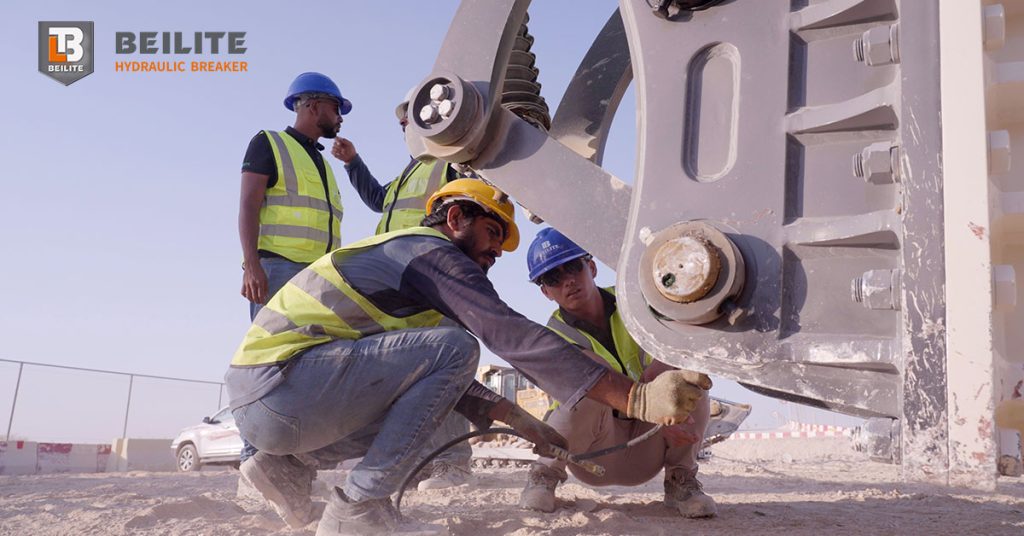
Common Issues of Hydraulic Breakers that Operators Recounter
Before diving into the maintenance and repair techniques, it’s important to recognize the common issues that may affect hydraulic breakers:
Chisel wear and damage – The chisel takes the brunt of the impact, leading to wear or even breakage. Overuse, poor lubrication, and working on hard surfaces can cause the chisel to become blunt or crack.
Piston failure – Piston damage is often caused by contamination in the hydraulic oil, poor lubrication, or overuse. A damaged piston reduces the breaker’s efficiency and may cause internal damage to the hammer breaker housing.
Seal kit leakage – Leaking seals cause hydraulic fluid to escape, leading to a drop-in performance. This can also introduce dirt and debris into the system, further damaging internal components.
Reduced nitrogen pressure – Nitrogen is used to cushion the impact in hydraulic breakers. Over time, nitrogen pressure can decrease, leading to poor performance and inefficient breaking.
Hydraulic Breaker Maintenance Tips
Regular maintenance is the key to prevent breakdowns and maintain your hydraulic breaker’s performance. Here’s a practical breakdown of essential hydraulic breaker maintenance tasks:
1. Inspect and Replace the Chisel Regularly
The chisel is the most exposed and frequently used part of a hydraulic breaker. Over time, chisels can become blunt, worn, or even cracked due to constant impact. A worn-out chisel not only reduces breaking efficiency but also puts additional stress on other parts like the piston.
Signs of wear: If the chisel becomes flattened, excessively worn, or develops cracks, it’s time for a replacement.
Maintenance tip: Regularly inspect the chisel for signs of damage. When replacing, always use high-quality, compatible chisels that match your hydraulic breaker model.
2. Check Hydraulic Oil Quality
The hydraulic oil plays a crucial role in keeping the breaker’s internal components lubricated and preventing overheating. Contaminated oil can lead to faster wear and tear on pistons, seals, and other critical parts.
Signs of contamination: Dirty or discolored oil, foam, or a noticeable drop in oil pressure can indicate that your oil needs to be changed.
Maintenance tip: Replace the hydraulic oil regularly, according to your manufacturer’s guidelines. Keep the oil clean and monitor its temperature to avoid overheating.
3. Maintain Nitrogen Pressure
The nitrogen charge in hydraulic breakers cushions the impact between the piston and the tool. Over time, the nitrogen charge can lose pressure, leading to reduced breaking efficiency and potential damage to internal components.
Signs of reduced nitrogen pressure: A drop in impact force or erratic operation of the breaker are common symptoms.
Maintenance tip: Check nitrogen pressure regularly and recharge it as necessary. Ensure the nitrogen is at the recommended pressure to maintain optimal impact force.
4. Inspect and Replace Seal Kits
Seal kits prevent hydraulic fluid leaks and protect the internal components from contaminants. Over time, seals can wear out due to pressure, heat, or exposure to dirt. A leaking seal can lead to reduced performance and potential internal damage.
Signs of seal damage: Oil leakage, slower operation, or inconsistent impact are all signs that the seals need attention.
Maintenance tip: Replace seals and O-rings regularly. Use OEM seal kits to ensure proper fitment and performance. Regular inspection of seals during maintenance checks can prevent leaks from becoming major problems.
5. Lubricate Regularly
Lubrication is essential for reducing friction between moving parts and preventing excessive wear. Always use high-quality, manufacturer-recommended lubricants to ensure proper performance.
Signs of inadequate lubrication: Increased friction, noisy operation, or visible wear on the front and rear heads.
Maintenance tip: Grease the breaker regularly, particularly after long working periods or when operating in harsh conditions. Follow the manufacturer’s recommended lubrication schedule for optimal performance.
Common Hydraulic Breaker Repairs Tips
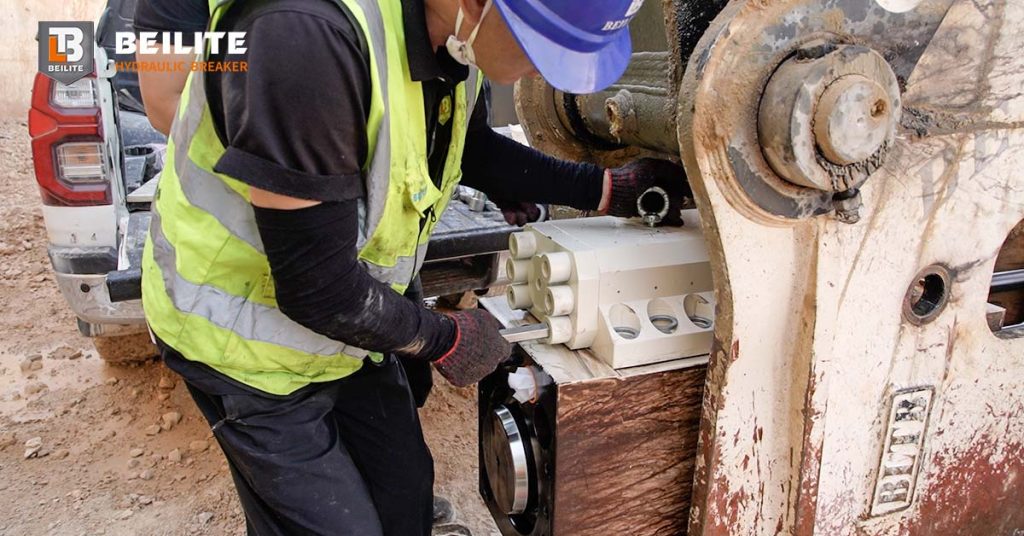
Despite regular maintenance, some spare parts of your hydraulic breaker may still require repairs due to damage or excessive wear. Here are some common repair tips:
1. Replace the Piston
If your hammer breaker or hydraulic breaker has a damaged piston, it’s essential to replace it immediately to avoid further internal damage. Piston failure is usually caused by contamination, poor oil quality, or overuse.
2. Replace the Front Head and Back Head
The front and back heads are critical for transferring impact energy. Over time, these hydraulic breakers spare parts can become worn or damaged, reducing breaking efficiency. Replacing them promptly ensures consistent impact and protection for the rest of the breaker.
Conclusion
Meticulous hydraulic breaker maintenance is essential for maximizing your equipment’s life in long term, reducing downtime, and improving operational efficiency. By regularly checking the chisel, piston, seals, hydraulic oil, and nitrogen pressure, you can prevent many common problems before they lead to expensive repairs. If you encounter issues that cannot be fixed through basic maintenance, ensure you use OEM parts for replacement and repairs to keep your hydraulic breaker running at peak performance.
With regular upkeep, you can ensure that your hydraulic breaker continues to provide reliable, high-impact performance for all your excavation, demolition, and construction projects.
FAQs
1. How often should I check the nitrogen pressure in my hydraulic breaker?
It’s recommended to check the nitrogen pressure at least once every 200 hours of operation or whenever you notice a drop-in impact force. Ensure the pressure is within the manufacturer’s specifications to maintain optimal breaking performance.
2. What should I do if my hydraulic breaker is leaking oil?
Oil leaks are often a sign of damaged seals. Inspect the seals for cracks or wear, and replace them with high-quality OEM parts. Also, ensure that the hydraulic oil is clean and free from contaminants.
3. How can I tell if my breaker’s chisel needs to be replaced?
If the chisel becomes excessively blunt, develops cracks, or is unable to penetrate materials efficiently, it’s time for a replacement. Regular inspection and replacing worn chisels prevent damage to other internal parts.
Beilite Machinery Co., Ltd.
40008-40008
info@beilite.com
+6282321982255