 English
 Indonesian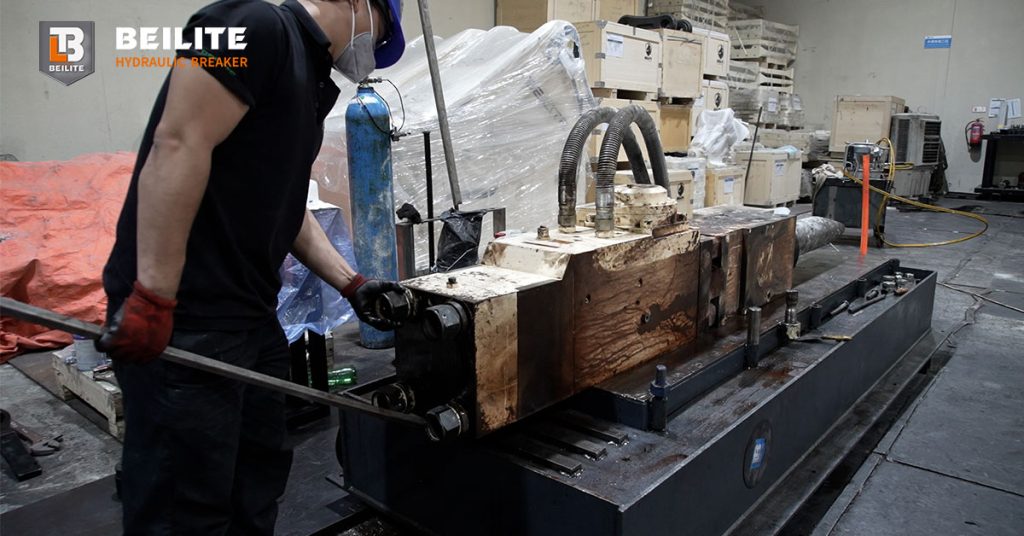
Hydraulic breaker oil leakage is one of the most common problems faced by excavator operators and construction companies. A small amount of oil around the hydraulic breaker may seem harmless at first, but ignoring the problem can lead to reduced impact power, higher maintenance costs, and even serious damage to internal components.
A hydraulic breaker works under extremely high pressure and repeated impact conditions. When seals, cylinders, pistons, or other components wear out, hydraulic oil can escape from the system.
Understanding why hydraulic breakers leak oil, how to identify the severity of the leakage, and when repair is required can help operators reduce downtime and extend the service life of their equipment.
Read More : Hydraulic Breaker Troubleshooting
What Causes Hydraulic Breakers Oil Leakage?
Hydraulic breakers rely on hydraulic oil pressure to drive the piston and generate impact energy. Any failure in the sealing system or internal components may cause oil leakage.
The most common causes include:
1. Worn or Damaged Hydraulic Breaker Seals
The hydraulic breaker cylinder contains several high-pressure seals that prevent hydraulic oil from escaping.
Over time, seals may become damaged due to:
- Long working hours Without Greasing
- Excessive hydraulic pressure
- High operating temperature
- Poor-quality hydraulic oil
- Contamination from dust and metal particles
When seals lose elasticity or become scratched, oil leakage will gradually appear around the cylinder area.
2. Damaged Hydraulic Breaker Cylinder or Piston
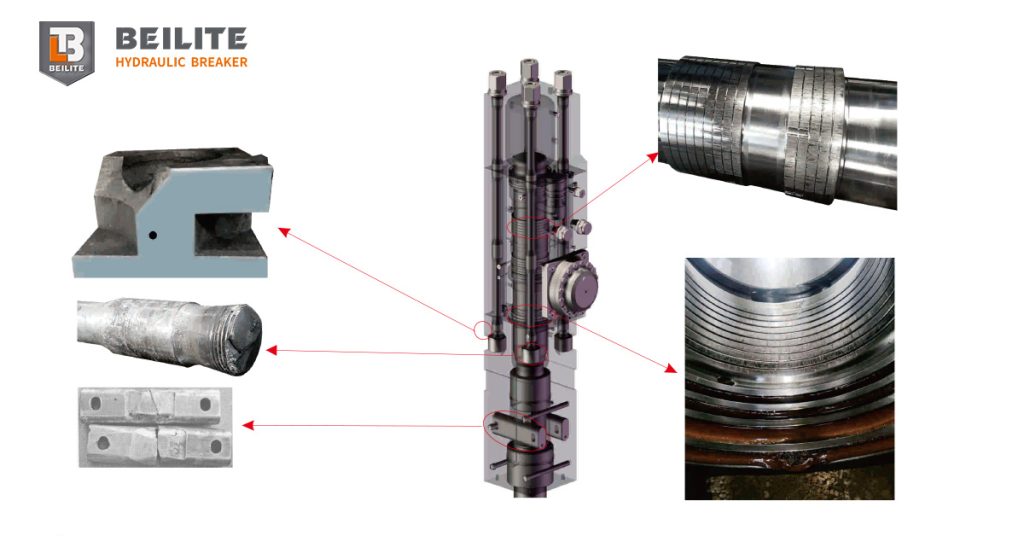
The cylinder and piston are precision-machined components that must maintain a tight sealing surface.
Oil leakage can occur when:
- The piston surface is scratched
- The cylinder wall is worn
- Internal clearance becomes too large
- The piston rod is damaged
In severe cases, replacing only the seals cannot solve the problem because the main components have already been damaged.
3. Incorrect Hydraulic Pressure or Flow
A hydraulic breaker must match the excavator’s hydraulic system.
Excessive pressure or incorrect flow can cause:
- Seal overheating
- Faster component wear
- Abnormal oil leakage
- Reduced breaker performance
Before installation, always check whether the excavator’s hydraulic pressure and flow match the breaker specifications.
4. Poor Maintenance and Contaminated Hydraulic Oil
Clean hydraulic oil is essential for hydraulic breaker performance.
Dirty oil containing:
- Dust
- Metal particles
- Water contamination
can damage seals and accelerate internal wear.
Regular hydraulic oil inspection and replacement are important for preventing leakage problems.
How Does a Hydraulic Breaker Work?
Understanding the working principle helps explain why oil leakage happens.
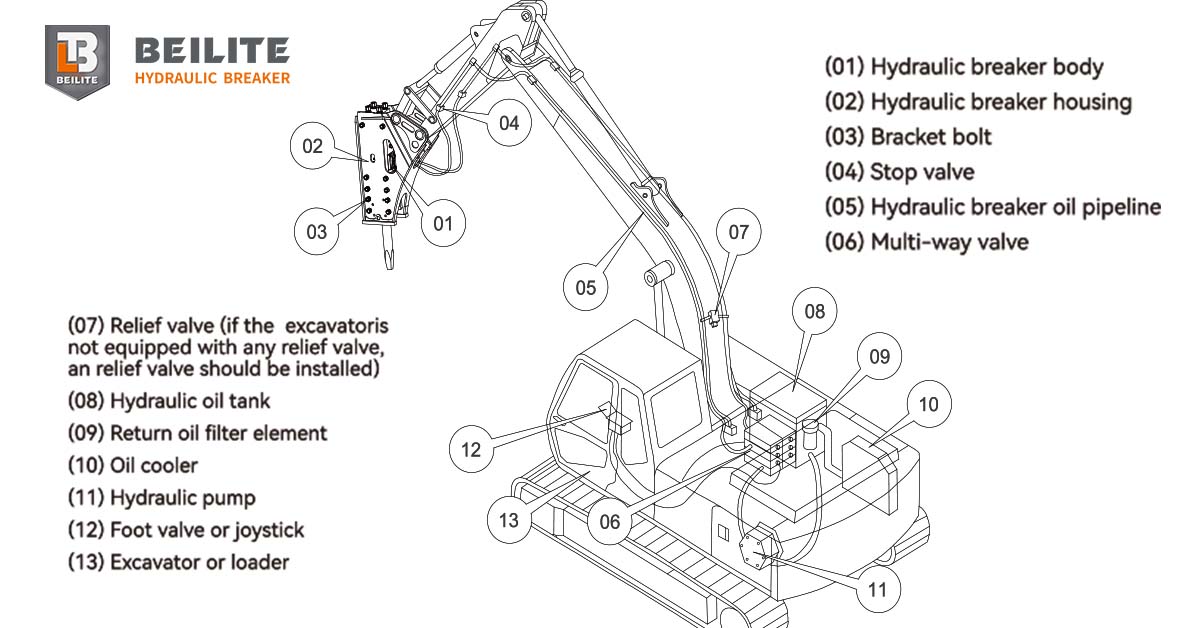
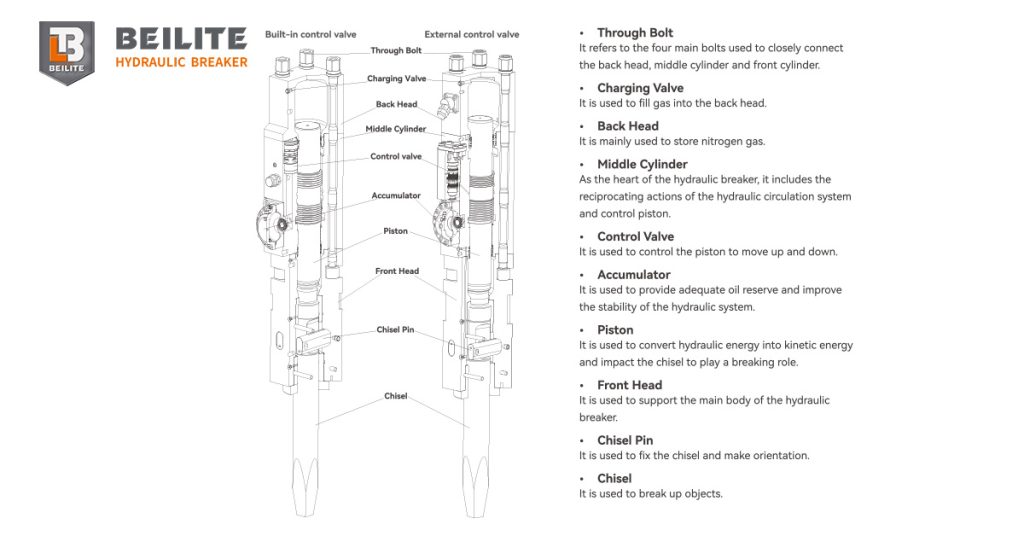
A hydraulic breaker uses hydraulic oil pressure from the excavator to move a piston inside the cylinder.
The basic working process includes:
- Hydraulic oil enters the breaker cylinder.
- Oil pressure pushes the piston backward.
- The control valve changes oil direction.
- The piston moves forward at high speed.
- The piston strikes the tool (chisel) and creates impact energy.
During operation, the hydraulic breaker experiences:
- High hydraulic pressure
- High-frequency impact
- Continuous vibration
- Extreme mechanical stress
Because of these conditions, sealing components are critical for maintaining performance.
How to Solve Hydraulic Breaker Oil Leakage?
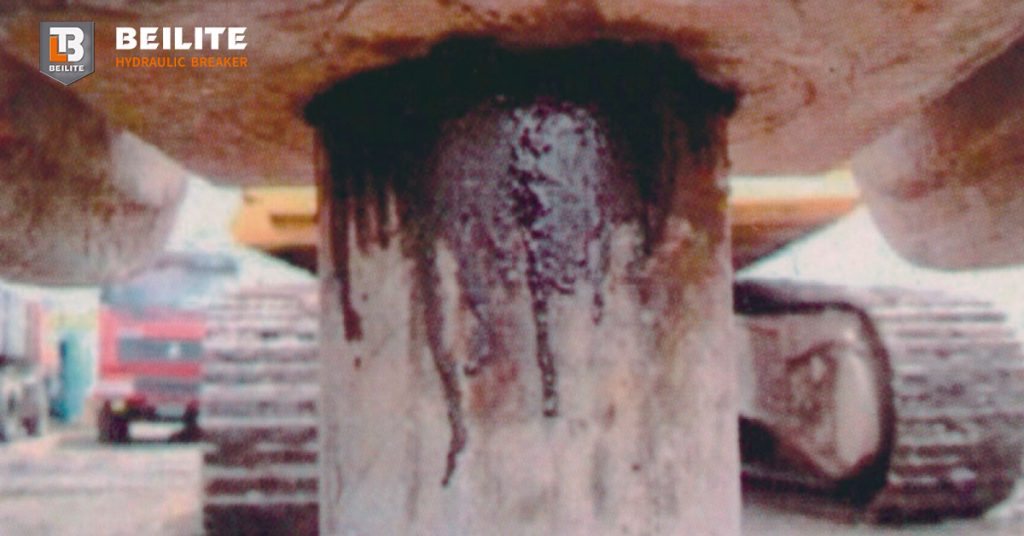
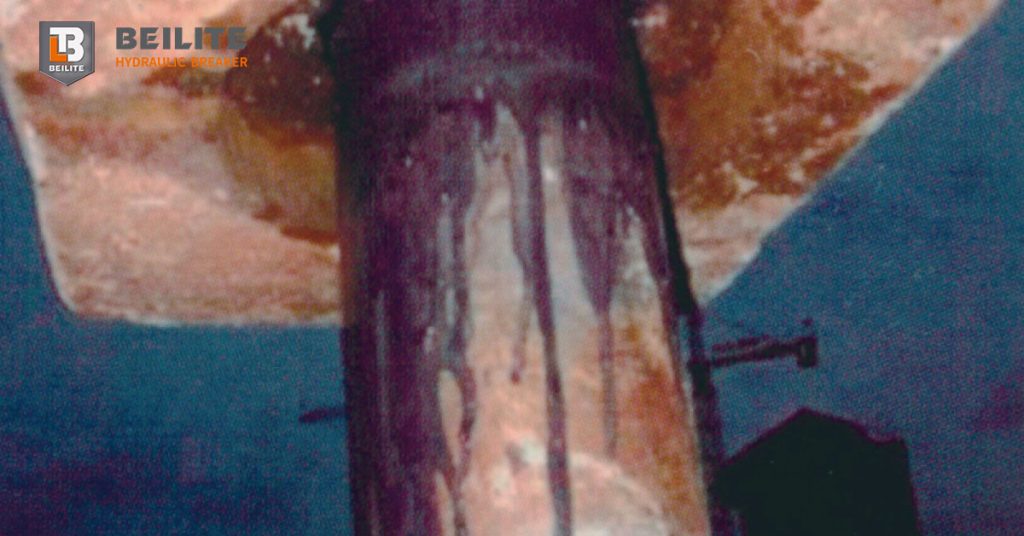
The repair method depends on the leakage location and severity.
Before repairing, operators should:
- Stop operation immediately if leakage is serious
- Clean the breaker surface
- Identify the leakage position
- Check seal condition
- Inspect piston and cylinder damage
Different leakage conditions requires different solutions.
Hydraulic Breaker Cylinder Oil Leakage Treatment Guide
1. Completely No Oil Leakage
Condition:
The hydraulic breaker cylinder area is completely dry, with no visible hydraulic oil.
Solution:
No repair is required.
Continue normal operation but maintain regular inspection to ensure early detection of future problems.
2. Small Oil Leakage Around Cylinder — No Immediate Repair Required
Condition:
A very small amount of oil appears around the cylinder, but:
- Breaker performance remains normal
- Impact power is unchanged
- Oil level does not decrease quickly
Solution:
Usually, immediate repair is unnecessary.
Operators should:
- Clean the oil area
- Monitor leakage regularly
- Check hydraulic oil consumption
If leakage increases, repair should be scheduled.
3. Slight Oil Leakage — Repair Within a Few Days
Condition:
Signs include:
- Visible oil around the cylinder
- Gradual increase of leakage
- Slight reduction in performance
Possible causes:
- Aging seals
- Minor seal damage
- Early piston wear
Solution:
Plan maintenance within a short period.
Recommended actions:
- Replace hydraulic breaker seal kit
- Inspect piston surface
- Check cylinder condition
Early repair can prevent more expensive damage.
4. Oil Leakage Requires Short-Term Repair
Condition:
Oil leakage becomes obvious and affects operation.
Symptoms include:
- Hydraulic oil dripping continuously
- Reduced impact force
- Abnormal breaker movement
Solution:
Stop heavy operation and arrange repair as soon as possible.
Required inspection:
- Replace damaged seals
- Check piston clearance
- Inspect cylinder inner surface
- Verify hydraulic pressure settings
Continuing operation may damage major components.
5. Severe Oil Leakage — Repair Immediately
Condition:
Severe leakage occurs when:
- Hydraulic oil sprays or flows continuously
- Breaker loses impact power
- Large oil loss occurs
- Internal components may be damaged
- Solution:
Stop using the hydraulic breaker immediately.
The breaker should be completely inspected and repaired.
Possible repairs include:
- Complete seal replacement
- Cylinder repair or replacement
- Piston replacement
- Hydraulic system inspection
Operating under severe leakage conditions can cause permanent damage.
How to Prevent Hydraulic Breaker Oil Leakage and Failure?
Preventive maintenance is the best way to reduce hydraulic breaker downtime.
1. Use Correct Hydraulic Oil
Always use hydraulic oil recommended by the excavator and breaker manufacturer.
Incorrect oil can cause:
- Seal deterioration
- Overheating
- Poor lubrication
2. Regularly Check Hydraulic Breaker Seals
Inspect:
- Cylinder area
- Front head
- Side bolts
- Tool area
Early detection of oil leakage can prevent major repairs.
3. Avoid Empty Firing Operation
Empty firing happens when the breaker piston impacts without proper contact.
It can cause:
- Excessive vibration
- Seal damage
- Internal component wear
Always keep the chisel properly pressed against the working material.
4. Maintain Proper Nitrogen Pressure
Hydraulic breakers use nitrogen gas to improve impact performance.
Incorrect nitrogen pressure can cause:
- Reduced impact energy
- Abnormal stress
- Faster wear
Check nitrogen pressure according to manufacturer recommendations.
5. Keep Hydraulic Oil Clean
Regularly check:
- Hydraulic oil quality
- Oil filter condition
- Hydraulic system cleanliness
Clean oil significantly improves breaker lifespan.
Daily Hydraulic Breaker Maintenance Checklist
Before operation:
✓ Check for oil leakage
✓ Inspect hydraulic hoses and connections
✓ Check chisel condition
✓ Confirm proper lubrication
✓ Check unusual noise or vibration
During operation:
✓ Avoid empty firing
✓ Avoid side loading
✓ Monitor breaker performance
After operation:
✓ Clean dust and debris
✓ Inspect leakage signs
✓ Record maintenance issues
Conclusion: Fix Hydraulic Breaker Oil Leakage Before It Becomes a Major Problem
Hydraulic breaker oil leakage is often a warning sign of seal wear, incorrect operation, or internal component damage.
A small leak may only require monitoring, while severe leakage requires immediate repair to avoid costly failures.
By following proper operation methods, regular inspections, and preventive maintenance, operators can improve hydraulic breaker reliability, reduce downtime, and extend equipment service life.
For reliable hydraulic breakers, spare parts, and professional maintenance support, choosing an experienced hydraulic breaker manufacturer can make a significant difference in long-term operating costs.
Beilite Official Contacts:
Beilite Machinery Co., Ltd.
40008-40008
info@beilite.com